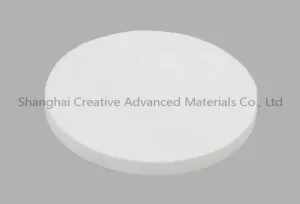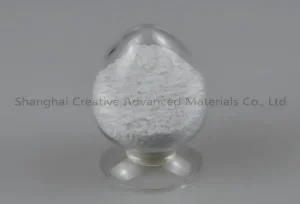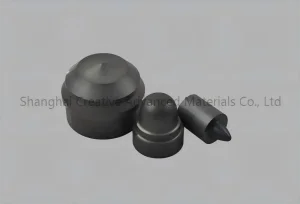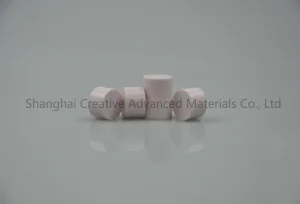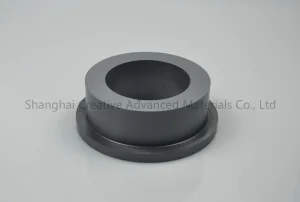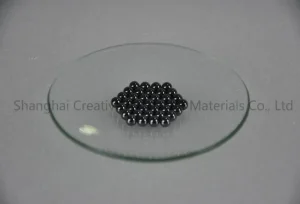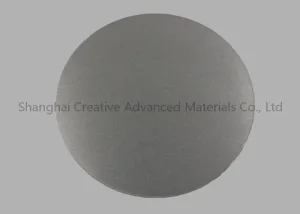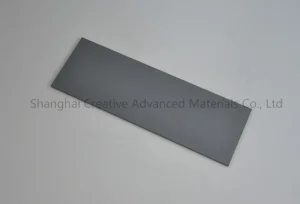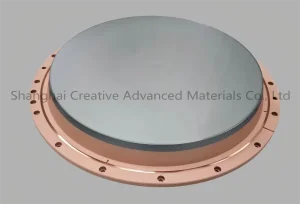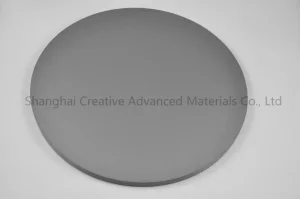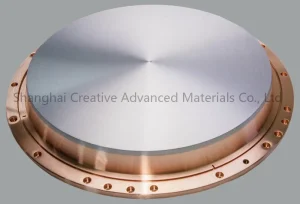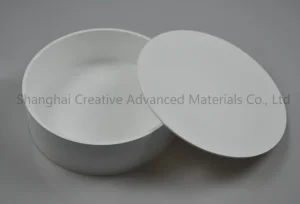
As a premier China Silicon Carbide Board Manufacturer, Shanghai Creative Advanced Materials Co., Ltd (SCA) operates at the nexus of material science and industrial evolution. Silicon Carbide (SiC) boards, also known as SiC plates or setter plates, have transitioned from traditional refractory materials to critical components in the global high-tech supply chain. Today, the global market for SiC ceramics is projected to grow at a CAGR of over 7% through 2030, driven by the explosive demand in electric vehicles (EVs), 5G infrastructure, and advanced semiconductor processing.
In the current industrial landscape, Silicon Carbide stands peerless due to its extreme hardness (Mohs 9.5), exceptional thermal conductivity, and chemical inertness. Unlike traditional alumina or metallic plates, SiC boards maintain structural integrity at temperatures exceeding 1,600°C, making them indispensable for kiln furniture, heat exchangers, and ballistic protection. China has emerged as a global hub for SiC production, leveraging massive raw material reserves and rapidly advancing sintering technologies to provide high-purity solutions to international markets.
SiC boards serve as essential setter plates for wafer processing, where thermal uniformity and zero-contamination are non-negotiable requirements for 300mm wafer yields.
With thermal conductivity up to 120-200 W/m·K, SiC boards outperform stainless steel by factors of five, enabling rapid heat dissipation in high-power electronics.
The high hardness-to-weight ratio makes SiC the material of choice for hard armor inserts and lightweight structural components in satellite housings.
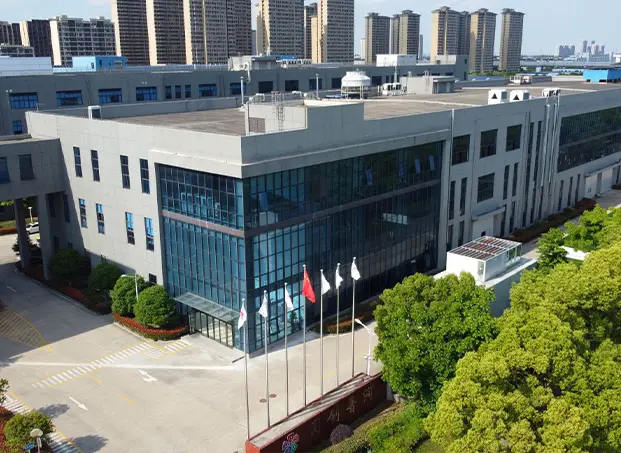
Shanghai Creative Advanced Material Co.,Ltd, established in Shanghai Industrial Comprehensive Development Zone, is a high-tech company that integrates the research and development, production, and sales of semiconductor ceramic targets, powder metallurgy targets, and ceramic components. With over 19 years of industry experience, we have mastered the complexities of Silicon Carbide synthesis and precision machining.
Our facility specializes in high-purity materials, providing solutions for neutron absorption, advanced polymer products, and structural ceramics. We are committed to the E-E-A-T principles, ensuring every SiC board leaving our factory meets the rigorous ISO9001 and industry-specific semiconductor standards.
As a leading Silicon Carbide Board Manufacturer, SCA invests heavily in the technical routes that define the next generation of ceramics. Understanding the difference between sintering methods is crucial for procurement engineers to match material properties to application needs.
Infiltrating silicon into a carbon-SiC preform. It offers excellent dimensional stability and is cost-effective for large-scale kiln furniture and complex shapes.
Produced using sub-micron SiC powder at 2000°C+. This route provides the highest corrosion resistance and is ideal for chemical pumps and semiconductor seals.
High-purity SiC processed via evaporation-condensation. This results in a porous structure with high thermal shock resistance, used primarily in high-temperature kilns.
Using silicon nitride as the bonding phase to enhance wear resistance and non-wetting properties against molten non-ferrous metals.

Controlling purity, particle size, and chemical stability to ensure baseline performance of every SiC board.

Advanced slurry concentration monitoring to ensure uniform particle distribution for high-density blanks.

Automated presses create consistent green bodies, reducing internal stresses and improving final yields.

Utilizing hot pressing, pressureless, and reaction sintering methods to achieve targeted mechanical properties.
The "Silicon Carbide Era" is shifting from bulk manufacturing to precision engineering. As a China Silicon Carbide Board Manufacturer, we observe several key trends shaping the future:
Our SiC boards provide the thermal foundation for IGBT modules in high-speed rail and EV chargers, ensuring stability under rapid switching and high thermal loads.
Sintered SiC plates are used in PV cell manufacturing as durable kiln furniture that survives thousands of thermal cycles without warping or outgassing.
Combined with our Boron Carbide expertise, our SiC-based composites serve as radiation shielding and neutron absorption plates in next-gen reactors.
A: Silicon Carbide offers significantly higher thermal conductivity (up to 5x), better thermal shock resistance, and higher maximum service temperatures (1600°C+ vs 1400°C for Alumina). It also possesses superior chemical resistance in acidic and basic environments.
A: Yes. As a direct manufacturer, we offer precision CNC machining to provide custom geometries, including holes, slots, and specific surface finishes (lapping/polishing) to meet semiconductor-grade requirements.
A: We use high-purity raw powders and specialized sintering atmospheres. Every batch undergoes GDMS or ICP-MS testing to ensure metallic impurities are within the parts-per-billion (ppb) or parts-per-million (ppm) range as specified.
A: Depending on the complexity and volume, standard products take 2-4 weeks. Highly customized machined boards may take 6-8 weeks, including the sintering and precision grinding phases.