1 / 1

Boron carbide thin films can achieve a hardness of 30-40 GPa (approximately 3000-4000 HV), making it one of the hardest known materials, significantly enhancing the wear resistance and scratch resistance of device surfaces. It exhibits extremely high corrosion resistance against acids and bases, particularly maintaining good chemical inertness at high temperatures. The material has a low density (approximately 2.52 g/cm³), but an extremely high Young's modulus, making it suitable for lightweight protective applications where weight sensitivity is important.
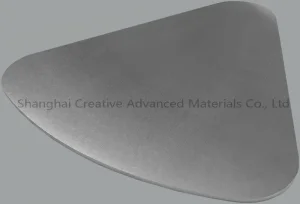
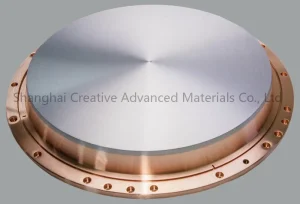
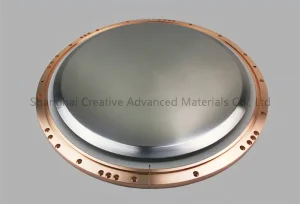
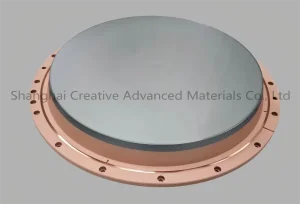
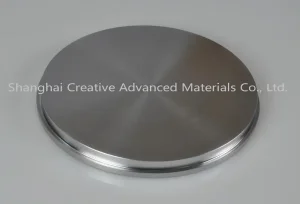
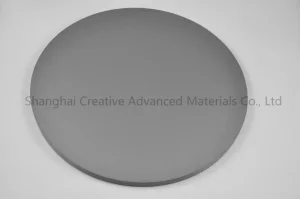
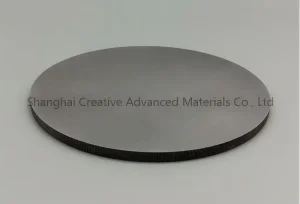
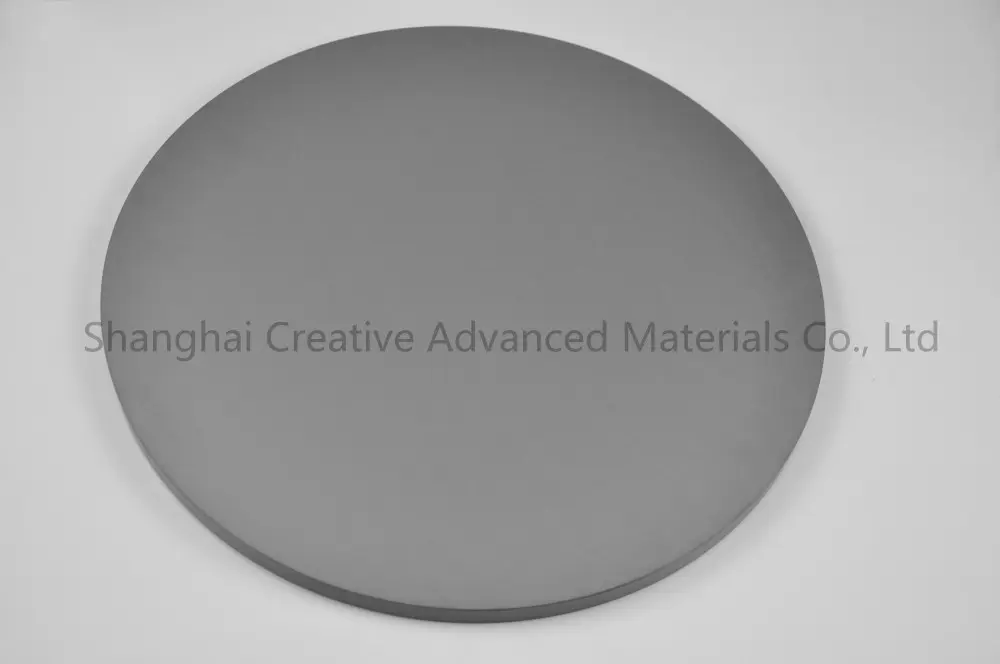
High-density (≥98% theoretical density) targets are obtained through hot pressing (HP) or hot isostatic pressing (HIP), which reduce particle splatter and cracking during the sputtering process. Although the conductivity is relatively poor (requiring RF radio frequency sputtering), the process is mature and can yield uniform thin films with good adhesion.
The element boron has a high thermal neutron absorption cross-section (600 barns), making it an ideal choice for control rods in nuclear reactors and shielding materials. With a melting point of up to 2450°C, it maintains structural stability and performance in high-temperature environments. Its low coefficient of thermal expansion allows it to withstand drastic temperature changes without cracking.
Boron carbide thin films can reach a hardness of 30-40 GPa (approximately 3000-4000 HV), making it one of the hardest materials available for protecting devices against wear and scratches.
High-density (≥98% theoretical density) targets are manufactured using hot pressing (HP) or hot isostatic pressing (HIP) to minimize particle splatter and micro-cracking during processing.
Due to its relatively low electrical conductivity, RF (radio frequency) sputtering is typically utilized to achieve uniform thin films with strong surface adhesion.
The boron element features a high thermal neutron absorption cross-section of 600 barns, which makes the material highly effective for control rods and radiation shielding in nuclear reactors.
Boron carbide has a melting point of up to 2450°C. Coupled with a low coefficient of thermal expansion, it maintains excellent structural stability under extreme thermal shocks.
Yes. With a low density of approximately 2.52 g/cm³ and a very high Young's modulus, it is ideal for lightweight protective coatings and components.