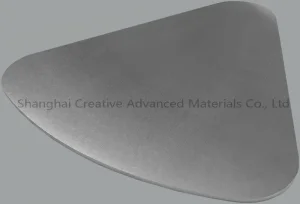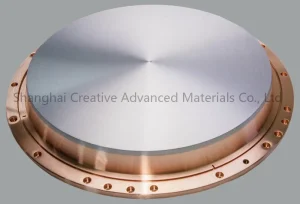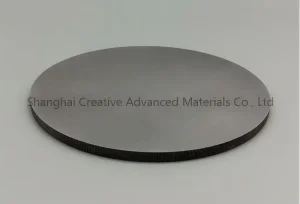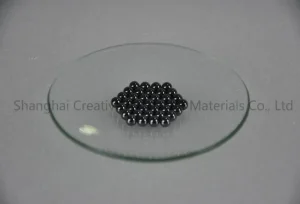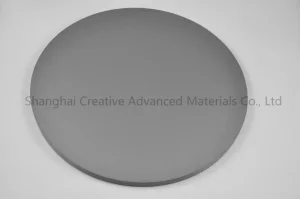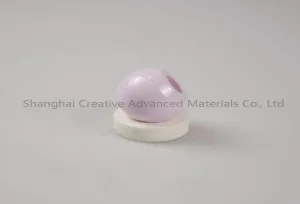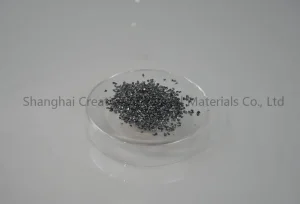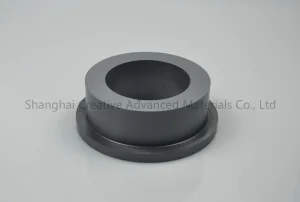
Boron Carbide (B4C), famously known as "Black Diamond," stands as one of the most critical materials in the modern industrial arsenal. As we move into 2025 and beyond, the demand for High-Density B4C ceramics (with relative density exceeding 98%) has surged across defense, aerospace, and nuclear sectors. Shanghai Creative Advanced Materials Co., Ltd (SCA) has observed a significant paradigm shift from traditional pressureless sintering to advanced Spark Plasma Sintering (SPS) and Hot Isostatic Pressing (HIP) technologies.
Industry trends indicate a growing reliance on B4C for lightweight ballistic protection. With modern combat requirements demanding higher mobility, the weight reduction offered by B4C—being 15% lighter than silicon carbide and 40% lighter than alumina—has made it the gold standard for personal armor and vehicle protection systems. Furthermore, in the semiconductor industry, B4C’s extreme hardness is leveraged for high-efficiency grinding and wafer processing components.
Enhanced grain boundary engineering leads to superior fracture toughness in armor applications against high-velocity projectiles.
High boron content makes it an unparalleled neutron absorber for reactor control rods and shielding in spent fuel storage.
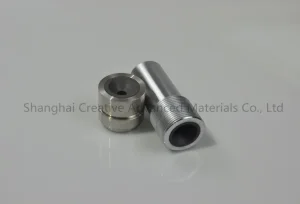
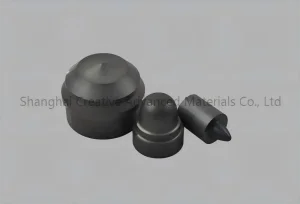
Industrial nozzles and sandblasting components made from high-density B4C offer 10x the lifespan of tungsten carbide counterparts.
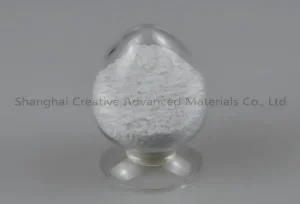
Procuring High-Density B4C ceramics from China requires a sophisticated understanding of material purity and sintering methodology. Global enterprises often face challenges regarding chemical consistency and dimensional accuracy. SCA addresses these by offering a vertically integrated supply chain—from raw B4C powder synthesis to final high-precision machining.
Our solutions for global buyers include Total Quality Traceability. Every batch of ceramic components undergoes rigorous ultrasonic non-destructive testing (NDT) to ensure zero internal micro-cracks, which is vital for structural integrity in extreme chemical or pressure environments. For international partners, we provide comprehensive Export Compliance Support, ensuring that dual-use material regulations are strictly adhered to, facilitating smooth logistics to Europe, North America, and Southeast Asia.
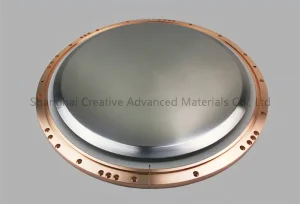
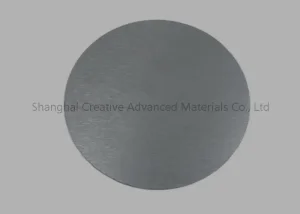
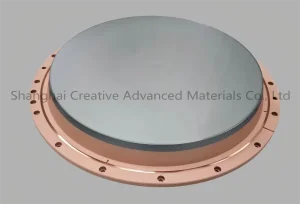
Customized B4C targets and components designed for the latest 300mm wafer fabrication lines, ensuring low contamination and high thermal stability.
Localized technical consultancy and 24/7 engineering support to assist in material selection and application design-in phases.
Full ISO 9001:2015 certification and adherence to REACH/RoHS standards for global market accessibility.
The future of B4C ceramics lies in Composite Engineering. By introducing secondary phases such as TiB2 or SiC, we are enhancing the inherently low fracture toughness of pure Boron Carbide. This "Toughened B4C" is set to revolutionize the next generation of deep-sea exploration equipment and high-temperature aerospace turbines.
SCA is currently investing in Additive Manufacturing (3D Printing) for B4C, allowing for complex geometries that were previously impossible to achieve via traditional pressing and sintering. This transition will reduce material waste and allow for "Topology Optimized" designs in weight-sensitive defense applications.
Strict control over purity and particle size stability.
Uniform composition through automated slurry monitoring.
Automated presses for consistent green body density.
HP, Pressureless, and Reaction sintering capabilities.
A: Industrially, high-density refers to products reaching >95% of the theoretical density (2.52 g/cm³). For critical applications like nuclear control rods or ballistic armor, SCA achieves >98% density through Hot Pressing (HP), which significantly reduces porosity and improves mechanical strength.
A: We utilize high-purity raw powders and specialized cleaning lines. Our vacuum sintering process prevents carbon contamination, ensuring our B4C targets meet the stringent requirements of PVD (Physical Vapor Deposition) processes used in thin-film coatings.
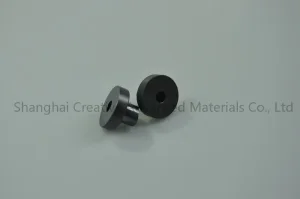
A: Yes. While B4C is difficult to machine due to its hardness, our facility is equipped with imported high-precision diamond grinding tools and EDM (Electrical Discharge Machining) capability to produce intricate geometries for valve cores, nozzles, and structural parts.
A: Depending on the complexity, standard components have a lead time of 4-6 weeks. We maintain a strategic buffer of raw materials to ensure fast delivery for our long-term global partners.