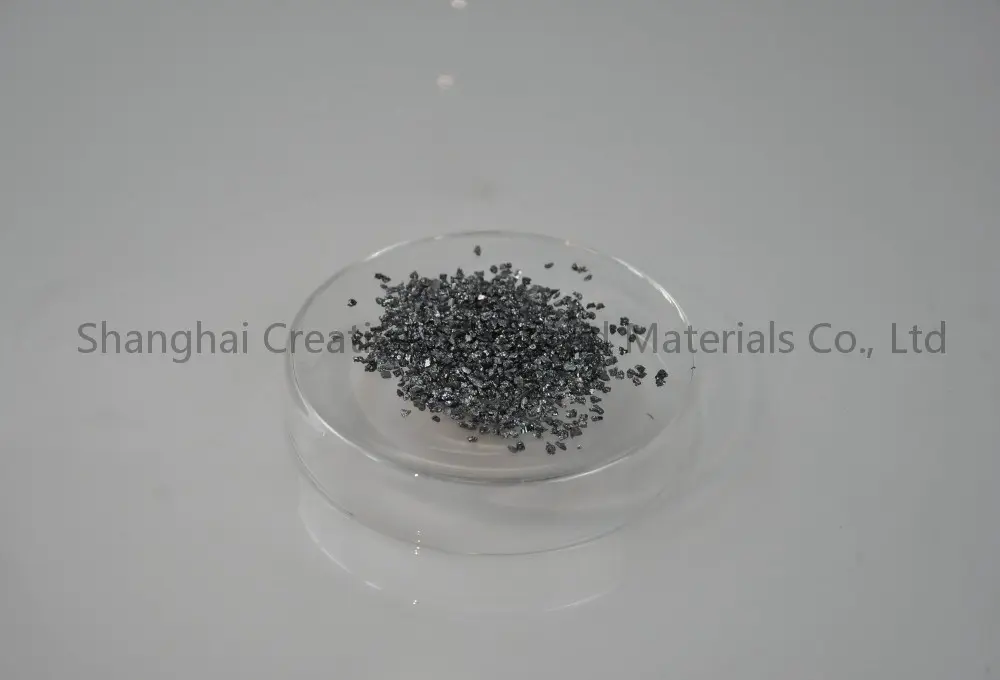
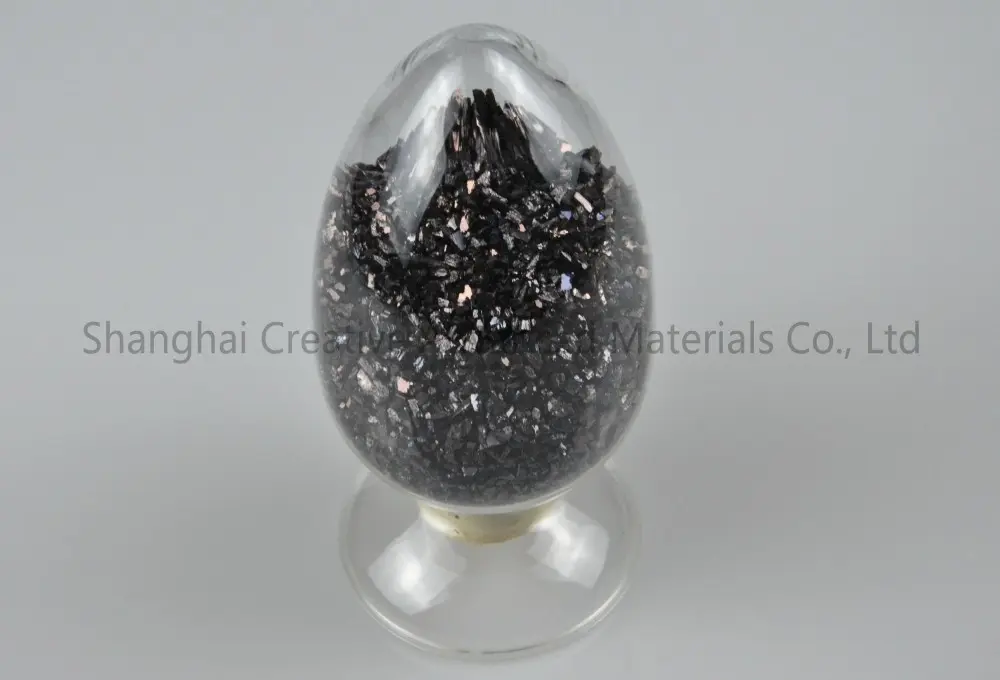

Wholesale Ti₃O₅ Slug Suppliers, Factories

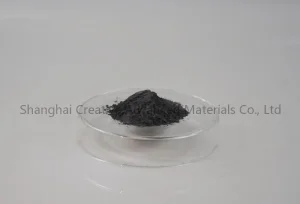
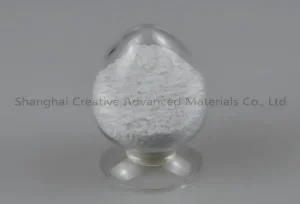
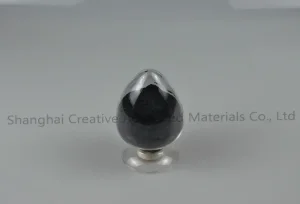
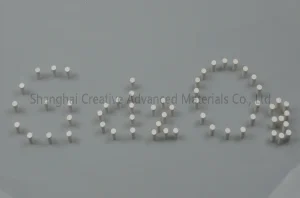
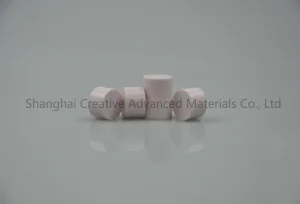
Ti3O5Slug is a sintered pellet material primarily composed of titanium trioxide (Ti3O5), specifically designed for vacuum coating processes. Its high purity, specific morphology, and excellent optical properties make it one of the core materials in the field of optical coatings.

Product Description

Application

Optical Coating

Functional positioning: As a high refractive index material, it is used to deposit titanium dioxide (TiO₂) films to improve the light transmittance, reflectance and damage resistance of optical devices.
Typical devices:
  • Anti-reflection film and beamsplitter: Reduce the loss of lens reflection and improve imaging clarity (such as camera lenses, microscopes).
  • Filters and high reflection films: Used in laser systems and infrared sensors to optimize the optical response of specific wavelengths.
  • Special coatings: Glasses anti-glare film, cool light film (energy-saving lighting), automotive glass insulation film.
Functional Coating Material
  • Wear-resistant and anti-oxidation coatings: In Ti-Si-C plasma spray coatings, Ti₃O₅ is used as a secondary phase (coexisting with TiC and Ti₅Si₃), which can improve coating hardness (up to 1980 HV) and high temperature oxidation resistance (5 times that of titanium alloys at 800°C).
  • Bioceramic modification: Doped in alumina (Al₂O₃) bioceramics, artificial bone or dental implants are made by DLP 3D printing, taking into account mechanical strength (compressive strength increased to 7.07 MPa) and biocompatibility.
Nuclear Energy & New Energy Materials
  • Neutron absorbers: Compounded with rare earth oxides (such as Dy₂O₃, Tb₄O₇) for nuclear reactor control rods, Tb₂TiO₅-Dy₂TiO₅ ceramics are made through high-energy ball milling-sintering process, with low coefficient of thermal expansion (optimized radiation stability).
Alloy Additives
  • Titanium-based alloy strengthening: As an additive to Ti-4Si alloy (accounting for 5wt%), it works with Zr/Y₂O₃ to improve the thermal corrosion resistance and wear resistance of the alloy, and is suitable for high-temperature aero engine components.

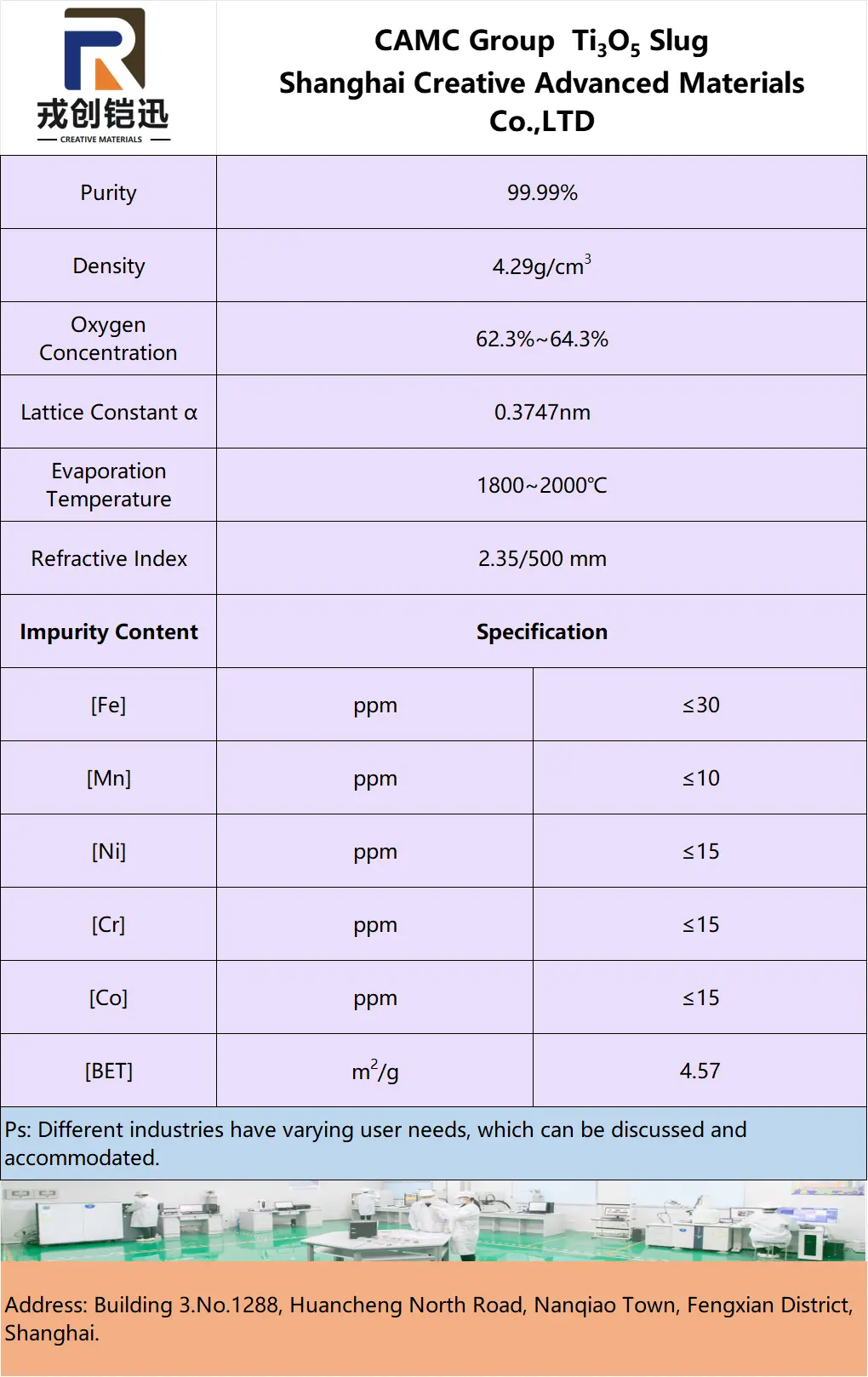
Property Table

Ti3O5 Slug properties and specifications table
description2

Frequently Asked Questions (FAQ)

What is the role of Ti₃O₅ in optical coatings?
As a high refractive index material, Ti₃O₅ is used to deposit titanium dioxide (TiO₂) films, which helps improve the light transmittance, reflectance, and damage resistance of optical devices such as camera lenses, microscopes, and laser systems.
How does Ti₃O₅ enhance the performance of wear-resistant coatings?
In Ti-Si-C plasma spray coatings, Ti₃O₅ is used as a secondary phase coexisting with TiC and Ti₅Si₃. This addition significantly improves coating hardness (up to 1980 HV) and enhances high-temperature oxidation resistance by 5 times compared to titanium alloys at 800°C.
What are the benefits of doping Ti₃O₅ in alumina bioceramics?
When doped in alumina (Al₂O₃) bioceramics used for artificial bone or dental implants made by DLP 3D printing, Ti₃O₅ enhances the mechanical strength, raising the compressive strength to 7.07 MPa, while ensuring excellent biocompatibility.
How does Ti₃O₅ function in nuclear reactor control rods?
Ti₃O₅ is compounded with rare earth oxides like Dy₂O₃ and Tb₄O₇ to form Tb₂TiO₅-Dy₂TiO₅ ceramics. Through high-energy ball milling and sintering, it achieves a low coefficient of thermal expansion, which optimizes radiation stability for nuclear reactor control rods.
Why is Ti₃O₅ added to Ti-4Si alloys?
Serving as an additive at 5wt%, Ti₃O₅ works in combination with Zr/Y₂O₃ to improve the alloy's thermal corrosion and wear resistance, making the material suitable for demanding high-temperature aero engine components.

Related Products