Advanced Material Solutions for Semiconductor, Aerospace, and Industrial Engineering
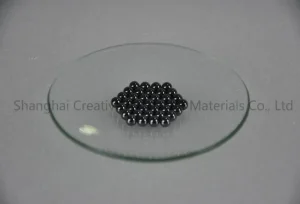
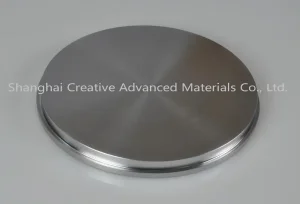
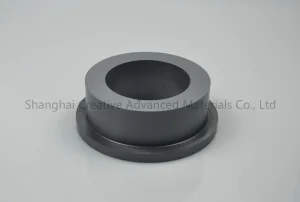
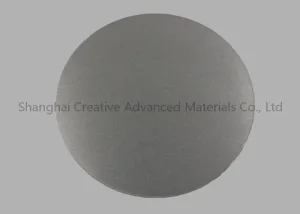
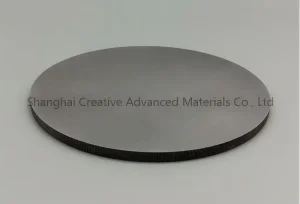
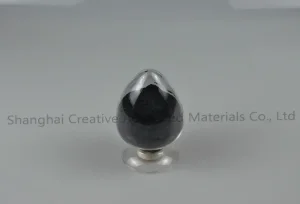
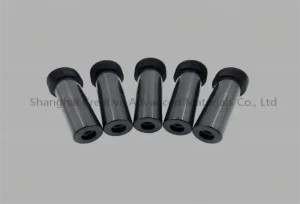
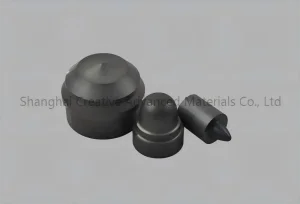
Boron Carbide (B4C), often known as "Black Diamond," is one of the hardest man-made materials on Earth. With a Vickers hardness exceeding 30 GPa, it ranks third behind diamond and cubic boron nitride. For the sandblasting industry, this means unparalleled wear resistance. Our B4C nozzles are engineered using Hot-Pressing Sintering (HPS) technology, ensuring a density near the theoretical limit of 2.52 g/cm³. This high density is crucial for resisting the high-velocity impact of aggressive abrasives like aluminum oxide and silicon carbide.
The global abrasive blasting market is shifting from traditional Tungsten Carbide (TC) to Boron Carbide (B4C). Procurement officers are increasingly prioritizing **TCO (Total Cost of Ownership)** over initial purchase price. While a B4C nozzle may cost more upfront, its service life is 5 to 10 times longer than TC, significantly reducing downtime and maintenance labor costs in automated production lines. In 2024-2025, we observe a 40% increase in demand for custom-length B4C liners for robotic blasting cells.
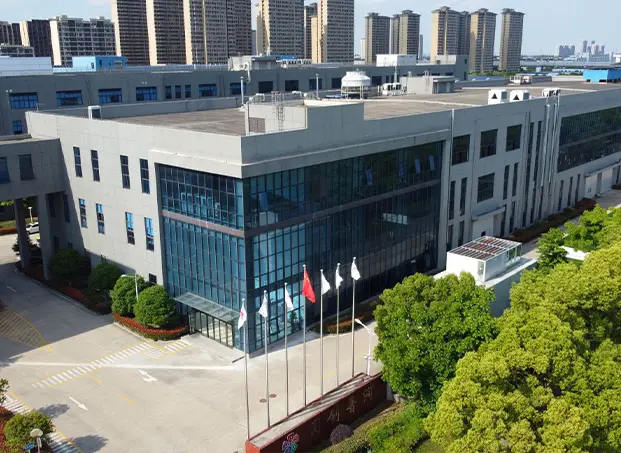
Established in the Shanghai Industrial Comprehensive Development Zone, we are a premier high-tech enterprise integrating R&D, production, and sales of advanced ceramic components and neutron absorption materials. With over 19 years of expertise, we serve the semiconductor, nuclear, and aerospace sectors with uncompromising quality.
Detailed comparison of service life across different abrasive media
| Material Type | Hardness (Mohs) | Estimated Life (Steel Grit) | Estimated Life (Al2O3) | Efficiency Rating |
|---|---|---|---|---|
| Boron Carbide (B4C) | 9.5+ | 750 - 1500 Hours | 200 - 500 Hours | ⭐⭐⭐⭐⭐ |
| Silicon Carbide (SiC) | 9.0 | 400 - 800 Hours | 100 - 300 Hours | ⭐⭐⭐⭐ |
| Tungsten Carbide (TC) | 8.5 | 200 - 400 Hours | 20 - 50 Hours | ⭐⭐ |
| Ceramic (Al2O3) | 8.0 | 10 - 30 Hours | 1 - 5 Hours | ⭐ |
How our B4C nozzles integrate into large-scale industrial ecosystems
In aerospace turbine blade manufacturing, precision is non-negotiable. Our B4C nozzles maintain a constant internal diameter for longer periods, ensuring uniform shot peening intensity (Almen strip consistency) which is vital for fatigue resistance compliance.
With the rise of EVs, large-scale sandblasting of aluminum battery trays for coating adhesion is a massive trend. Our bulk wholesale solutions provide OEMs with the reliability needed for 24/7 automated blasting lines.
Leveraging our expertise in neutron absorption (B10 isotope), we provide composite B4C components that serve dual purposes: structural wear resistance and radiation shielding in specialized environments.
Navigating international trade requires more than just a good product. Shanghai Creative provides:
We are investing 15% of annual revenue into R&D for next-generation ceramics:
The foundation of our 19-year reputation for excellence
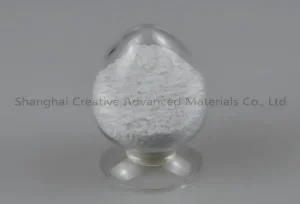
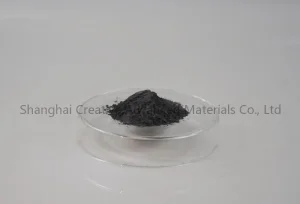
We strictly control the purity, particle size, and chemical composition stability to ensure the core performance of our B4C and SiC products.
Monitoring slurry concentration and composition uniformity to ensure powder loose tap density is optimal for pressing.
Using automated CIP to give the blank superior green strength and density consistency before the sintering stage.
Utilizing Hot Pressing Sintering (HPS) and Pressureless Sintering to reach maximum ceramic hardness.
Imported high-precision grinding equipment ensures the tightest tolerances for industrial nozzle fittings.
CMM size testing and performance verification for every batch of semiconductor and industrial ceramic components.
Technical insights for sandblasting professionals
B4C is extremely hard but brittle. Cracking usually occurs due to thermal shock or physical impact. Ensure your air is dry and the nozzle is mounted in a protective jacket (Aluminum or Urethane) to absorb external vibrations and impacts.
Hot-pressed B4C offers higher density (99%+) and better wear resistance, making it ideal for nozzles. Pressureless sintering is better for large, complex shapes but typically has slightly higher porosity.
Yes, but it is often "over-engineering." For soft abrasives like glass beads or walnut shells, Tungsten Carbide or even SiC might be more cost-effective. B4C excels when using Aluminum Oxide, Silicon Carbide, or Steel Grit.