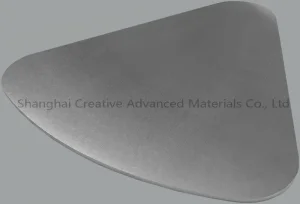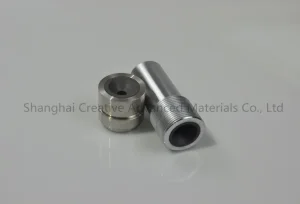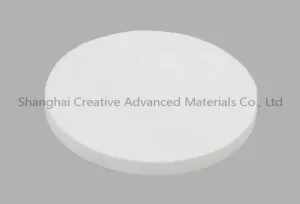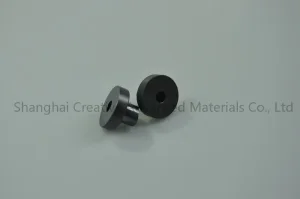
Engineered for the most demanding industrial environments
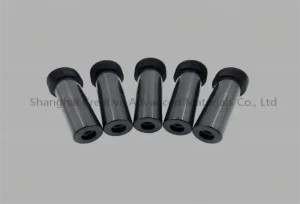
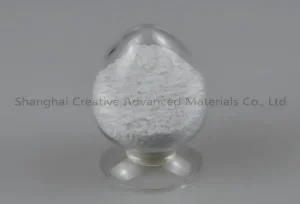
Boron Carbide (B4C), famously known as "Black Diamond," stands as one of the hardest materials known to man, second only to diamond and cubic boron nitride. In the landscape of modern industrial abrasive processing, the transition from tungsten carbide to Ultra-hard B4C ceramic nozzles represents a paradigm shift in operational efficiency and Total Cost of Ownership (TCO).
In 2024, the global demand for B4C components has surged by 15.4% YoY. This growth is driven by the semiconductor, nuclear, and aerospace sectors. Unlike traditional metals, B4C nozzles offer an extraordinary lifespan—often lasting 10 to 15 times longer than tungsten carbide under identical blasting conditions with aggressive abrasives like aluminum oxide or silicon carbide.
With a Vickers hardness exceeding 30 GPa, B4C remains stable under extreme mechanical stress, making it the premier choice for sandblasting and water-jet cutting.
B4C is a critical neutron absorber. Our nozzles and components are utilized in nuclear shielding and control rods due to the high neutron capture cross-section of the Boron-10 isotope.
At only 2.52 g/cm³, B4C is significantly lighter than steel or tungsten alloys, reducing centrifugal stress in rotating components and lowering shipping costs for bulk wholesale orders.
International buyers are no longer just looking for "suppliers"; they are looking for supply chain resilience. Procurement officers from Tier-1 industrial firms in Germany, the USA, and Japan prioritize three factors:
How Shanghai Creative Advanced Materials Leads with Efficiency
The "Made in China 2025" initiative has transformed ceramic manufacturing. At Shanghai Creative Advanced Materials Co., Ltd (SCA), we integrate Industry 4.0 protocols to ensure that every B4C nozzle leaving our factory meets the rigorous E-E-A-T standards required by global industries.
Utilizing Hot Pressing (HP) and Pressureless Sintering (PLS) controlled by AI algorithms to ensure uniform density and eliminate micro-cracks.
From raw B4C powder particle size analysis to final high-precision machining, every unit carries a unique serial number for full life-cycle tracking.
Our 19+ years of experience allow us to prototype custom geometries that Western factories often find too complex or costly to produce.
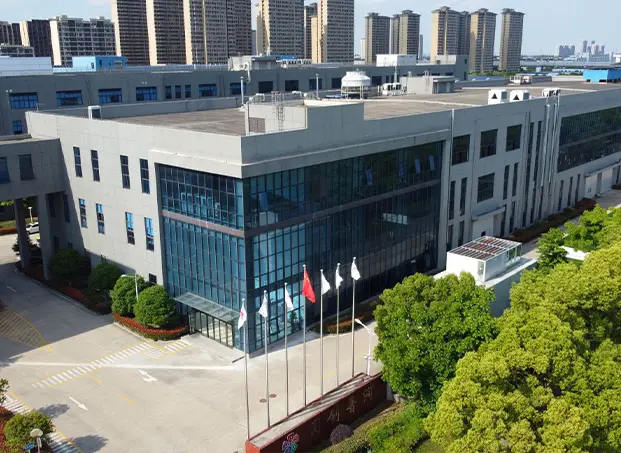
Established in the Shanghai Industrial Comprehensive Development Zone, SCA is a high-tech vanguard specializing in semiconductor ceramic targets, powder metallurgy targets, and advanced ceramic components. We integrate R&D, production, and sales to provide neutron absorption materials and polymer solutions to a global clientele.
Our commitment to quality is unparalleled. SCA provides full record traceability from raw materials to final products. Serial numbers are assigned to every single unit, ensuring that our innovative, ready-to-run solutions meet the most demanding applications in modern engineering.
Why B4C Outperforms Traditional Materials
| Property | Boron Carbide (B4C) | Tungsten Carbide | Alumina (Al2O3) |
|---|---|---|---|
| Density (g/cm³) | 2.52 (Ultra-Light) | 15.6 (Heavy) | 3.95 (Moderate) |
| Knoop Hardness (HK) | 2900 - 3500 | 1300 - 2000 | 1800 - 2000 |
| Wear Life Index | 100 (Baseline) | 5 - 10 | 20 - 30 |
| Chemical Resistance | Excellent (All Acids) | Fair | Good |
The Lifecycle of a Precision Component
We control purity, particle size, and chemical stability to ensure the foundation of the ceramic is flawless.
Maintaining slurry concentration and uniformity via automated monitoring of particle size distribution.
Using automated presses to form the blank, granting superior strength and consistency across batches.
Options include Hot Pressing, Pressureless, and Isostatic Pressing to meet specific density requirements.
Imported high-precision equipment ensures that even the most complex nozzle geometries are accurate to the micron.
Equipped with CMM size testing and ceramic performance analysis to validate every specification.
Real-World Utility of B4C Solutions
Used in downhole tools and oilfield valves where sand erosion and high-pressure chemical exposure would destroy standard steel components in days.
Massive hull sandblasting requires nozzles that don't widen during the process. B4C ensures a constant spray pattern for uniform surface preparation.
B4C grinding materials and ceramic components are essential for wafer processing due to their extreme hardness and non-contaminating properties.
While SiC is an excellent material, B4C typically lasts 3 to 5 times longer when using hard abrasives like Aluminum Oxide. For high-volume industrial plants, the reduced downtime for nozzle changes significantly offsets the higher initial cost of B4C.
B4C is brittle compared to metals. It should not be used in applications where the nozzle is subjected to heavy mechanical impact (like being dropped or hit by a hammer). However, its wear resistance under abrasive flow is unmatched.
Yes. With our imported high-precision processing equipment, we can manufacture custom venturi nozzles, curved nozzles, and specialized inserts based on your CAD drawings.
Hot-pressing typically achieves higher density (98%+) and better mechanical properties, making it ideal for the highest-wear applications. Pressureless sintering is more cost-effective for complex shapes and bulk production where moderate wear resistance is sufficient.
Explore our library of technical ceramic applications and engineering guides.
Read All News →Premium solutions for sputtering and material research