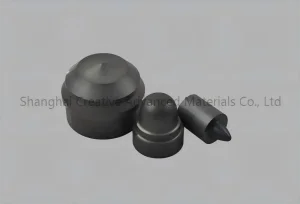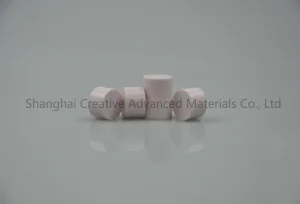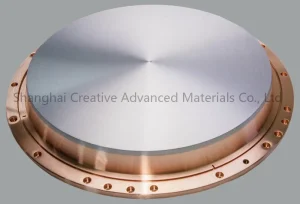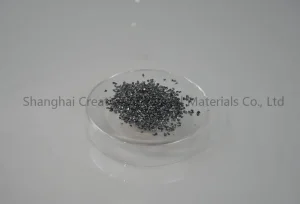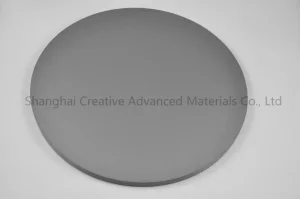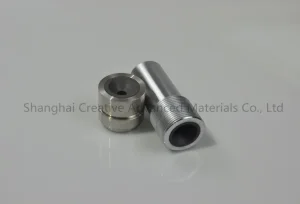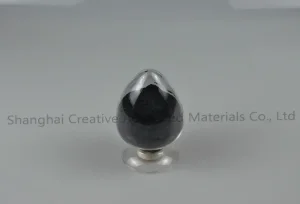
High-purity targets and specialized ceramic components for critical industrial applications.
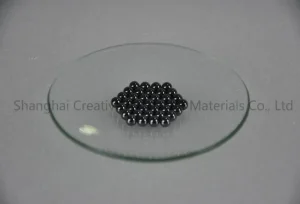
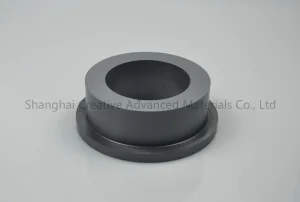
Silicon Nitride (Si3N4) has emerged as the "super-material" of the 21st-century ceramics industry. Known for its exceptional combination of high strength, fracture toughness, and thermal shock resistance, Si3N4 is fundamentally reshaping the landscape of high-stress industrial applications. As leading China Si3N4 ceramic suppliers and factories, the demand for precision-engineered components has shifted from basic structural parts to complex, high-performance functional modules in the semiconductor, EV, and aerospace sectors.
The global Silicon Nitride market is currently experiencing a compound annual growth rate (CAGR) of over 7.2%. This growth is primarily driven by the transition to 800V architectures in electric vehicles and the miniaturization of semiconductor nodes. China has solidified its position as a primary manufacturing hub, transitioning from low-cost production to high-E-E-A-T (Expertise, Authoritativeness, Trustworthiness) value-added manufacturing. Modern factories in Shanghai and industrial zones across China are now competing directly with Japanese and German counterparts in terms of purity levels and machining precision.
The technical roadmap for Si3N4 involves three critical pillars: Powder Synthesis, Sintering Optimization, and Precision Finishing.
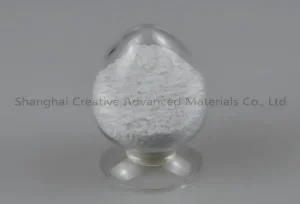
Controlling the alpha-to-beta phase ratio and minimizing oxygen content are paramount. We ensure the stability of raw materials by monitoring particle size distribution at a sub-micron level.
Utilizing Hot Pressing (HP) and Pressureless Sintering to achieve near-theoretical density (3.2 g/cm³), ensuring zero porosity in critical functional parts.
Imported high-precision equipment allows for tolerances within ±0.001mm, essential for semiconductor ceramic components and valve cores.
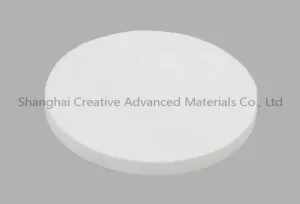
Shanghai Creative Advanced Material Co., Ltd, established in Shanghai Industrial Comprehensive Development Zone, is a high-tech company that integrates the research and development, production, and sales of semiconductor ceramic targets, powder metallurgy targets, and ceramic components. Our commitment to Top Quality and Professional Design enables us to be the excellent partner of advanced ceramics development.
SCA provides full record traceability from raw materials to final products. Serial numbers are assigned to every single unit, ensuring total transparency and reliability. Many of our programs have been patented, reflecting our position at the forefront of material science.
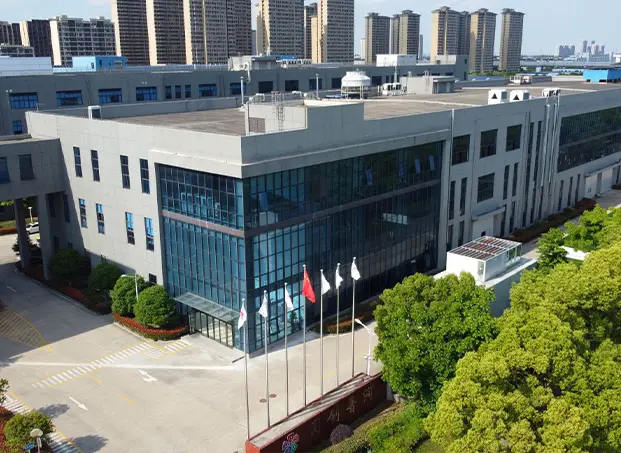
Precision-managed processes ensuring the highest industrial E-E-A-T standards.

Control of purity, particle size, and chemical composition stability.

Monitoring slurry concentration and particle size distribution.

Automated pressing for superior strength and consistency.

Hot pressing, pressureless, and reaction sintering methods.

High-precision equipment ensuring component accuracy.

CMM size testing and ceramic performance verification.

Dust-free workshop and semiconductor cleaning lines.

Global export qualifications and reliable partners.
Utilizing Boron Carbide (B4C) and Gadolinium Oxide as neutron absorption materials. B4C's hardness is second only to diamond, making it ideal for shielding and individual soldier protection.
Silicon Carbide (SiC) and Silicon Nitride components are applied to tank armor, helicopter protection, and rocket engine nozzles due to their lightweight and extreme heat resistance.
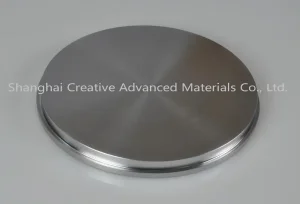
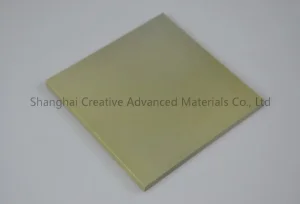
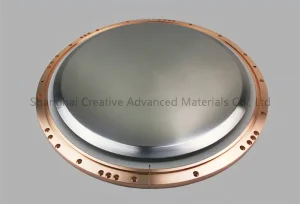
From PVD targets (WTi, Cr, W) to ceramic end effectors, our materials enable high-purity environments required for the latest wafer processing technologies.
Expert insights into Silicon Nitride and Advanced Ceramic Sourcing.
Exploring our full range of advanced ceramic solutions and powder metallurgy.