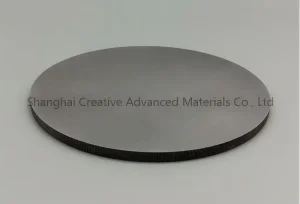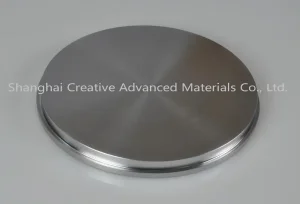
In the landscape of modern thin-film deposition, FeCoTa (Iron-Cobalt-Tantalum) PVD targets represent a pinnacle of material science engineering. As the global demand for high-density magnetic recording media and advanced sensors surges, the role of these specialized alloy targets has transitioned from niche components to critical strategic assets. The combination of Iron (Fe) for high magnetic saturation, Cobalt (Co) for thermal stability and coercivity, and Tantalum (Ta) as a grain-refining dopant, creates a synergistic material capable of meeting the rigorous requirements of Spintronics and Magnetoresistive Random Access Memory (MRAM).
Currently, the global PVD target market is undergoing a seismic shift. Western electronics manufacturers are increasingly looking toward China for high-purity alloy synthesis. The integration of FeCoTa targets into the manufacturing workflows of Hard Disk Drive (HDD) heads—particularly for HAMR (Heat-Assisted Magnetic Recording)—requires a level of microstructural homogeneity that only state-of-the-art Vacuum Induction Melting (VIM) and Hot Isostatic Pressing (HIP) can achieve. Chinese manufacturers, led by innovators like Shanghai Creative Advanced Materials, have bridged the quality gap, offering targets with purity levels reaching 99.99% (4N) and beyond.
Optimized Fe-Co ratios ensure maximum magnetic flux density for read-write operations.
Tantalum additions prevent grain growth at elevated temperatures during the sputtering process.
Advanced powder metallurgy ensures zero segregation of alloy phases.
Shanghai Creative Advanced Material Co.,Ltd, established in Shanghai Industrial Comprehensive Development Zone, is mainly engaged in semiconductor ceramic targets, powder metallurgy targets, and ceramic components; Advanced ceramic materials and products; Polymer materials and products; A high-tech company that integrates the research and development, production, and sales of neutron absorption materials.


The efficiency of China-based FeCoTa target manufacturers is not merely rooted in cost reduction, but in the rapid vertical integration of the supply chain. In the Shanghai Industrial Comprehensive Development Zone, the proximity of raw material refineries to precision machining facilities creates a "Lean Manufacturing" ecosystem that reduces lead times by 30-40% compared to European or North American counterparts.
Technical Precision & Efficiency: China’s investment in automated Hot Isostatic Pressing (HIP) technologies allows for the production of FeCoTa targets with theoretical densities exceeding 99%. For global procurement teams, this translates to less particulate contamination during sputtering and longer target life-cycles. Furthermore, the localized application of high-precision CNC machining ensures that targets fit perfectly into various cathode systems, including Kurt J. Lesker, Angstrom, and custom industrial-scale arrays.

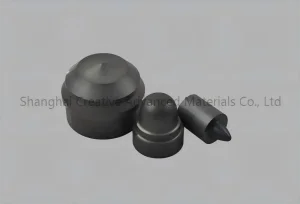
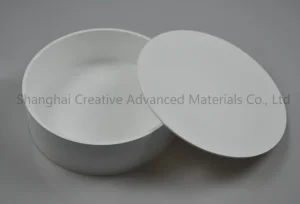
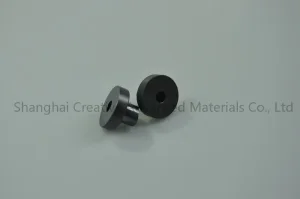
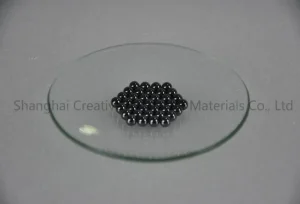
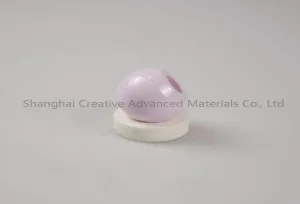
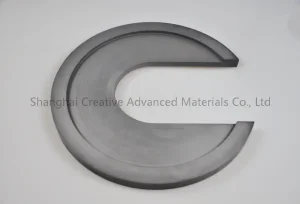
High-performance Silicon Carbide and Alumina precision parts.

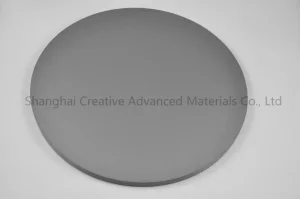
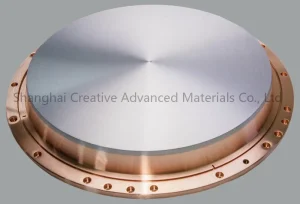
Tungsten, Molybdenum, and FeCoTa alloy sputtering targets.

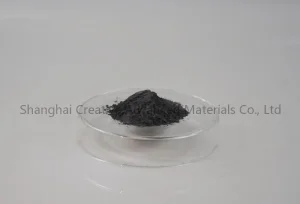
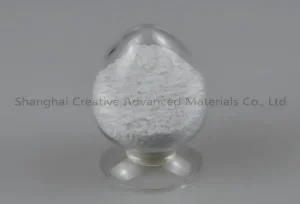
Premium B4C and SiC powders for industrial research.
The versatility of FeCoTa PVD targets allows them to be utilized across diverse localized scenarios:
In MRAM production, FeCoTa thin films serve as the free layer or pinned layer, where precise control over the Tantalum concentration determines the switching speed and data retention of the memory cell.
Used in automotive ABS systems and industrial automation, where Iron-Cobalt alloys provide the necessary sensitivity to detect minute changes in magnetic fields.
FeCoTa films are applied in aerospace electronics to protect sensitive circuitry from external magnetic interference, leveraging the alloy's high permeability.
Control of purity, particle size, and chemical stability.
Monitoring particle size distribution and loose tap density.
Automated press forming for blank strength and consistency.
Hot pressing, pressureless, and isostatic pressing methods.
Imported high-precision equipment for dimensional accuracy.
CMM size testing and full ceramic performance analysis.
Dust-free workshop packaging to ensure zero contamination.
Global export qualifications with trusted logistics partners.
As we move towards 2030, the PVD target industry is being reshaped by three major trends:
Shanghai Creative Advanced Materials is at the forefront of these trends, investing in Plasma Spark Sintering (SPS) to create targets with even finer grain structures, facilitating higher deposition rates and more uniform film thickness across 12-inch wafers.
Localized sintering technologies drive upgraded zirconia ceramic industry in China.
New breakthroughs in hot pressing for complex alloy target production.
Understanding the cost-to-performance ratio in ceramic component manufacturing.