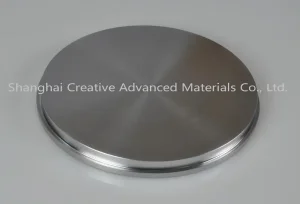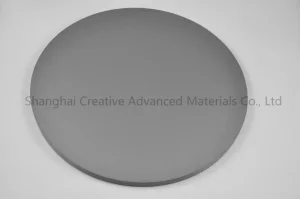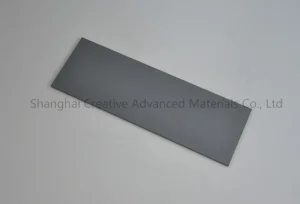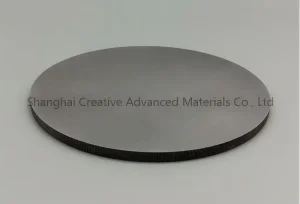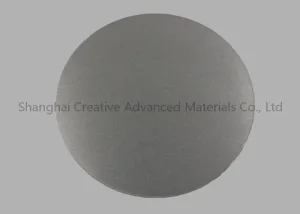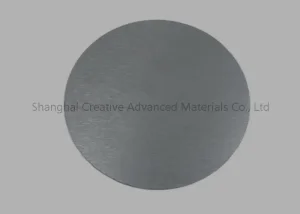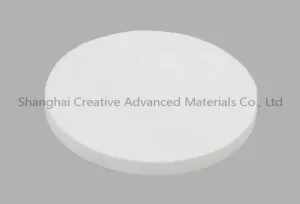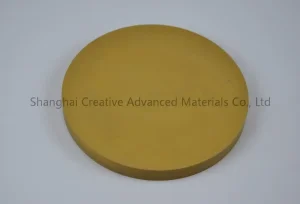
Engineered via hot isostatic pressing to deliver unparalleled material density and sputtering stability for the region's top tool-coating and decorative hardware operations.
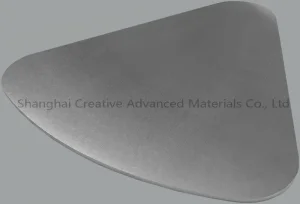
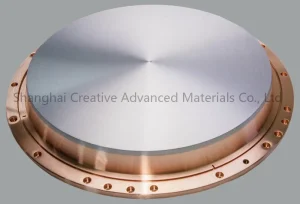
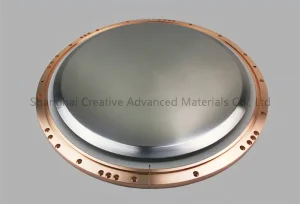

As Nigeria pursues economic diversification, the nation's manufacturing sector is transforming. Leading industrial zones in Ogun State (Agbara, Sagamu), Lagos (Ikeja, Lekki Free Zone), Kano, and Port Harcourt are shifting toward high-tech production. Hard thin-film protective coatings, low-emissivity (low-E) architectural glass, and electronic component manufacturing are emerging drivers. Standard electroplating methods are being replaced by Physical Vapor Deposition (PVD) to improve component lifespan, wear resistance, and thermal durability.
In this industrial environment, powder metallurgy sputtering targets are essential materials. Traditional cast metallurgical targets often feature coarse grain structures and internal micro-voids, leading to unstable sputtering rates and defect-prone thin films. Our hot isostatically pressed targets deliver the uniform density and ultra-fine grain structures required by modern PVD equipment. This enables Nigerian factories to achieve precise film deposition on drilling tools, decorative metal hardware, automotive components, and glass substrates.
Drill bits, valve components, and high-pressure subsea hardware in Port Harcourt rely on Cr, Ti, and Mo coatings to withstand highly corrosive marine and underground environments.
Nigerian architectural hardware and aluminum profile extruders use CrSi and MoTi alloy targets for durable decorative coatings that resist tropical humidity and oxidation.
As Nigeria expands grid capacity, manufacturing solar PV panels locally requires reliable oxides (ZnO, MgZnO) and metals (W, Mo) for transparent conductive coatings.
Leveraging 19+ Years of Metallurgy Experience to Support Nigeria's Advanced Industrial Development
Established in the Shanghai Industrial Comprehensive Development Zone, Shanghai Creative Advanced Materials Co., Ltd. (SCA) manufactures semiconductor ceramic targets, powder metallurgy targets, advanced ceramic components, and neutron absorption materials. We provide global supply chains with high-purity materials designed for critical applications.
We trace materials from raw powders to completed sputtering targets. Every unit features a serial number linked to its raw material batch, chemical composition analysis, and density inspection. We provide Nigerian manufacturers with consistent targets that minimize downtime on import lines.
Our production facilities feature high-temperature forming equipment, including hot-pressing sintering, pressureless sintering, and cold isostatic pressing. We supply high-purity targets (up to 99.999% purity) for microelectronics, flat panel displays, solar cell layers, and industrial wear coatings.
Our systematic quality assurance process ensures that every target delivered to Lagos, Abuja, or Port Harcourt meets exact industrial specifications.
We source raw metal and ceramic powders, validating purity, grain size distribution, and chemical stability before production.
Slurry concentration is controlled using automated spray granulators to produce uniform spherical granules with optimal flow properties.
We utilize high-pressure Cold Isostatic Pressing (CIP) to compact the raw powders, ensuring uniform density in the green body.
We apply Vacuum Hot Pressing, Pressureless Sintering, or Reaction Sintering to consolidate the targets at temperatures up to 2200°C.
High-precision CNC equipment is used to machine targets to final dimensions (up to 300mm diameter and custom shapes) within micron tolerances.
We verify density and dimensions using Coordinate Measuring Machines (CMM) and perform ultrasonic bonding inspections.
Cleaned in semiconductor-grade ultrasonic baths, targets are vacuum-sealed in cleanroom environments to prevent oxidation.
Securely packed in shockproof, moisture-barrier wooden crates, products are dispatched to West Africa via reliable logistics routes.
Specialized compounds designed for high-stress applications, including armor protection, industrial wear parts, and electrical insulation.
With a hardness second only to diamond, Boron Carbide is used for body armor, military vehicle protection, and nuclear neutron absorption. Its extreme resistance to wear makes it ideal for manufacturing sandblasting nozzles and precision semiconductor grinding media.
Highly thermal-conductive and chemical-resistant, Silicon Carbide is utilized in semiconductor processing, solar cell fabrication, and LED manufacturing. In Nigeria's mineral processing sector, SiC components help reduce wear in high-temperature valves and pumps.
Widely used for industrial insulation, Alumina offers excellent electrical resistance and high mechanical strength at elevated temperatures. It is a key material for wear-resistant ceramic liners, kiln tubes, and thin-film passivation layers on solar PV cells.
Often called "white graphite," Boron Nitride provides high temperature stability, electrical insulation, and chemical inertness. It is utilized in aerospace components, metal melting crucibles, and high-temperature lubrication, making it ideal for glass and metal extrusion processes in Nigeria's expanding fabrication facilities.
For industrial operators in Ogun State, Ikeja, and Port Harcourt, importing materials requires high reliability. Quality issues with sputtering targets—such as cracking, localized hotspots, or outgassing—can delay production schedules.
Our manufacturing facility mitigates these risks through structured process control. By controlling grain growth during hot pressing, we minimize target spitting during high-power sputtering. This enables thin-film coaters to run continuously without premature target replacement. We bonding metallic targets to oxygen-free copper backing plates using high-grade indium, ensuring thermal transfer during high-power runs.
Request Technical DatasheetProviding end-to-end shipping support to ensure smooth import operations at Lagos ports and air cargo hubs.
We prepare compliance documentation, including test reports and chemical purity certifications, to support SONCAP (Standards Organisation of Nigeria Conformity Assessment Programme) approvals.
High-purity target materials like Cr, W, and alloy targets are vacuum-sealed in double-layer polyethylene with industrial desiccants to prevent exposure to maritime humidity during shipping.
We offer sea freight to Lagos (Apapa/Tin Can Island) for large-volume orders and air cargo to Murtala Muhammed International Airport (LOS) for time-critical replacement parts.
Technical information and answers for factory engineers and procurement managers operating in West Africa.
Powder metallurgy (utilizing methods like HIP or vacuum hot pressing) produces targets with uniform composition and fine, equiaxed grain sizes. Cast targets often suffer from grain segregation, dendrite growth, and internal micro-voids. For multi-element alloys (such as WTi, MoTi, or CrSi), powder metallurgy is necessary to ensure uniform sputtering rates and prevent film composition drift.
High-purity metallic and ceramic targets should be stored in their original vacuum packaging within a temperature-controlled, low-humidity cabinet (relative humidity below 30%). Once opened, targets must be stored in a vacuum desiccator or under dry nitrogen purge. Exposure to high humidity can lead to surface oxidation and moisture adsorption, which increases vacuum pump-down times and causes film contamination.
Higher target density (above 99% relative density) reduces micro-pores in the material. During high-power sputtering, micro-pores can cause localized electrical arcing, which damages the substrate by producing micro-droplets (spitting). High-density targets also offer improved thermal conductivity, allowing higher power densities and deposition rates without cracking.
Indium has high thermal conductivity (81.8 W/m·K) and low shear strength, which allows it to absorb differences in thermal expansion between the target material and the copper backing plate. This prevents target warping and cracking during high-power sputtering. We recommend indium bonding for targets exposed to power densities exceeding 5 W/cm².
Every shipment includes a Certificate of Analysis (COA) detailing the chemical purity (measured via GDMS or ICP-OES), dimensions, relative density, and ultrasonic bonding inspection report (if bonded). We also provide packing lists and documentation to support local customs clearance and SONCAP processing.
Explore our complete range of high-performance sputtering targets, configured for wear-resistant coatings, optoelectronics, and microelectronics.