High-purity advanced powders & slugs optimized for Houston's aerospace and microelectronics manufacturing facilities.
Providing the critical thermodynamic and tribological answers to the Gulf Coast's most challenging environments.
As the undisputed energy capital of the world and home to NASA’s Johnson Space Center, the Houston metropolitan area operates under environmental stresses that demand next-generation materials. Traditional steels and basic superalloys consistently meet their operational limits in deep-bore drilling, corrosive offshore platforms, and rocket propulsion chambers. This is where advanced ceramic materials transition from research curiosities to fundamental industrial necessities.
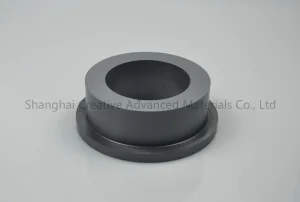
Modern downhole drilling requires materials that can withstand pressures exceeding 20,000 psi and temperatures above 200°C, combined with abrasive sand flow and highly acidic hydrogen sulfide (H₂S) gas. Ceramic powders, specifically Boron Carbide (B₄C) and Silicon Carbide (SiC), are sintered to create valve seats, sandblasting nozzles, and mechanical seals that outperform cobalt alloys by factors of ten. Our products deliver the structural integrity, extreme hardness (second only to diamond for B₄C), and thermal resistance needed to secure reliable oilfield operations across the Gulf Coast.
On a macro scale, the global advanced ceramics market is witnessing an unprecedented CAGR driven by the semiconductor transition and the shift towards green energy. As Houston positions itself as a clean energy and carbon-capture tech hub, the demand for precision ceramic components and ultra-pure sputtering targets is scaling exponentially. Sputtering targets, such as W, WSi, and MoSi target alloys, are the building blocks of the microchips driving automation in smart grids, energy-efficient vehicles, and advanced defense systems.
To serve this local demand, Shanghai Creative Advanced Materials Co., Ltd. (SCA) couples global manufacturing scale with highly localized logistics. By partnering with local Houston warehouses and shipping agencies, we guarantee compliance with API (American Petroleum Institute), ASTM, and ASME standards. This ensures that every shipment of refractory ceramic powder or precision targets integrates seamlessly into local production lines without regulatory friction.
Empirical physical properties and typical chemical analysis profiles for engineering design verification.
| Material Type | Purity Grades Available | Density (g/cm³) | Vickers Hardness (HV) | Key Industrial Use Case | Primary Thermal Limit |
|---|---|---|---|---|---|
| Boron Carbide (B₄C) | 95% - 99.5% (Industrial & Nuclear) | 2.52 | > 3000 | Neutron shielding, oilfield sandblasting nozzles | 1200°C (Air) / 2200°C (Inert) |
| Silicon Carbide (SiC) | 98.5% - 99.9% (Sub-micron available) | 3.21 | 2200 - 2800 | Refractory lining, semiconductor process parts | 1600°C (Air) |
| Alumina (Al₂O₃) | 99% - 99.99% (Sputtering target grade) | 3.95 | 1600 - 1800 | Dielectric thin films, aerospace high-temp insulation | 1750°C (Air) |
| Boron Nitride (BN) | 99% - 99.5% (Hexagonal / Hot Pressed) | 2.10 - 2.25 | < 50 (Soft, highly machinable) | Crucibles, molten metal casting mold release | 900°C (Air) / 2000°C (Inert) |
| Silicon Al Alloy (Si-Al) | 99.9% - 99.999% (PVD target) | Dependent on Ratio | Alloy Dependent | Optical coatings, semiconductor metallization | 550°C (Melting limit) |


Established in the Shanghai Industrial Comprehensive Development Zone, Shanghai Creative Advanced Materials Co., Ltd. (SCA) has emerged as a premier developer of high-purity ceramic targets, powder metallurgy targets, and customized ceramic structural components. Our mission centers on engineering specialized solutions for high-demand, high-stress operating environments worldwide.
Our production facility integrates the full supply-chain sequence from initial powder purification and atomized spray granulation, through Cold Isostatic Pressing (CIP), to specialized high-temperature vacuum sintering processes (SPS, HIP, and Pressureless Sintering). Backed by ISO 9001 and ISO 14001 international standards, we ensure that every batch of advanced ceramic targets or industrial powders meets strict microstructural purity and particle consistency metrics.
Connect With Our Houston Liaison Team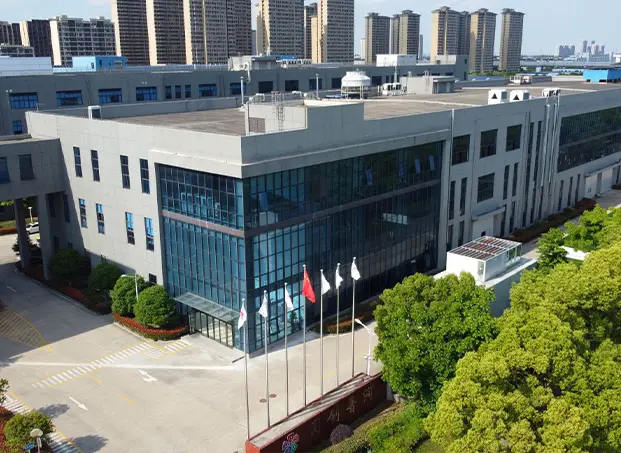
Discover the physical characteristics and structural benefits of our four primary ceramic platforms.

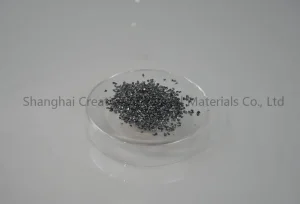
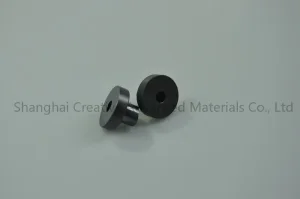
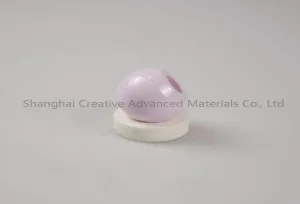
Artificially synthesized with diamond-level hardness. Essential for personnel protection armor, tank shields, aerospace impact plates, and nuclear fuel rod neutron absorbing matrices.
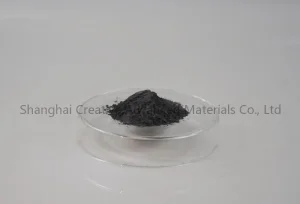
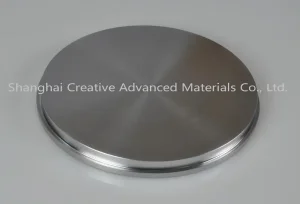
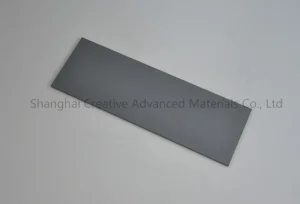
High thermal conductivity coupled with extreme mechanical toughness. Ideal for precision semiconductor lithography rings, chemical process mechanical pump faces, and aerospace nozzles.
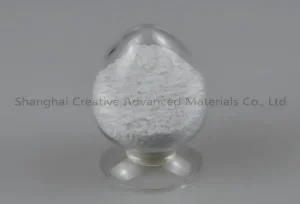
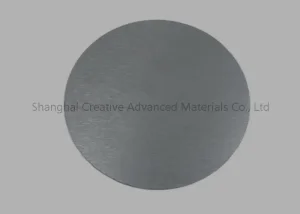
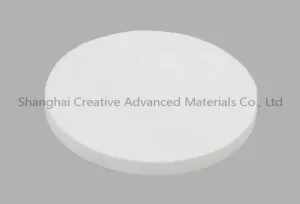
Superior dielectric strength and high chemical inertness. Deployed in high-voltage isolators, plasma-facing chamber components in semiconductor fabs, and general industrial wear sleeves.
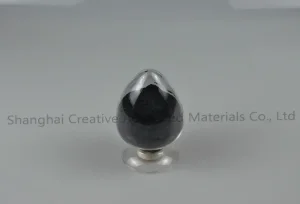
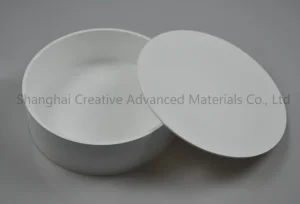
Superb electrical insulation properties combined with excellent machinability. Features non-wetting properties with molten metals, making it the premier choice for crucible manufacture.
Quality control, engineering support, and dependable logistics engineered to reduce down-time.

Our commitment to rigorous QA systems and deep manufacturing traceability ensures SCA remains an ideal materials partner. We provide full serial-numbered certification from raw chemicals to final sintered products. Patent-backed technologies guarantee microstructural homogeneity in targets.

Time is critical in heavy engineering. We partner with reliable oceanic and air carriers serving Port Houston and George Bush Intercontinental Airport (IAH). Every container is custom-packed to avoid transport damage and moisture ingress.

SCA adapts target geometries, bonding layers, and powder particle distributions to meet specific engineering criteria. Our engineers collaborate directly with project managers to select the optimum dopant or matrix ratio for extreme stress profiles.

Specialized materials require continuous expert support. We supply direct technical consulting for target utilization, shielding setups, and crucible handling. Our after-sales engineers guide you on optimal sputtering parameters and cooling sequences.
Our 8-stage manufacturing process ensures dimensional precision and strict trace impurity monitoring.

We test chemical composition, particle size distribution, and crystalline purity of incoming precursors to guarantee a clean matrix baseline.

Using specialized spray dryers, we control slurry concentration to construct uniform, free-flowing granular powders perfect for pressing.

High-tonnage automatic presses and Cold Isostatic Pressing (CIP) molds deliver uniform green body density and high dimensional consistency.

We deploy pressureless, reaction-bonded, hot-pressing, and vacuum gas-pressure sintering techniques depending on target component specs.

Equipped with advanced multi-axis grinding and diamond tooling machinery to finish targets and structural parts within strict design tolerances.

We perform non-destructive ultrasonic defect scanning, dimensional checks via CMM, mechanical strength tests, and trace chemical ICP-MS analysis.

Ultrasonic cleaning runs inside dust-free cleanrooms. This prevents surface hydrocarbon or particulate deposition before vacuum packaging.

Our dedicated compliance department prepares custom packing arrays and detailed clearance documentation to facilitate smooth export pathways.
High-performance targets and sintered assemblies designed to meet demanding metallurgical and semiconductor requirements.
Corrosion-resistant ceramics and custom sputtering targets for advanced optical applications.
Read about recent materials engineering breakthroughs and sintering technology updates.

Discover how localized sintering systems are driving cost reductions and performance updates across modern zirconia products.

Analyzing microstructural crystallization under hot isostatic pressing compared to conventional pressureless methods.

Evaluating thermal profiles and mechanical shear limits of pressureless sintered boron carbide parts in sandblast configurations.
Answers to crucial structural and procurement questions for engineering team leads.
Boron Carbide exhibits extreme hardness (Vickers hardness exceeds 3000 HV), making it highly resistant to abrasive wear from sand and geological fragments. It is ideal for wear liners and nozzle orifices. However, because of its low fracture toughness compared to steel, B₄C is typically designed as an insert inside a steel casing to prevent mechanical failure from impact shocks.
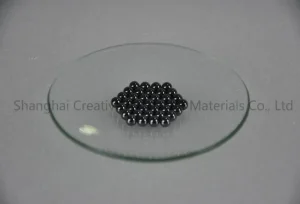
SiC grinding balls feature higher density and hardness than standard alumina, which translates to shorter milling cycles and reduced contamination in ultra-fine grinding setups. Additionally, SiC is highly resistant to acid and alkaline attack, preserving powder purity in pharmaceutical, semiconductor, and paint manufacturing processes.
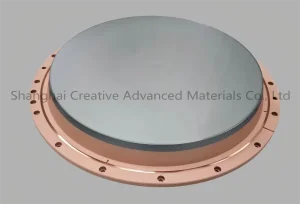
For high-power deposition setups utilizing materials with high thermal expansion mismatch (such as WSi or Cr targets), we recommend metallic indium bonding to a copper backing plate. This setup handles thermal stresses effectively, ensuring reliable heat transfer and protecting the ceramic target face from cracking under thermal stress.
For semiconductor target options (such as tungsten target or chromium target setups), we analyze alkali metal ions (Na, K, Li), heavy transition metals (Fe, Ni, Cu), and radioactive elements (U, Th) down to parts-per-billion (ppb) levels via ICP-MS. This prevents contamination of the active silicon wafer matrix during thin-film deposition.
Typical lead time for customized targets or sintered ceramic parts ranges between 4 to 6 weeks from approval of final drawings. Shipping to Houston is managed using moisture-barrier vacuum packaging. Our logistics team handles all US Customs and Border Protection clearance documentation, delivering directly to your facility in the Energy Corridor or Houston Spaceport.
Speak directly with our materials engineers to specify target compositions, custom grain sizes, and structural ceramic tolerances designed for your applications.
Send Inquiry Now