Explore our specialized range of high-performance targets, sintered ceramic parts, and advanced powders tailored for global industrial application standards.
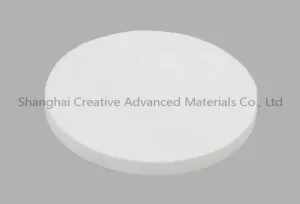
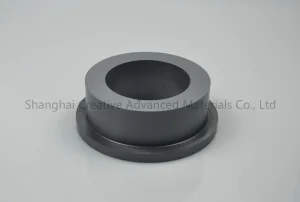
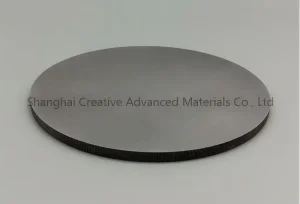
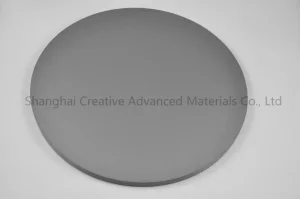
Understanding high-purity aluminum oxide (Al₂O₃) as the foundational material for modern extreme-environment fluid dynamics and thermal shielding.
In modern industrial manufacturing, components are constantly subjected to extreme operational stresses: mechanical wear, abrasive media, chemical erosion, electrical breakdown, and thermal cycling. Among structural technical ceramics, Alumina (Al₂O₃) stands out as one of the most reliable and cost-effective solutions. Alumina nozzles, manufactured by Shanghai Creative Advanced Materials Co., Ltd. (SCA), utilize advanced sintering and powder processing to optimize the alpha-alumina crystalline structure. By refining grain size distributions and minimizing residual porosity, SCA produces nozzles that offer high hardness, chemical inertness, and thermal shock resistance.
The performance of an alumina nozzle is dictated by its purity level and microstructural integrity. Standard industrial grades usually start at 95% Al₂O₃, which is suitable for standard welding shields and wire-drawing guides. However, high-end applications like semiconductor plasma etching, sandblasting, waterjet cutting, and gas atomization require 99% to 99.7% high-purity alumina. These high-purity formulations eliminate silica-based glassy phases at the grain boundaries, which are often susceptible to chemical attacks and mechanical failure under heat. As a leading manufacturer in the Shanghai Industrial Comprehensive Development Zone, SCA leverages advanced pressing and firing controls to ensure every nozzle meets these demanding standards.
Alumina ceramics feature a Vickers hardness exceeding 15-18 GPa (Mohs scale 9), making them highly resistant to high-velocity abrasive particles and physical erosion.
The chemical stability of alpha-phase alumina provides resistance to corrosive liquids, molten metals, and fluorine-based cleaning gases in semiconductor chambers.
With a melting point over 2050°C and high dielectric strength, Al₂O₃ nozzles maintain structural integrity and electrical insulation under extreme voltages and thermal gradients.
Analyzing the international market demand, supply chain dynamics, and structural adoption across key regions.
The global demand for high-performance ceramic nozzles has experienced steady growth, driven by expansion in the semiconductor, aerospace, automotive, and metallurgical sectors. In the Asia-Pacific region, spearheaded by foundry expansions in Taiwan, South Korea, China, and Japan, demand centers on high-purity alumina and silicon carbide components for thin-film deposition and plasma processing. Simultaneously, in North America and Western Europe, high-velocity oxygen-fuel (HVOF) spraying, thermal barrier coating (TBC) applications, and high-precision abrasive blasting rely on wear-resistant ceramic nozzles to minimize process downtime.
According to industrial supply chain metrics, sourcing ceramic nozzles from a verified Chinese factory offers structural cost-performance advantages without sacrificing technical quality. Organizations like Shanghai Creative Advanced Materials Co., Ltd. (SCA) supply global buyers with traceable, ISO-certified ceramic materials. As international logistics and quality standards align (e.g., DIN, ASTM, JIS), the commercial preference has shifted toward integrated manufacturers capable of powder synthesis, green body shaping, sintering, and micron-level diamond grinding under one roof. This minimizes dimensional tolerance variance and ensures consistency across large, repeat orders.
A rigorous breakdown of the eight critical manufacturing steps employed at the SCA Shanghai production facility.
Traceability validation of purity, particle size, and chemical composition stability to establish a reliable baseline.
Slurry concentration optimization and binder formulation to produce uniform, spherical powders for pressing.
Utilizing automated dry presses and Cold Isostatic Pressing to compact blanks with consistent density distribution.
Advanced atmospheric pressureless, reaction-bonded, or hot-pressed sintering processes targeting zero open-porosity.
State-of-the-art CNC diamond grinding to achieve sub-micron dimensional accuracy on custom nozzle profiles.
CMM dimensional inspection, dye penetrant crack checking, and microstructural analysis to verify physical properties.
Dedicated semiconductor-grade ultrasonic cleaning and dust-free packaging to prevent particulate contamination.
Global export packaging, impact-resistant crating, and reliable tracking for international delivery.
Comparing high-performance materials to guide application-specific nozzle selection.
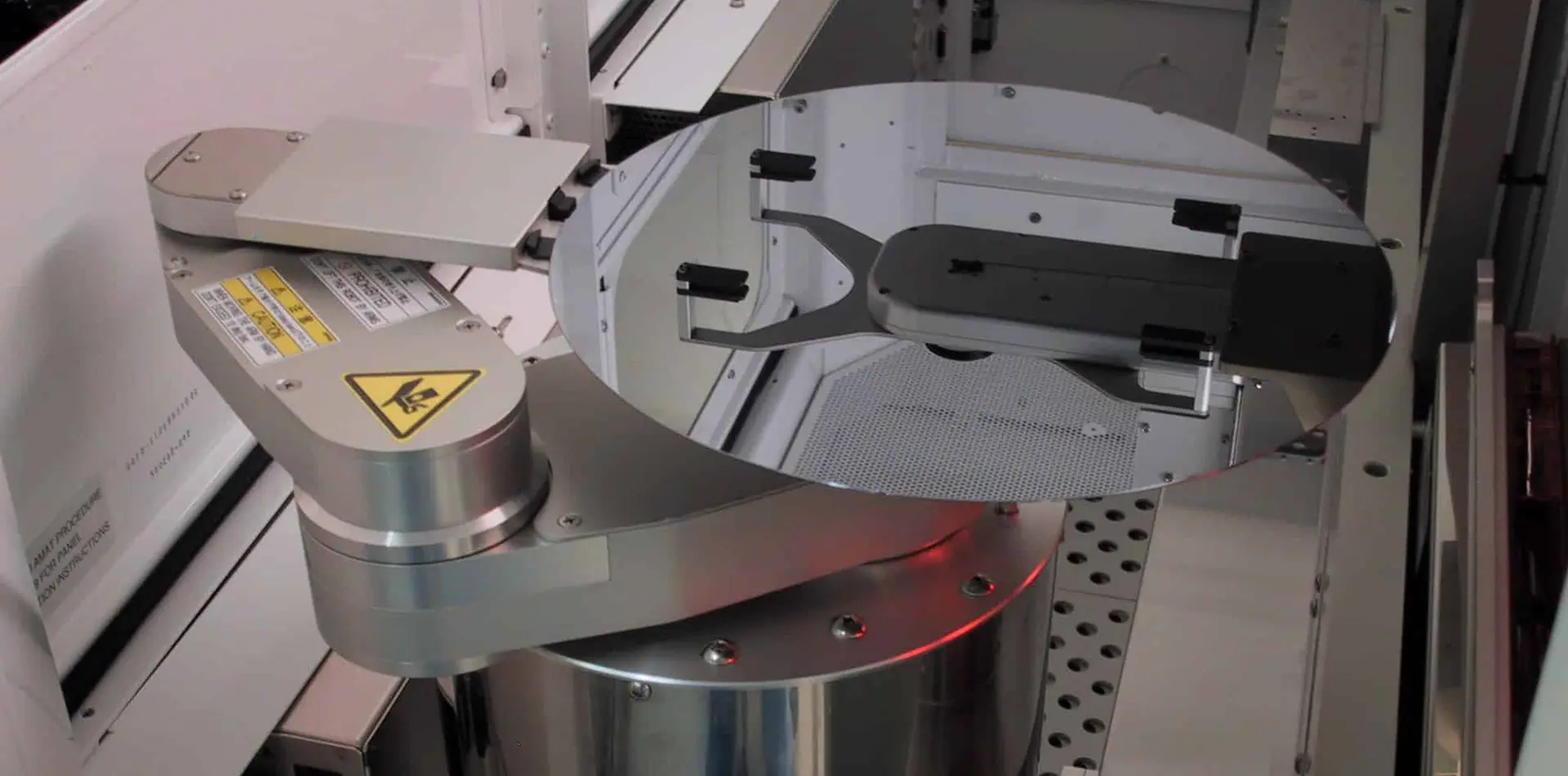
Often called the "black diamond," B₄C is among the hardest synthetic materials. Ideal for heavy-duty sandblasting nozzles, military armor, and nuclear neutron absorption shielding.

Features high thermal conductivity and excellent thermal shock resistance. Widely used for gas burner components, semiconductor wafer boats, and mechanical seal rings.

Combines high wear resistance, strong chemical stability, and high electrical resistivity. Excellent for semiconductor processing, TIG welding cups, and electrical insulator guides.

Known as "white graphite," BN offers low friction, excellent machinability, and resistance to molten metals. Frequently used for rocket exhaust nozzles and high-temp crucibles.
Exploring advanced forming technologies, ultra-precision manufacturing, and the future of industrial ceramics.
The industrial ceramics sector is moving toward finer grain sizes and additive manufacturing. Traditionally, dry pressing and cold isostatic pressing (CIP) have defined the production of alumina nozzles. However, structural requirements for complex internal geometries, such as helical cooling channels or multi-port gas distribution nozzles, have accelerated the development of ceramic injection molding (CIM) and 3D printing via stereolithography (SLA).
In addition, advanced microstructural modifications are improving mechanical performance. By incorporating nanoparticles or whiskers, such as silicon carbide or zirconia, into the alumina matrix, manufacturers can produce Zirconia-Toughened Alumina (ZTA) or composite ceramic nozzles. These materials offer enhanced fracture toughness without sacrificing hardness. In high-purity semiconductor processing, controlling trace impurities is critical to preventing wafer contamination during reactive ion etching (RIE) cycles. The roadmap points toward the adoption of ultra-pure (99.99%) alumina raw materials processed in cleanroom facilities.
Enabling the production of custom internal fluid channels and complex geometries that are difficult to machine using conventional methods.
Blending zirconia or sub-micron secondary phases to increase crack propagation resistance and improve structural reliability.
Scaling up 99.99% purity processing lines to meet the strict trace element limits required for next-generation semiconductor fabrication.
How specialized alumina nozzles solve wear, heat, and electrical challenges across critical applications.
In high-pressure sandblasting and abrasive jetting, nozzle life directly impacts process efficiency and consistency. Steel or carbide nozzles erode rapidly under high-velocity flow, changing the spray pattern and reducing blast velocity. Replacing them with 99% alumina or boron carbide nozzles extends component lifespan by up to 20 times, reducing downtime and stabilizing system pressure.
In thermal spray and plasma deposition systems (APS, HVOF), gas atomization nozzles operate under intense heat. Alumina nozzles act as thermal shields, maintaining structural integrity up to 1600°C without melting or contaminating the atomized powder. Their high electrical resistivity also prevents high-voltage arcing, ensuring safe and stable plasma flame operation.
Technical answers to common engineering questions regarding the selection, application, and performance of Al₂O₃ nozzles.
Explore our selection of targets, thin-film materials, and structural ceramics designed for semiconductor and PVD coating systems.
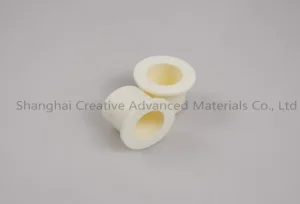
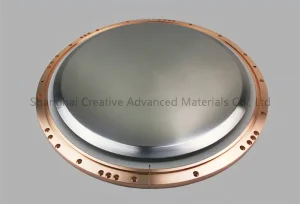
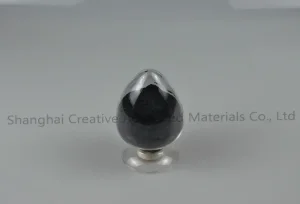
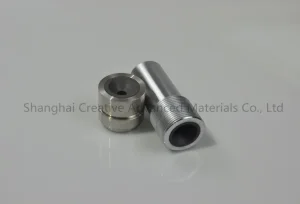
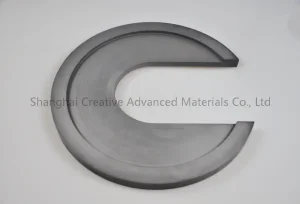
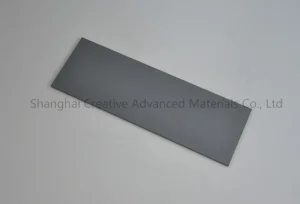
A trusted manufacturer of structural ceramic targets, powder metallurgy materials, and advanced ceramic components.
Established in the Shanghai Industrial Comprehensive Development Zone, Shanghai Creative Advanced Materials Co., Ltd. (SCA) is a high-tech company that integrates the research, development, production, and sales of semiconductor ceramic targets, powder metallurgy targets, advanced ceramic components, and neutron absorbing materials.
With 19 years of industry experience, SCA supplies high-precision ceramic solutions to clients worldwide. Our facilities handle the full production cycle: from raw material formulation and spray granulation to cold pressing, atmospheric sintering, CNC machining, and quality control. We provide full record traceability with individual serial numbers for our advanced structural ceramic products, helping to ensure consistent performance in demanding applications.
We maintain full process traceability from raw materials to final components. Serial numbers are assigned to each unit, and many of our structural ceramic designs are patented, reflecting our focus on quality control and product consistency.
By managing our own manufacturing workflows and keeping raw material stock on hand, we minimize production delays. We work to fulfill custom fabrication orders efficiently, helping to reduce lead times for our partners.
Our engineering team designs custom structural ceramic parts tailored to specific operating conditions. We work with various ceramic formulations to meet requirements for heat, wear, and chemical resistance.