Explore our engineering capabilities across advanced thin-film coatings, structural wear components, and functional high-temperature ceramics.
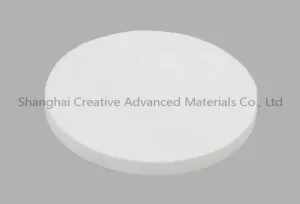
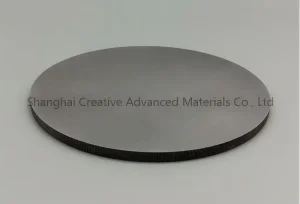
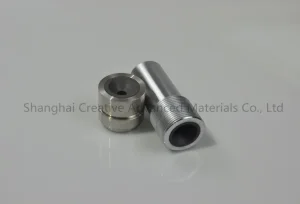
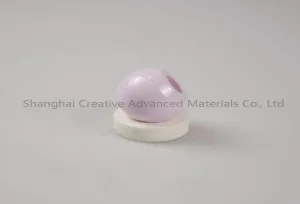
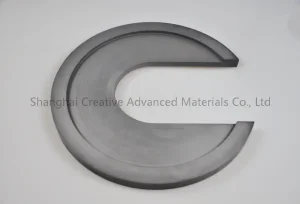
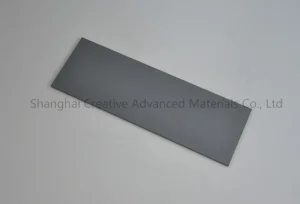
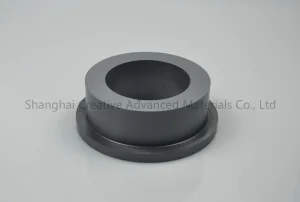
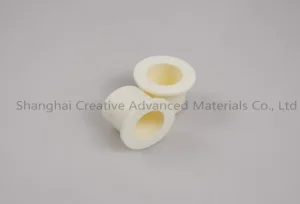
Often referenced in modern materials science as "White Graphite," Hexagonal Boron Nitride (h-BN) is a synthetic binary compound showcasing an isotropic, layered hexagonal crystal matrix. Unlike carbon-based graphite, the alternating boron and nitrogen atoms generate a highly polar interlayer molecular field that acts as a robust electrical barrier while facilitating high in-plane vibrational thermal transport.
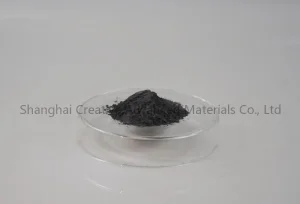
As leading global Boron Nitride Powder Suppliers, we engineer hexagonal, cubic, and turbostratic allotropes. The hexagonal polymorph (h-BN) represents the cornerstone of thermal management architectures. Because its covalent bond configurations restrict free-electron mobility, h-BN possesses a colossal bandgap of approximately 5.9 eV. This makes it an anomaly in materials engineering: a substance that conducts heat efficiently while maintaining total electrical resistance.
Understanding the physics of Boron Nitride explains why it has become non-negotiable for high-frequency electrical machinery, next-generation semiconductor packing, and harsh-chemical metallurgic processes.
The international demand for high-purity Boron Nitride powder has surged, fueled by the aggressive expansion of the electric vehicle (EV) sector, 5G communications infrastructures, and aerospace propulsion technologies. Historically, production was concentrated in small batches due to the extreme heat treatments required (up to 2000°C) under high nitrogen flows.
China has emerged as a crucial manufacturing hub, deploying industrial-scale synthesis methods such as the melamine-boric acid synthesis route. This development has democratized access to high-purity BN powders, optimizing costs for global buyers. However, processing performance relies heavily on precise particle size distribution (PSD) and surface morphology control. Suppliers must maintain rigorous statistical process controls to prevent moisture absorption, carbon contamination, and trace oxygen inclusions.
Established in Shanghai Industrial Comprehensive Development Zone, Shanghai Creative Advanced Materials Co., Ltd. (SCA) is a high-tech company integrating the research, development, production, and sales of semiconductor ceramic targets, powder metallurgy targets, ceramic components, advanced materials, and neutron absorption materials.
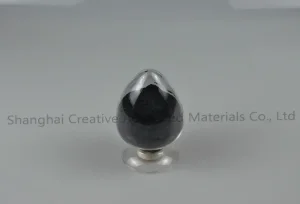
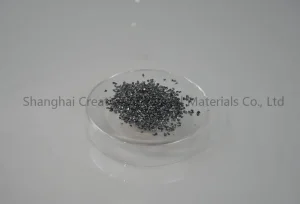
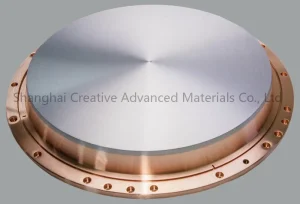
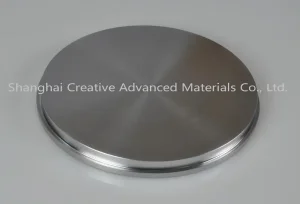
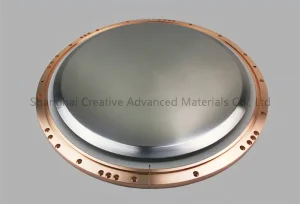
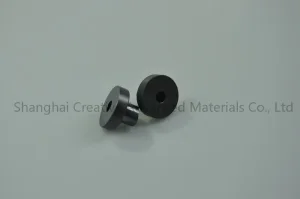
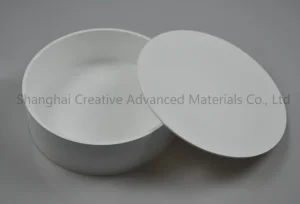
Our four core mineralogical structures optimized for extreme mechanical, thermal, and ballistic requirements.


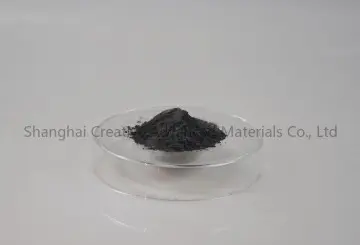
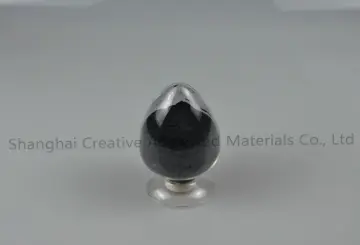
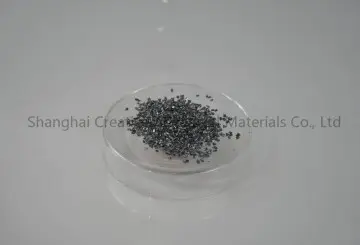
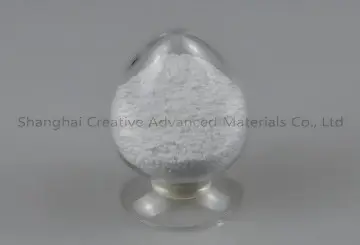
Deploying Boron Nitride powder formulations to unlock thermal bottlenecks and increase insulation reliability across core industries.
In electronics packing, high computing speeds translate directly into localized heat fields. As chip sizes shrink, standard silica or alumina thermal fillers cannot handle the thermal load. Hexagonal Boron Nitride (h-BN) stands out as an exceptional filler material for thermal interface materials (TIMs), including thermal greases, phase-change matrices, and insulated metal substrates (IMS). By optimizing particle shape (e.g., spherical vs. platelet formats), we help manufacturers achieve thermal conductivities exceeding 10 W/m·K while maintaining high dielectric isolation.
Due to its non-wetting properties, Boron Nitride serves as a premium dry lubricant and release coating. In steel processing, aluminum foundry environments, and glass casting, BN sprays and coatings protect crucibles, molds, and sensors from thermal shock and chemical attack. Our specialized powder lines maintain extremely low boron oxide levels, preventing bubbles or surface flaws in the cast metals.
In rocket thrust nozzles and plasma engines, materials face temperatures above 1500°C alongside high-velocity atomic gas flows. Solid-state reaction-bonded or hot-pressed Boron Nitride ceramic alloys retain structural stiffness and electrical resistance at extreme temperatures. This durability helps prevent electrical arcs in Hall effect thrusters and deep-space sat arrays.
Depending on the polymer filler viscosity target, we supply crystalline platelets (for high directional in-plane thermal vectoring) and aggregated spherical powders (for isotropic thermal routing and high filler loading limits).
Ensuring trace traceability, particulate purity, and dimensional precision from synthesis to delivery.
We control raw material purity, particle size, and chemical composition stability at the molecular level, ensuring a high-purity precursor matrix.
We monitor and adjust slurry concentration, composition uniformity, and atomization pressure. The equipment is regularly cleaned to maintain consistent PSD and tap densities.
Using fully automated hydraulic and isostatic presses to compact the raw powder into uniform blanks, providing reliable mechanical green strength.
We deploy high-temperature sintering methods, including hot pressing, pressureless sintering, reaction bonding, and hot isostatic pressing (HIP) under inert gas protection.
Using imported high-precision CNC mills, grinders, and diamond-tooled lathes to ensure dimensional tolerances within micron-level ranges.
Equipped with coordinate measuring machines (CMM) for physical dimensions, along with ceramic mechanical and electrical testing devices to verify target performance.
Utilizing clean packaging lines and ISO-certified cleanrooms to eliminate external dust and moisture during final target vacuum-packing.
Partnering with certified global freight forwarders to manage export customs clearance and secure container transport for industrial customers worldwide.
Providing custom advanced ceramic materials built on process transparency, engineering support, and supply security.
Our commitment to quality control and continuous process improvement makes SCA a reliable partner for advanced ceramics. We offer complete batch traceability from raw materials to finished targets. Serial numbers are assigned to each item, and many of our custom composites hold active patents.
Recognizing the cost of operational downtime, we optimize production scheduling to ensure prompt, reliable deliveries. Our optimized high-temperature operations keep key materials stocked, allowing us to process and ship custom orders efficiently.
We tailor materials to meet challenging application requirements. By adjusting grain boundaries, porosity, and phase composition across a wide range of advanced ceramic compounds, we optimize both performance and mechanical processing limits.
We serve the semiconductor and high-vacuum industries with customized technical support. Global clients trust SCA's materials expertise, engineering capabilities, and comprehensive quality documentation.
Pioneering high-purity processing, functionalized crystal structures, and composite technologies to meet evolving thermal requirements.
As technology shifts toward high-voltage architectures, sub-5nm semiconductors, and high-capacity battery systems, SCA is focusing R&D efforts on three key material engineering initiatives:
Untreated h-BN platelets often aggregate when blended into silicone or epoxy matrices, which increases compound viscosity and leads to internal voids. Our research team has developed surface modification technologies, utilizing custom silane coupling agents and localized titanate treatments. These treatments optimize interfacial bonding, allowing for high powder loading levels (up to 70-80 wt%) while maintaining excellent fluid workability.
We are scaling our spray-granulation and calcination lines to produce spherical boron nitride aggregates. These spherical shapes reduce anisotropic variations in thermal conductivity, ensuring consistent heat flow in all directions. This uniformity is crucial for complex thermal designs in EV high-voltage controllers and high-power LED systems.
To address the stringent requirements of high-frequency communications devices, we have optimized our vacuum nitrogen purification furnaces. We can now offer industrial quantities of h-BN powders with carbon levels under 100 ppm and trace oxygen content below 0.3%, preventing dielectric breakdown in thin-film applications.
We collaborate with technical universities and high-vacuum engineering groups to develop advanced ceramic composites, such as Boron Nitride-Silicon Carbide (BN-SiC) and Boron Nitride-Alumina (BN-Al2O3). These materials combine the thermal properties of BN with the mechanical wear resistance of carbides, providing durable components for industrial processing.
Addressing design issues, chemical limits, and thermal conductivity questions for engineering teams.
Read about manufacturing updates, material science papers, and advanced sintered technologies.
July 2, 2026
Localized sintering technologies drive upgraded zirconia ceramic industry in China.
Read Article
June 3, 2026
Exploring new furnace technologies to optimize grain boundary development.
Read Article
May 22, 2026
An analysis of density distribution in pressureless sintering methods.
Read ArticleHigh-purity raw powders and custom targets engineered for thermal management, wear protection, and thin-film depositions.