Analyzing Advanced Ceramic Powder Matrices and Sputtering Target Supply Architectures in Thailand's Industrial Corridor
The global electronics supply chain is undergoing a critical decentralization, with Bangkok and the surrounding Eastern Economic Corridor (EEC) emerging as primary nodes for advanced semiconductor packaging, automotive electronics, and high-precision mechanical assemblies. As manufacturing tolerances shift toward the sub-micron scale, the demand for ultra-pure ceramic materials has surged. This whitepaper analyzes the chemical performance, sintering kinematics, and local distribution models of critical materials—including Boron Carbide (B₄C), Silicon Carbide (SiC), Alumina (Al₂O₃), and various refractory metal targets—designed to meet the operational demands of Bangkok’s high-precision manufacturing sectors.
Our organization, Shanghai Creative Advanced Materials Co., Ltd. (SCA), leverages over 19 years of continuous metallurgical and powder synthesis research to deliver certified technical ceramics that conform directly to the stringent performance metrics of international semiconductor and aerospace standards. Serving Samut Prakan, Chonburi, Rayong, and the broader Bangkok Metropolitan area, SCA provides end-to-end supply chain integration, offering raw high-purity powders alongside fully sintered, precision-machined ceramic components.
Advanced structural ceramics require maximum relative density to avoid mechanical fatigue under cyclical stress. By implementing controlled spray granulation and high-vacuum pressureless sintering, our factory consistently achieves relative density values exceeding 98.5% of the theoretical maximum, minimizing internal voids and optimizing mechanical shear resistance in heavy industrial environments.
Direct supply options optimized for Bangkok electronics and mechanical engineering applications
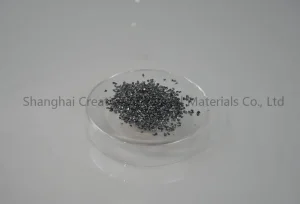
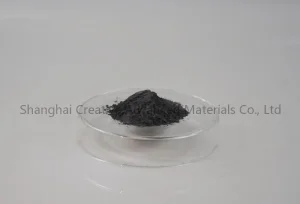
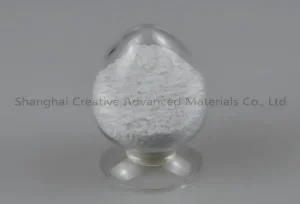
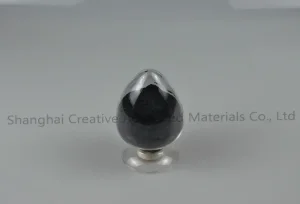
The manufacturing of advanced structural ceramics relies heavily on specific, pure raw materials with strict limits on metal impurities. Globally, the supply of raw silicon metal, boron oxide, and technical alumina is concentrated in highly specialized refining centers. Any variation in chemical purity—even at parts-per-million levels—can compromise the dielectric and thermal properties of the sintered ceramic.
For Bangkok manufacturers, relying directly on unrefined raw materials presents high logistical risks. SCA bridges this gap by managing the complex raw material purification and powder synthesis at our primary manufacturing plant. We ensure that every batch of silicon carbide and boron carbide powder shipped to Thailand has undergone rigorous ICP-MS testing to confirm structural integrity, providing local industries with consistent quality and buffer stocks to protect against global supply disruptions.
Bangkok's high ambient humidity and temperature pose unique challenges for dry powder storage and handling. Hydrophilic raw powders, such as raw alumina or boron nitride, can quickly adsorb atmospheric moisture. This moisture leads to particle agglomeration, which interferes with precise dry-pressing or tape-casting processes, potentially causing micro-cracking during sintering.
To address this, SCA uses moisture-resistant packaging systems, including vacuum-sealed aluminized foil bags with desiccant inserts. Additionally, our technical team provides Bangkok clients with on-site humidity-controlled handling guidelines and custom-designed spray-granulation binders optimized for tropical production environments, ensuring zero-defect forming operations.
Overcoming severe thermal, chemical, and wear challenges in precision environments
Electronic systems in the automotive and energy sectors require rapid heat dissipation without electrical breakdown. Our structural boron nitride and silicon carbide components offer high thermal conductivity paired with excellent dielectric strength, providing reliable performance in compact packages.
Chemical processing and pumping facilities in the EEC region frequently encounter corrosive, abrasive slurries. SCA’s sintered silicon carbide (SSiC) valve seats, seals, and nozzles withstand continuous abrasive wear and acidic exposure, extending equipment lifespan up to ten times compared to stainless steel.
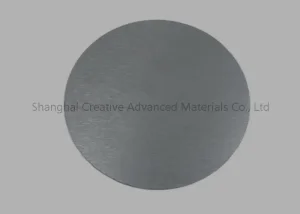
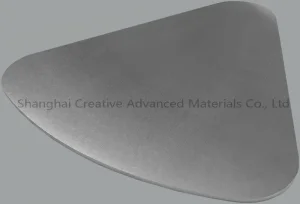
Achieving uniform thin films in modern display and microelectronics manufacturing requires sputtering targets with minimal gas inclusion and high relative density. Our powder metallurgy targets, including tungsten, titanium, and molybdenum alloys, ensure stable deposition rates and low particle generation.
Integrating advanced materials directly into key regional manufacturing processes
Thailand remains the automotive manufacturing hub of Southeast Asia. As local OEMs transition toward Electric Vehicle (EV) drivetrains, the demands on power electronics change. Silicon carbide (SiC) ceramics are critical for high-efficiency inverters, while alumina substrates provide electrical isolation for high-voltage battery modules. SCA works directly with tier-1 suppliers in Chonburi and Rayong to supply green-state machineable preforms, enabling cost-effective local prototyping.
Refining operations along the Chao Phraya River face constant corrosive challenges. Conventional metal valve cores degrade quickly in acidic environments, leading to maintenance shutdowns. By implementing SCA's pressureless sintered silicon carbide valve cores and seats, local plants achieve long-term seal integrity, minimizing unscheduled maintenance and improving overall process safety.
Ensuring microstructural consistency from raw powder selection to final cleanroom packaging
We trace and verify chemical purity, particle size distribution (D50, D90), and phase stability to ensure consistent raw materials.
Our closed-loop spray dryers produce spherical granules with uniform binder distribution, critical for uniform green-body density.
We apply high multidirectional pressure (CIP) to compact green bodies uniformly, avoiding density gradients that can cause warp during sintering.
We use state-of-the-art sintering methods, including hot pressing, pressureless sintering, and reaction bonding, tailored to each material's properties.
Sintered ceramics are shaped using high-precision diamond grinding equipment, maintaining dimensional tolerances within ±0.005 mm.
We perform ultrasonic flaw detection, density measurements, and coordinate measuring machine (CMM) testing to verify structural integrity.
Components are cleaned in multi-stage ultrasonic baths and packaged in Class 100 dust-free environments to prevent contamination.
We offer reliable export logistics with fully traceable documentation, delivering directly to manufacturing sites across the Bangkok area.
Explore the physical and mechanical properties of our main compound groups
Boron Carbide is one of the hardest synthetic materials available, surpassed only by diamond and cubic boron nitride. With a density of 2.52 g/cm³, it offers extreme hardness and wear resistance, making it ideal for sandblasting nozzles, industrial grinding media, protective armor plating, and nuclear industry neutron absorption materials.
For research and advanced fabrication facilities in Thailand, SCA provides high-purity B₄C powders with customizable particle size distributions (from sub-micron to mesh grades) to ensure optimal sintering density and mechanical performance.
Inquire About B₄C Specifications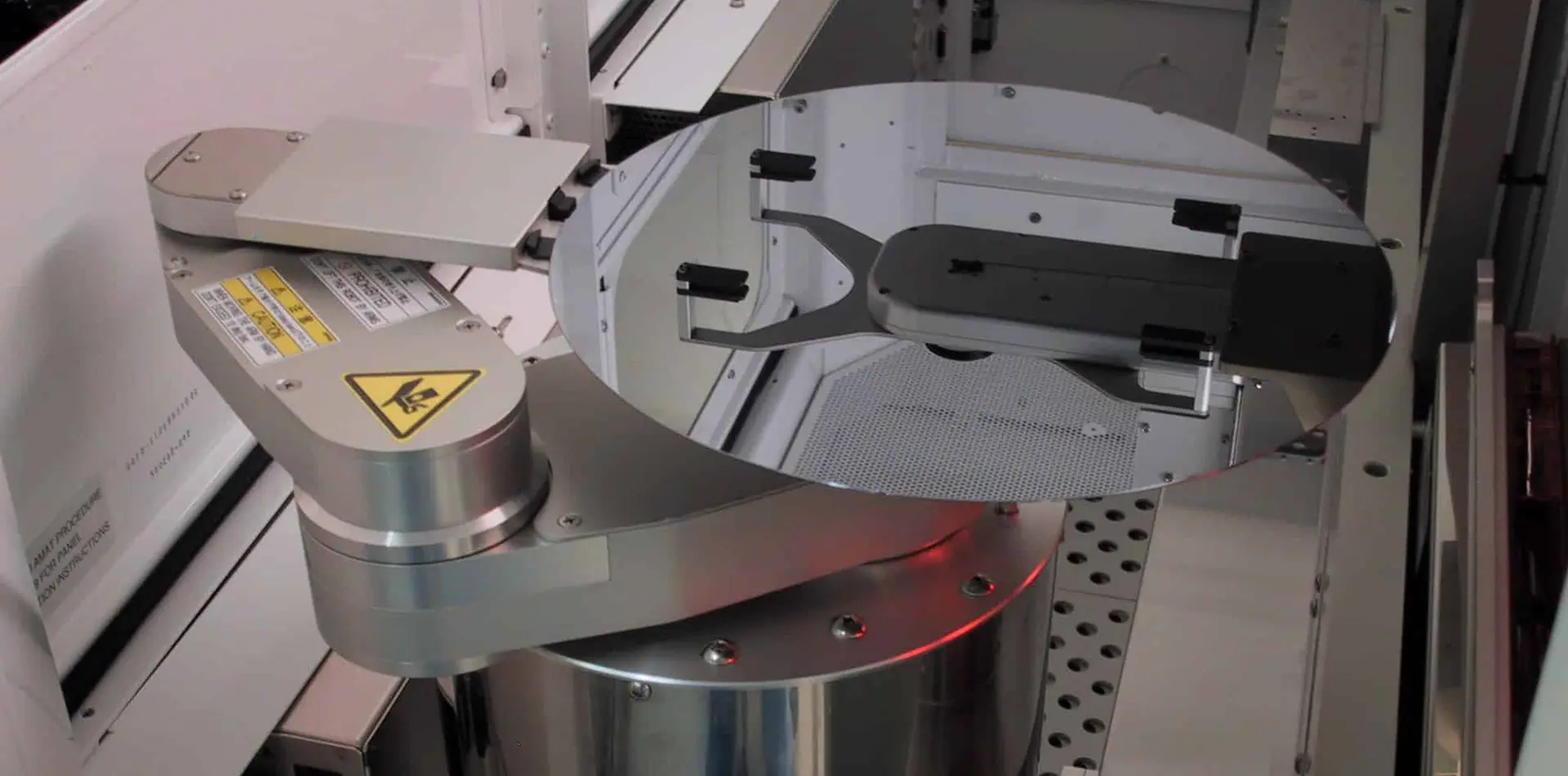
Adapting product synthesis to meet the requirements of next-generation packaging and deposition technologies
To support next-generation semiconductor geometries, sputtering targets must achieve ultra-fine grain sizes and minimize structural defects. Traditional hot pressing often results in localized density variations, leading to uneven sputtering rates and particle contamination during deposition. SCA is addressing this by transitioning our target production lines to Spark Plasma Sintering (SPS) and Hot Isostatic Pressing (HIP), which improve density and microstructure uniformity.
Furthermore, we are expanding our research into ceramic additive manufacturing (3D printing). By combining low-viscosity ceramic slurries with advanced binder-jetting techniques, we aim to produce complex internal cooling channels within silicon carbide components. This technology will allow our partners in Bangkok and the wider EEC region to design highly efficient, custom-engineered components that are difficult or impossible to manufacture using conventional diamond grinding.
Fully certified materials manufactured for high-vacuum deposition and high-wear applications
Expert answers addressing the concerns of materials scientists and procurement managers