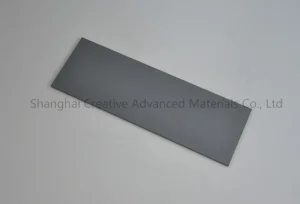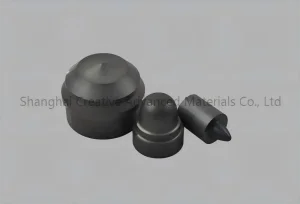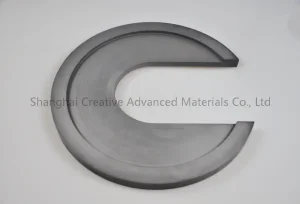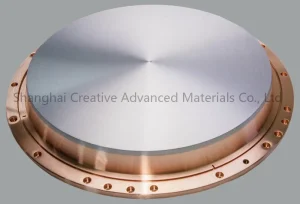
High-performance targets and components for global industrial leaders
A Comprehensive Technical Whitepaper on Advanced Ceramic Filtration
The global market for Silicon Carbide (SiC) membranes has witnessed a meteoric rise, primarily driven by the escalating demand for sustainable water treatment and the rigorous requirements of the semiconductor industry. Unlike traditional polymer membranes, SiC membranes offer unparalleled thermal stability (up to 800°C in specialized configurations) and extreme chemical resistance across the entire pH scale (0-14). As wholesale manufacturers, we have observed a shift where heavy industrial sectors—including petrochemicals, mining, and metallurgy—are moving away from sacrificial filtration systems to permanent SiC-based ceramic architectures.
Projected CAGR of 12.5% through 2030, with Asia-Pacific leading in manufacturing capacity and North America leading in specialized application adoption.
Essential for produced water treatment in oil & gas, high-purity chemical processing, and slurry recovery in the electronics sector.
Current research emphasizes reducing the sintering temperature and increasing the "Flux Rate" while maintaining mechanical integrity.
The "Information Gain" in current SEO isn't just about keywords; it's about understanding User Intent Mining. Engineers are no longer just searching for "SiC membranes"; they are searching for "Zero Liquid Discharge (ZLD) solutions" and "high-flux oily wastewater separation." The major trend is the integration of SiC membranes as a robust pre-treatment for Reverse Osmosis (RO) systems, significantly extending RO life by removing 99.9% of suspended solids and oils that would otherwise cause irreversible fouling.
Shanghai Creative Advanced Materials is leading the integration of SiC membranes into "Closed Loop" systems. By leveraging the high hydrophilicity of SiC, we enable factories to recover 95% of process water, reducing raw water intake costs by up to 40% annually. This isn't just filtration; it's an ROI-driven utility upgrade.
The technical evolution of SiC membranes involves moving from Recrystallized Silicon Carbide (RSiC) to Ultra-Thin Nano-Coatings. By controlling the pore size at a sub-micron level (0.04μm to 1.0μm), we achieve a perfect balance between high permeability and absolute separation accuracy.
In the localized manufacturing context, SiC membranes are solving "Unsolvable" problems:
Compact SiC units installed in urban underground plants where space is at a premium and reliability is non-negotiable.
Sterile filtration of aggressive solvents where polymer leaching could contaminate high-value drug batches.
Separation of black mass slurries and recovery of heavy metals in acidic environments that would dissolve alumina membranes.
Concentration of proteins and dairy products with a 100% "Steam-In-Place" (SIP) compatibility for absolute hygiene.
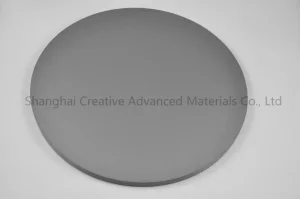
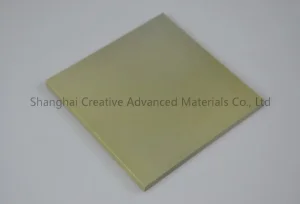
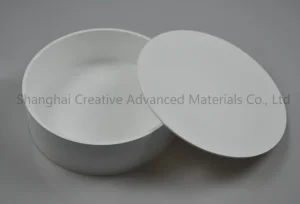
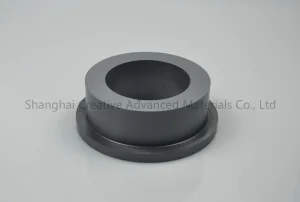
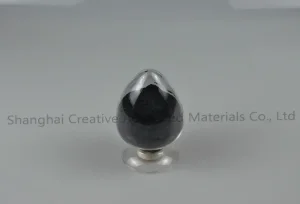
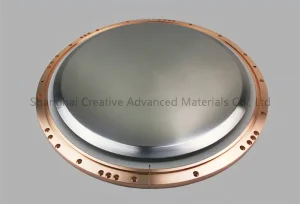
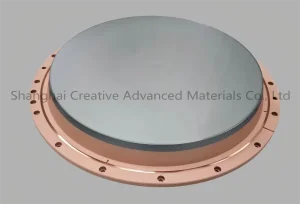
Established in the Shanghai Industrial Comprehensive Development Zone, we are a high-tech company that integrates R&D, production, and sales. We specialize in semiconductor ceramic targets, powder metallurgy targets, and high-performance ceramic components.
Our commitment to E-E-A-T principles ensures that every SiC membrane and ceramic valve we produce meets the most demanding global standards for purity and durability.
Explore Our History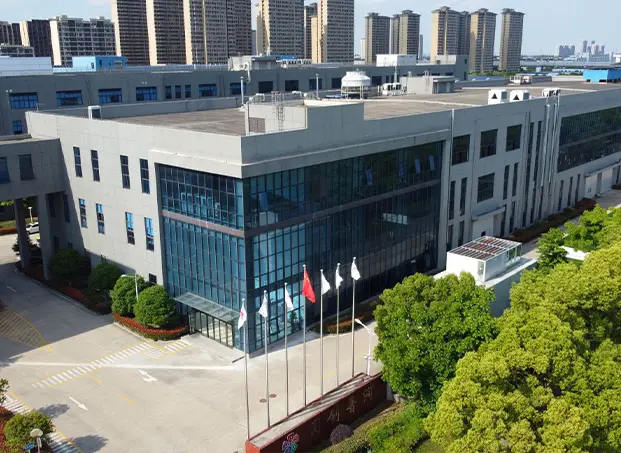
Years Experience
Core Technologies
Professionals
Satisfied Clients
Why Tier-1 Semiconductor and Water Treatment companies choose our materials

Full record traceability from raw materials to final products. Serial numbers provided for every unit to ensure accountability in mission-critical applications.

Our partnerships with international logistics giants ensure your SiC components arrive accurately and quickly, reducing downtime for your operations.

Dedicated engineers provide customized advanced ceramic solutions, from material selection to on-site integration support.
Purity and particle size stability control.
Slurry concentration and uniformity monitoring.
Hot pressing and pressureless sintering expert techniques.
Imported equipment ensuring micron-level accuracy.
Addressing the core questions of engineers and procurement directors
A: Silicon Carbide has a much higher flux rate due to its extreme hydrophilicity. Additionally, SiC is chemically inert in strong acids and bases (pH 0-14), whereas Alumina may degrade in high pH environments.
A: Yes, it is the premier material for this. The oleophobic nature of the SiC surface under water prevents oil from sticking to the membrane pores, allowing for easy cleaning and consistent flow.
A: In industrial water applications, SiC membranes often last 10+ years, significantly outperforming polymer alternatives which may require replacement every 12-24 months.
A: As a manufacturer, we provide tailored geometries, including flat sheets, tubular designs, and multi-channel monoliths to fit existing filtration infrastructures.
Reliable components for enhanced industrial performance
As we look toward 2035, the "Information Gain" in the ceramic industry lies in the fusion of Artificial Intelligence (AI) and Sintering Processes. We are investing in AI-driven thermal profiling to ensure that every silicon carbide membrane has a perfectly uniform pore distribution. This will unlock new possibilities in gas separation, specifically carbon capture (CCUS), where SiC membranes will play a pivotal role in stripping CO2 from high-temperature flue gases—a feat impossible for current polymer technologies.
By choosing Shanghai Creative Advanced Materials, you are not just buying a component; you are partnering with a visionary leader in ceramic science. Contact us today for a technical consultation on your next high-performance project.