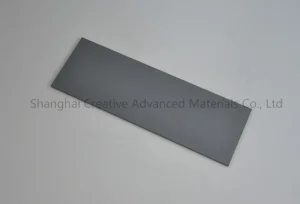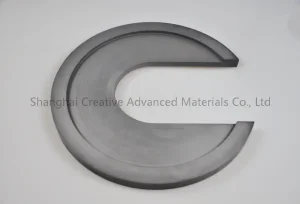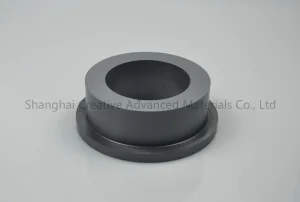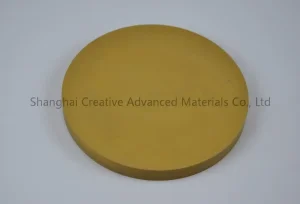
In the high-stakes environment of bulk material handling, the interface between the conveyor belt and the drive pulley is the most critical point of failure. Ceramic Pulley Lagging has emerged not just as a maintenance accessory, but as a strategic asset for enhancing system reliability. By utilizing high-alumina ceramic tiles embedded in a resilient rubber matrix, this technology provides a friction coefficient nearly double that of traditional rubber lagging, even in wet or muddy conditions.
As a leading wholesale ceramic pulley lagging manufacturer, Shanghai Creative Advanced Materials Co., Ltd. (SCA) understands that "Information Gain" in SEO translates to technical transparency in engineering. Our lagging solutions address the specific pain points of conveyor belt slippage, premature wear, and energy inefficiency through precision-engineered ceramic dimples that "bite" into the belt cover without causing damage.
Leveraging China's dominant position in the alumina and technical ceramic supply chain, we offer 92% and 95% Al2O3 grades that exceed international standards for Vickers hardness and fracture toughness.
Our factory utilizes proprietary bonding technologies. The "CN Layer" at the base of our ceramic lagging ensures a chemical bond to the pulley surface that is stronger than the rubber itself.
Based in the Shanghai Industrial Comprehensive Development Zone, we provide wholesale pricing that allows global distributors to maintain high margins while delivering premium quality to end-users.
The global industrial landscape is shifting towards Predictive Maintenance (PdM) and Sustainability. Ceramic lagging plays a pivotal role here. By reducing belt tension requirements through superior grip, it extends the life of the entire conveyor structure, including motors and bearings.
Future trends include embedding sensors within the lagging to monitor temperature and wear in real-time, integrating with IoT platforms for remote mine site management.
Procurement departments in Europe and North America are increasingly demanding REACH and RoHS compliant bonding agents, a standard SCA strictly adheres to.
Reducing slippage equates to direct energy savings. In large-scale mining operations, switching to ceramic lagging can reduce power consumption by up to 5-8% per annum.
Rigid control over purity and particle size of alumina and rubber compounds.
Maintaining slurry uniformity for consistent ceramic tile density.
Automated pressing for high-strength blanks and consistent geometry.
Advanced pressureless and isostatic sintering for maximum hardness.
High-precision imported equipment ensuring exact dimensional tolerances.
CMM size testing, Shore hardness, and adhesion pull-tests.
Handling iron ore, coal, and copper where high moisture and abrasive dust cause standard rubber lagging to fail within months. Our ceramic solutions provide years of service.
Loading and unloading facilities dealing with saltwater corrosion and high-speed belt operations require the extreme traction of dimpled ceramic tiles.
High-temperature environments and heavy loads demand materials like Silicon Carbide (SiC) or specialized Alumina (Al2O3) components that SCA excels in manufacturing.
Ceramic lagging offers significantly higher friction coefficients (0.5-0.7 vs 0.25-0.35) and superior wear resistance. This prevents belt slippage in wet conditions and extends the maintenance interval by 3 to 5 times.
The raised dimples increase traction by mechanically interlocking with the belt's bottom cover, while also allowing water and debris to be shed through the grooves in the rubber backing.
92% Alumina is the industry standard for most mining applications. 95% is recommended for extremely abrasive materials like quartz or in high-impact zones where fracture toughness is paramount.
Yes, we customize advanced solutions with unique material combinations. We can adjust the rubber thickness, tile size, and lagging width to match any pulley specification globally.