Premium grade engineering ceramics designed to withstand heavy wear, corrosive chemicals, and high-voltage operations across Canadian processing hubs.


Canada’s modern industrial framework spans some of the most extreme environments on Earth. From deep-well mining operations in Ontario and northern Quebec to the sub-zero thermal extraction in Alberta's oil sands, conventional alloy metals fail to meet reliability and lifespan requirements. Advanced ceramic components provide the solution, providing zero chemical contamination, high thermal conductivity, and hardness metrics that outperform hardened tool steels.
As a leading supplier of engineered ceramics, Shanghai Creative Advanced Materials Co., Ltd. (SCA) caters to Canada’s supply chain needs. We match the rigorous standards expected by Canadian engineering firms, supplying precision-machined elements in Silicon Carbide (SiC), Boron Carbide (B₄C), Alumina (Al₂O₃), and Silicon Nitride (Si₃N₄).
Canadian industrial sectors frequently operate at structural margins. High mechanical friction and aggressive chemical processing cause fast structural failure in standard equipment. Utilizing high-density sintered ceramic parts decreases downtime and reduces replacement frequencies by up to 400% compared to traditional carbide alloys.
A technical guide to chemical, thermal, and structural characteristics for Canadian engineering applications.
| Material Type | Density (g/cm³) | Vickers Hardness (GPa) | Thermal Conductivity (W/m·K) | Max Operating Temp (°C) | Primary Field Application |
|---|---|---|---|---|---|
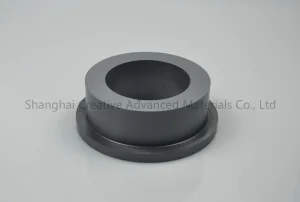
| Silicon Carbide (SiC) | 3.10 - 3.20 | 22 - 26 | 120 - 200 | 1600 | Mining pump impellers, seal rings, sandblast nozzles, semiconductor targets |
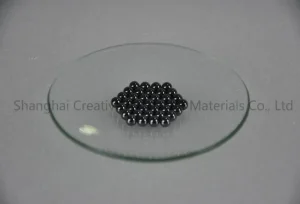
| Boron Carbide (B₄C) | 2.51 - 2.52 | 30 - 35 | 30 - 40 | 1900 | CANDU Nuclear control rods, industrial abrasive nozzles, personal body armor |
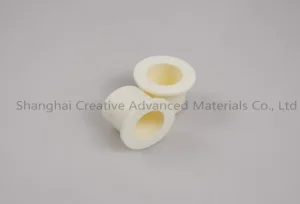
| Alumina (Al₂O₃ - 99.7%) | 3.90 - 3.96 | 15 - 18 | 30 | 1700 | Electrical insulators, high-voltage substations, semiconductor cleanrooms |
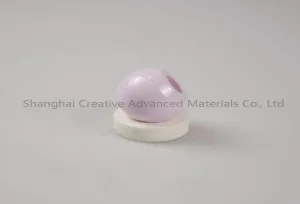
| Silicon Nitride (Si₃N₄) | 3.20 - 3.25 | 18 - 20 | 20 - 30 | 1400 | High-stress aerospace bearings, engine valves, cutting tools |
Choosing the correct ceramic material requires evaluating several key factors. While Silicon Carbide stands out for its high thermal conductivity and chemical resistance under heat, Boron Carbide is highly valued for its extreme hardness (second only to diamond) and effective neutron-absorbing capacity, making it a critical component for CANDU reactor maintenance programs in Ontario and New Brunswick. High-purity Alumina is widely used for electrical isolation applications and semiconductor processing chambers in Ottawa’s advanced manufacturing corridor.
A comprehensive look at our core materials engineered for specific industrial challenges.
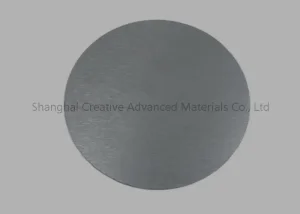
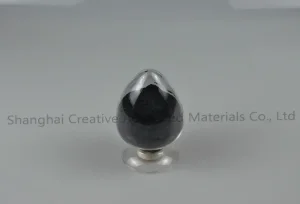
Boron Carbide (B₄C) is one of the hardest materials synthesized on Earth. It is vital for defense systems, industrial blast nozzles, and neutron shielding within Canadian nuclear power generation units.
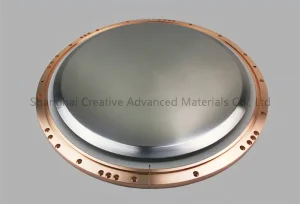
Learn More →Highly resistant to chemical wear and thermal shock. SiC is widely used for mining slurries, deep-sea exploration drills, and high-performance semiconductor components.
Learn More →Features high dielectric strength and chemical inertness. It acts as the standard engineering ceramic for high-voltage bushings, plasma etch chamber liners, and heavy manufacturing insulators.
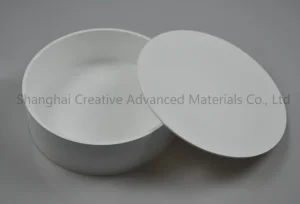
Learn More →Combines thermal conductivity with electrical insulation. It remains stable in contact with molten metals and corrosive glasses, serving as a reliable crucible material for alloy development.
Learn More →How we maintain high quality standards from raw powder to shipping logistics.
We analyze purity, grain size, and crystalline structure to ensure consistency from the start of the process.
Slurry density and compound distributions are monitored to produce stable, free-flowing engineering powders.
Using automated presses to shape the components, achieving consistent structural density before sintering.
We utilize pressureless sintering, reaction bonding, and hot pressing to match specific material requirements.
CNC grinding, ultrasonic milling, and diamond-wheel finishing help meet strict tolerances within +/- 0.005mm.
Components undergo coordinate measuring machine (CMM) testing, dye-penetrant checks, and density measurements.
Parts are processed through ultrasonic cleaning and packed in dust-free areas to prevent contamination during transit.
Secured export packaging helps protect the components during shipment to Canadian entry ports.
Operating in Canada requires compliance with international standards, such as CSA Group requirements, ASME boiler codes, and specific environmental standards for chemical manufacturing. Shanghai Creative Advanced Materials Co., Ltd. (SCA) implements quality control policies that track every phase of production, from raw powder processing to the final inspection of each component.
Our export department is experienced with customs documentation for Canadian ports of entry (including Vancouver, Prince Rupert, Montreal, and Toronto). We provide comprehensive testing certification reports, chemical analysis datasheets, and certificates of conformance with each shipment, helping minimize customs clearance times for your projects.
Clear answers to common questions about our technical ceramic capabilities, lead times, and manufacturing specs.
Using high-precision grinding, diamond tooling, and ultrasonic milling, we can hold dimensions to +/- 0.005mm (5 microns) on critical design interfaces. Surface finish qualities can be polished down to Ra 0.1 microns to meet high-vacuum sealing and low-friction wear requirements.
Each batch of raw material undergoes chemical assay verification, bulk density verification, and laser diffraction particle size distribution testing. Finished structural ceramic parts are analyzed via ultrasonic non-destructive testing (NDT), three-point flexural testing, and digital micro-hardness indentation protocols to confirm material integrity.
For standard stock target tiles or simple-geometry ceramic plates, components can ship within 2 to 3 weeks. Custom components requiring mold design, cold isostatic pressing (CIP), sintering, and diamond grinding typically require 6 to 8 weeks, depending on design complexity. Fast-track options are available for emergency projects.
Yes, we offer advanced metallization solutions for ceramic-to-metal vacuum brazing. Common coatings include Mo-Mn, nickel plating, silver plating, and gold plating, which are designed for high-vacuum, high-voltage feedthroughs used in analytical instruments and power distribution networks.
Review our complete range of technical ceramics, targets, and specialized coatings engineered for high performance.