Pre-engineered structural ceramic products optimized for Hungarian precision manufacturing applications.
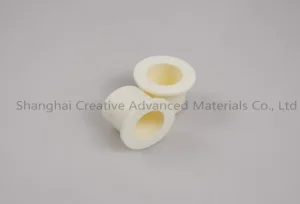
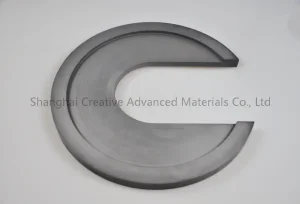
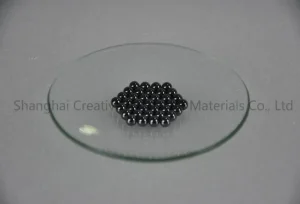
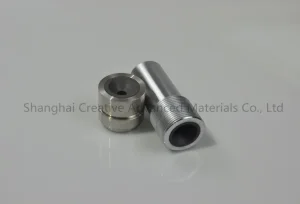
Hungary has positioned itself as the preeminent manufacturing and assembly hub of Central and Eastern Europe (CEE). Anchored by major clusters in Győr, Kecskemét, and Debrecen, the nation has evolved from simple assembly facilities to hosting advanced, state-of-the-art production hubs. The rapid transition towards electric vehicles (EVs), lithium-ion battery gigafactories, and complex microelectronics packaging systems has created a massive local demand for high-performance structural and thermal materials.
Traditional engineering polymers and metal alloys fail when subjected to the extreme operating temperatures, corrosive chemicals, and physical wear encountered in modern production lines. Advanced technical ceramics—primarily Alumina (Al₂O₃), Silicon Carbide (SiC), Silicon Nitride (Si₃N₄), and Zirconia (ZrO₂)—are critical to filling this engineering gap, providing unparalleled wear resistance, dielectric isolation, and thermal stability.
"As Hungary emerges as a European focal point for EV battery manufacturing and automotive technology, procurement departments must secure reliable channels for components capable of operating beyond the limits of steel and engineering plastics."
A trusted technical ceramics innovator delivering localized engineering support and robust supply networks to the Hungarian industrial corridor.
Analyzing key application parameters driving advanced ceramic adoption across domestic Hungarian industries.

The industrial landscape in Hungary demands specific material qualities tailored to exact process environments. For instance, the electric battery gigafactories established in the Pest and Northern Hungary regions require ultra-high purity grinding media and structural ceramics that avoid metallic cross-contamination during cathode and anode slurry preparation. Silicon Carbide (SiC) and Yttria-stabilized Zirconia (YSZ) represent the materials of choice for these high-shear environments.
Similarly, the high-voltage automotive sensor and power electronics industries require metallized ceramics and Boron Nitride (BN) components. These materials combine excellent electrical insulation properties with high thermal conductivity, allowing for rapid heat dissipation in high-power density modules. Without these advanced substrates, modern EV fast-charging components would suffer from severe thermal runaway issues.
Request Local Project ConsultationHow SCA integrates digital manufacturing to guarantee high-tolerance technical ceramics with seamless European logistics.
By leveraging automated spectral analysis and closed-loop powder synthesis, we guarantee consistent raw material batching to prevent structural failure under load.
Equipped with state-of-the-art diamond grinders and multi-axis green machining centers to meet micron-level dimensional tolerances required by European OEMs.
Pressureless, hot-isostatic (HIP), and reaction-sintering kilns utilize smart thermodynamic profiling, reducing manufacturing emissions and carbon footprint.
Through our long-standing agreements with trans-Eurasian rail freight lines and air freight hubs, we deliver components directly to Hungarian free-trade zones.
A comprehensive material comparison matrix to guide procurement managers and R&D engineers.
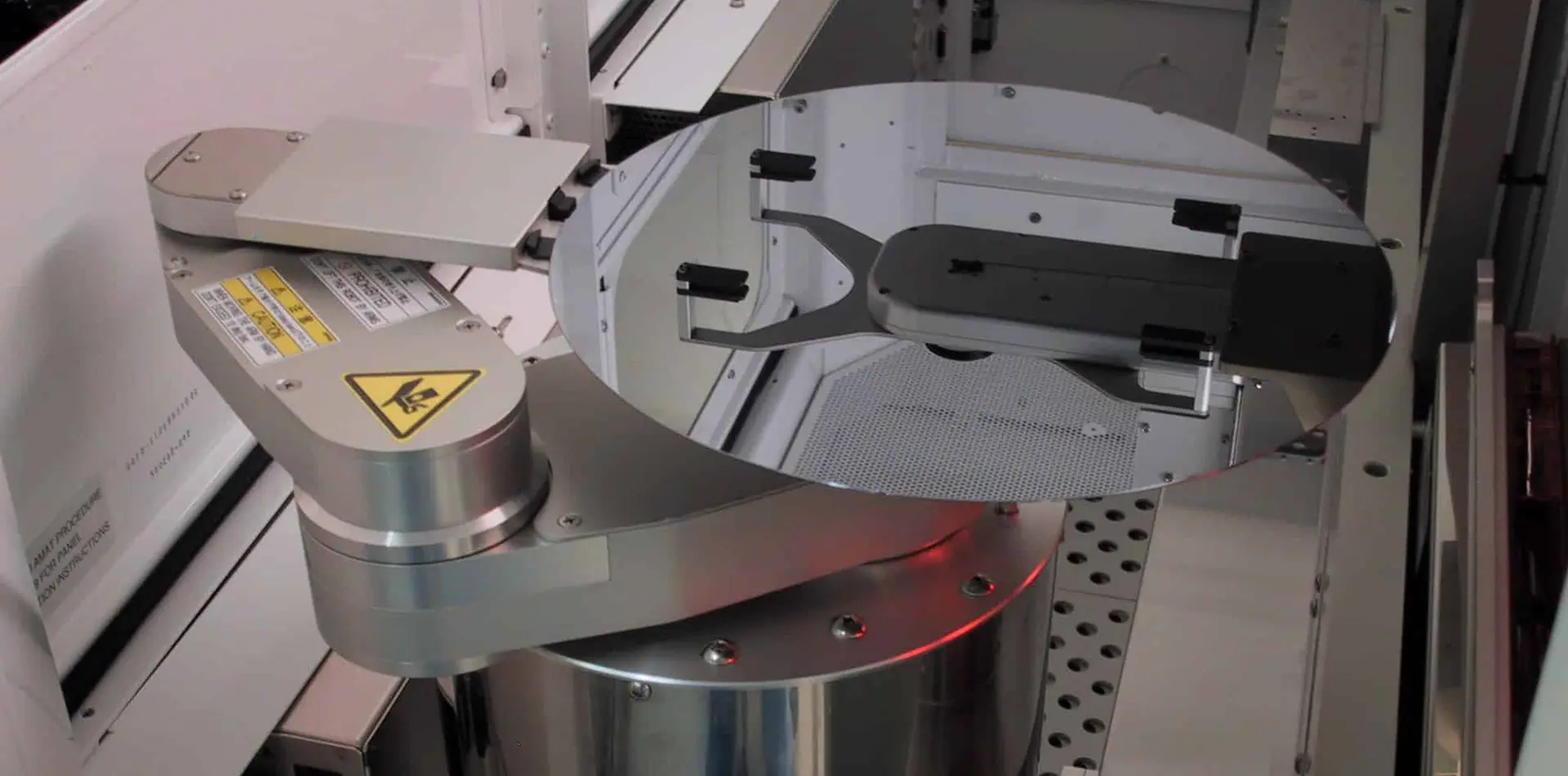
Key Parameter: Vickers Hardness > 2500 HV, Thermal Conductivity up to 150 W/m·K.
Primary Use: Excellent for mechanical pump seal faces, chemical process valves, and high-temperature gas nozzles used in Hungary's chemical and metallurgy industries.
Explore SiC Products >>
Key Parameter: Non-wetting to molten metals, thermal shock resistance up to 2000°C.
Primary Use: Perfect for alloy casting nozzles, semiconductor melting crucibles, and electric insulation shields in cleanroom electronics facilities.
Explore BN Products >>
Key Parameter: High fracture toughness (6-8 MPa·m1/2), extreme thermal shock capability.
Primary Use: Designed for high-speed rolling bearings, welding pins, and gas turbine blades in automotive power transmission systems.
Explore Si₃N₄ Products >>
Key Parameter: Superior wear resistance at room temperature, flexural strength > 900 MPa.
Primary Use: Slurry pump impellers, extrusion dies, and pharmaceutical powder processing components requiring absolute chemical inertness.
Explore ZrO₂ Products >>Each custom ceramic component undergoes rigorous processing stages governed by ISO 9001:2015 frameworks.
Purity checking, particle-size distribution validation, and phase composition analysis via XRD before batch release.
Ensures uniform particle size distribution and constant bulk density for high-pressure dry pressing consistency.
Utilizing automated isostatic presses to form dense green bodies with high internal structural density uniformity.
Sintering processes (up to 1800°C) with tailored atmospheric control (reducing, inert, or vacuum options).
Grinding, honing, and polishing using diamond wheel CNC machines to meet micro-level geometric tolerances.
Ultrasonic flaw detection, Coordinate Measuring Machine (CMM) testing, and density tests to isolate structural micro-cracks.
Components are ultrasonic-washed, dried, and vacuum-sealed in cleanroom environments to prevent site contamination.
Export compliance processing and protective outer crating to prevent physical transport vibration damage.
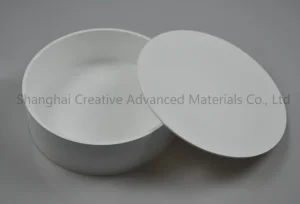
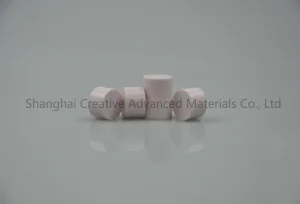
A broad array of custom engineering products designed for advanced thermo-mechanical and high-vacuum sputtering applications.
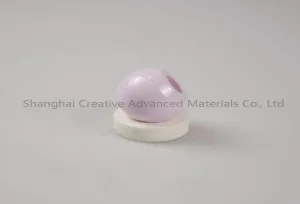
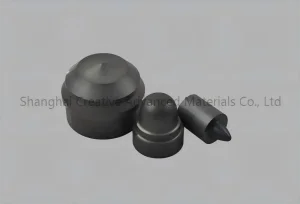
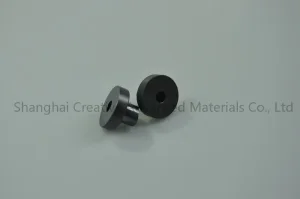
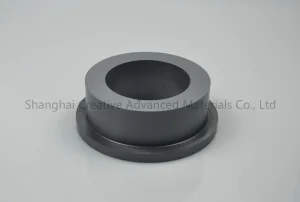
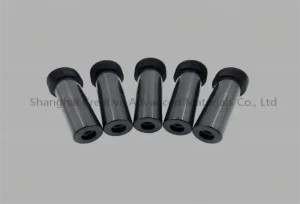
Answering structural engineering, production lead-time, and logistics questions for the Central European market.
Depending on the geometry and material selected (e.g., Alumina vs. Silicon Carbide), our precision diamond grinding lines can reach dimensional tolerances as tight as ±0.001 mm. Roundness and flatness tolerances can be controlled to within 0.0005 mm, verified via our CMM systems before packaging.
We work closely with certified third-party labs like SGS to test and certify all component batches. Full Material Declarations (FMD) can be provided upon request to prove that our structural and metallized ceramic parts contain no hazardous substances above regulatory limits.
For chemical and physical battery material mills, Silicon Carbide (SiC) or Yttria-stabilized Zirconia (YSZ) grinding balls are highly recommended. These materials offer exceptional density (reducing processing times) and minimal wear rates, avoiding contamination of chemical components with iron or other trace metals.
For custom prototype components, tool development and green-machining typically take 3 to 4 weeks. Sintering and post-sinter precision grinding add another 1-2 weeks. Direct rail shipping through the Belt and Road initiative to Budapest takes 18-22 days, while critical air freight delivery takes 5-8 business days.
Yes. Our R&D facility has green-body CNC machining capabilities, which bypasses expensive compression tooling requirements for initial samples. This allows engineers in Hungary to test custom part designs in their real production environments before investing in bulk production dies.
Send us your dimensional drawings (.dwg, .step, or .pdf) and operation conditions (temperatures, chemical exposure, stress cycles). Our engineering team will return a customized proposal and material matrix analysis within 24 hours.