Precision-Engineered Technical Ceramics: Empowering Boston’s Deep Tech, Defense Systems, Biotech, and Semiconductor Sectors with High-Purity Ceramic Components.
Direct supply paths from advanced cleanrooms to East Coast industrial and research hubs. Tailored thermal, mechanical, and dielectric metrics.
The Greater Boston area, spanning Cambridge, the Route 128 technology belt, and surrounding academic powerhouses like MIT and Harvard, stands at the absolute vanguard of global scientific research, biotechnology, hardware-level robotics, and defense electronics. In these high-stakes ecosystems, engineering materials are constantly pushed to their absolute thermal, chemical, and physical limits. Conventional metals and polymers cannot survive the extreme conditions required by today's advanced industries.
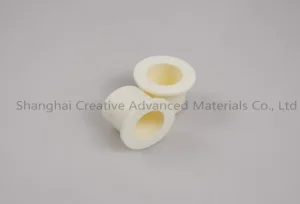
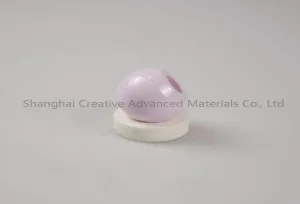
This is where advanced technical ceramics emerge as a foundational necessity. Whether it is structural silicon nitride ($Si_3N_4$) for high-stress aerospace bearings, ultra-pure alumina ($Al_2O_3$) for semiconductor lithography chambers, or high-density boron carbide ($B_4C$) for specialized neutron absorption and ballistic protection, modern innovation depends on these inorganic, non-metallic compounds. As a premier partner for advanced material fabrication, Shanghai Creative Advanced Materials (SCA) bridges the gap between raw scientific research and industrial-scale manufacturing, delivering highly customized components to Boston-based OEMs, research institutions, and defense contractors.
The global structural ceramics market is undergoing rapid evolution. Driven by the aggressive scaling of semiconductor nodes (sub-3nm processes), the transition to high-voltage electric vehicle platforms, and the expansion of aerospace exploration, high-performance ceramics are no longer niche options—they are critical path items. Processing techniques like Hot Isostatic Pressing (HIP), pressureless sintering, and spark plasma sintering (SPS) are refining the structural integrity of these materials, eliminating micro-porosity to yield densities exceeding 99.8% of theoretical values.
Internationally, standardizing ceramic-to-metal bonding, metalizing ceramic pathways, and maintaining sub-micron dimensional tolerances are the key competitive metrics. OEMs now require comprehensive batch traceability, crystal-structure characterization via X-ray diffraction (XRD), and zero-defect quality control protocols to ensure performance reliability in high-vacuum, cryogenic, or corrosive production environments.
While design specifications are engineered locally in Boston's R&D incubators, scaling these components to production volume requires robust manufacturing systems. Chinese advanced ceramic factories, led by specialized manufacturers like Shanghai Creative Advanced Materials, provide a critical supply chain balance. By locating raw material purification, automated spray granulation, precision cold isostatic pressing (CIP), and large-scale atmospheric sintering kilns in unified industrial zones, we significantly reduce manufacturing overhead and lead times.
Direct partnerships with domestic high-purity chemical refineries guarantee consistent ceramic powder composition, ensuring predictable shrinkage and batch-to-batch consistency.
Our CAD-to-sinter tooling pipeline shrinks initial sample cycles down to 14 days, followed by automated multi-cavity dry pressing for massive cost-per-part reductions.
State-of-the-art Japanese CNC grinders, ultrasonic machining setups, and double-disc diamond lapping machines realize dimensional tolerances down to ±0.001 mm.
For engineering groups in Massachusetts, sourcing from SCA does not mean sacrificing quality. We provide complete chemical composition reports, density validation, and coordinate measuring machine (CMM) certificates for every shipment. This balanced model blends deep cost advantages with the rigorous quality assurances demanded by high-reliability environments.
Established in the Shanghai Industrial Comprehensive Development Zone, Shanghai Creative Advanced Materials Co., Ltd. (SCA) has dedicated over 19 years to the R&D, fabrication, and global distribution of semiconductor-grade ceramic targets, powder metallurgy materials, and custom structural ceramic components.
We operate cleanroom manufacturing, automated spray drying, vacuum sintering, and high-precision diamond machining facilities. Our product lines serve critical industries worldwide, including medical imaging systems, deep-sea research setups, automated assembly systems, and defense electronics.
Connect With Our Technical TeamHow our engineering ceramics solve extreme challenges in the region's top industrial sectors.
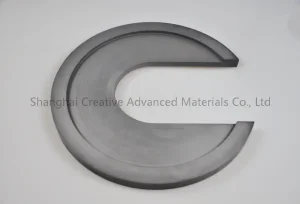
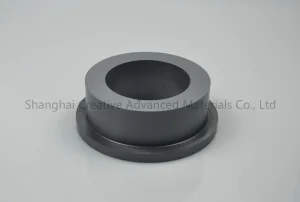
Silicon Carbide (SiC) wafer chucks, gas distribution plates, and end effectors. In high-density plasma etching systems, our 99.9% pure alumina protects tools from fluorine and chlorine gas erosion while preventing particle contamination.
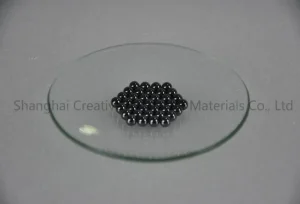
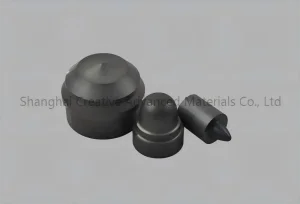
Boston's defense primes require extreme lightweight structural integrity. Our reaction-bonded and hot-pressed Boron Carbide ($B_4C$) and Silicon Nitride ($Si_3N_4$) provide unmatched ballistic energy dispersion, extreme hardness, and thermal shock resistance for airborne electronics and structural components.
Yttria-Stabilized Zirconia (YSZ) possesses exceptional fracture toughness, making it perfect for micro-fluidic channels, micro-pipette nozzles, and high-frequency surgical scalpels. Its biological inertness eliminates toxic reactions and simplifies sterilization protocols.
Every custom component destined for Boston goes through eight checks in our cleanrooms to ensure compliance with demanding parameters.
We audit high-purity sub-micron powders for mineral distribution, keeping raw impurities below 0.05%.
Automated processing controls slurry density and sizing, producing spherical granules with high flowability.
Cold Isostatic Pressing (CIP) applies uniform hydraulic force, producing green bodies with homogeneous density.
Vacuum hot-pressing and pressureless sintering at temperatures up to 2200°C ensure complete material densification.
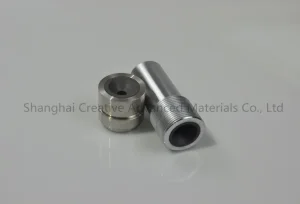
Equipped with high-precision CNC toolsets, we grind complex internal geometries and thread profiles to micron tolerances.
3D Coordinate Measuring Machines check dimensional requirements, including flatness, concentricity, and roundness.
Multistage deionized water baths remove surface residues, prepping products for high-vacuum applications.
Custom-molded foam suspension boxes protect delicate ceramic features during ocean or air transport to Logan Airport.
Procuring advanced ceramics for medical, semiconductor, and defense applications requires careful attention to compliance. At Shanghai Creative Advanced Materials, we recognize that our Boston clients operate in highly regulated environments. Our manufacturing systems are aligned with leading quality and environmental frameworks to ensure smooth validation and integration.
Our production facilities operate under ISO 9001:2015 certification. Every production batch is assigned a unique tracking number, linking it to the raw material chemical lot, sintering kiln parameters, and final dimensional inspection logs. Material test reports (MTRs) detailing density, grain size, hardness, and thermal conductivity are provided with every order.
We certify that our structural ceramics and metallized components are compliant with REACH and RoHS standards. Materials such as alumina, silicon carbide, boron nitride, and zirconia are inherently non-toxic and free of restricted hazardous substances, ensuring safe integration into biomedical systems, laboratory analysis tools, and consumer electronics.
For defense-related projects in the Massachusetts region, we work closely with procurement officers to comply with export control regulations. We support customers with documentation for dual-use classifications, customs clearance, and secure transport from Shanghai directly to regional logistics hubs.
Explore our complete catalog of materials designed for high-abrasion, high-temperature, and corrosive chemical environments.
The technical ceramics landscape is shifting rapidly, driven by industrial electrification, additive manufacturing, and high-temperature material requirements. Understanding these directions helps engineering groups design systems for longer life cycles and higher operational efficiencies.
Stereolithography (SLA) and Binder Jetting technologies are opening new possibilities for structural ceramics. Designers can now create intricate internal cooling channels, weight-reducing honeycomb cores, and custom geometries that were previously impossible to produce using conventional dry pressing or diamond grinding.
Materials such as hafnium diboride ($HfB_2$) and zirconium diboride ($ZrB_2$) are seeing increased use in aerospace thermal protection systems. Able to withstand temperatures exceeding 2000°C without melting or oxidizing, these compounds are critical for next-generation hypersonic vehicles and atmospheric reentry shielding.
By reinforcing ceramic matrices with silicon carbide fibers, engineers can mitigate the inherent brittleness of traditional monoliths. CMCs are key to weight-reduction initiatives in aviation turbine blades and high-stress industrial machinery, offering the strength of metals combined with the heat resistance of ceramics.
Get in touch with our engineering team today to review your CAD files, select materials, and request a detailed quote for prototyping or volume manufacturing.