The Republic of Maldives presents a unique micro-economic and geographical blueprint. Characterized by dispersed atoll communities, high tourism density, and a reliance on seawater reverse osmosis (SWRO) for municipal water resources, the local market demands structural components that deliver extreme resilience. Traditional alloys, including super duplex stainless steels, struggle with pitting, crevice corrosion, and biofouling when subjected to the high-salinity, high-temperature ocean waters of the Indian Ocean.
This reality has driven a widespread technological migration toward advanced ceramics. Today, municipal utility corporations (such as MWSC) and high-end resort infrastructures rely on silicon carbide (SiC) and zirconia (ZrO₂) ceramic valve seats, valve cores, and filtration nozzles. By implementing these chemically inert, tribologically superior components, engineering operators reduce system downtime by up to 74% and eliminate heavy metal leaching, ensuring compliance with strict environmental regulations.
On a macro scale, the global industrial sector is undergoing a rapid evolution. The demand for advanced materials is no longer localized within high-end semiconductor fabrication and aerospace systems. High-purity alumina (Al₂O₃), silicon nitride (Si₃N₄), and boron carbide (B₄C) are expanding into municipal water, marine diesel propulsion, solar energy converters, and localized coastal power grids.
Shanghai Creative Advanced Materials Co., Ltd is positioned at the intersection of this global demand. Leveraging nineteen years of intensive material research and vertical production control, we synthesize and configure high-performance components to meet regional challenges. In the Maldives, this means supplying ceramic units designed specifically to counter the corrosive interaction of ocean water under extreme structural pressures.
Unlike metals that depend on passivated oxide films vulnerable to mechanical erosion and chloride attack, advanced structural ceramics offer thermodynamic stability. This eliminates localized galvanic cells, offering zero corrosion potential in marine configurations.
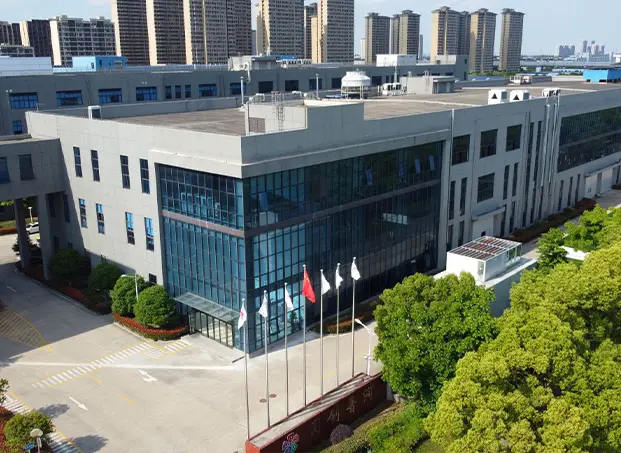
Established in the Shanghai Industrial Comprehensive Development Zone, Shanghai Creative Advanced Materials Co., Ltd (SCA) is a high-tech company that integrates the research, development, production, and sales of semiconductor ceramic targets, powder metallurgy targets, and high-precision ceramic components.
Over nearly two decades, we have engineered tailored material systems to satisfy the most demanding application criteria. We provide complete record traceability from initial raw powder synthesis to the final diamond-ground components, ensuring consistent quality and performance across all batches.
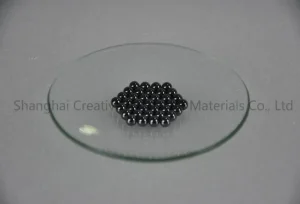
The "Black Diamond" is third only to diamond and cubic boron nitride in hardness. Used in localized sandblasting nozzles, marine armor systems, and neutron shielding within highly specialized facilities.
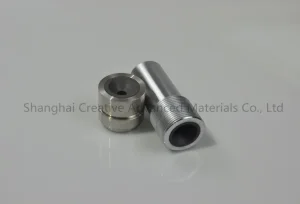
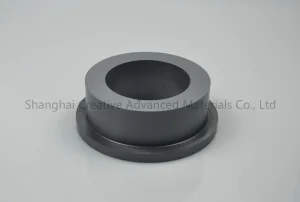
Engineered for high thermal conductivity, corrosion resistance, and structural stability. Deployed in industrial reverse osmosis pump assemblies, mechanical seals, and dynamic marine valves.
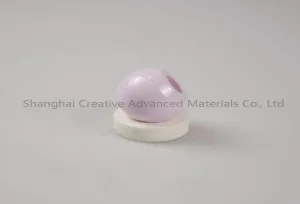
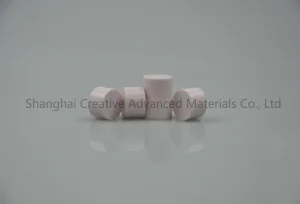
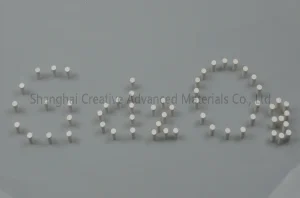
High dielectric strength, mechanical load tolerance, and thermal stability. Serves as insulating substrates, structural guide-pins, and high-voltage feedthroughs in resort microgrid systems.
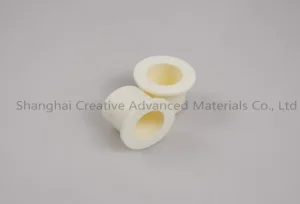
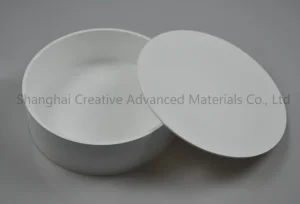
Combines thermal conductivity with high electrical insulation. Widely applicable in vacuum melting components, electrical heaters, and non-wetting metallurgy interfaces.
Strict controls over purity, particle size, and chemical consistency of imported sub-micron powders.
Carefully managed slurry density and thermal control for uniform powder properties and flowability.
Automated presses compress parts to ensure consistent green densities and dimensional uniformity.
Atmospheric, pressureless, and reaction sintering methods are applied to achieve near-theoretical density.
Diamond-grit tooling and high-precision CNC equipment achieve sub-micron tolerances for complex parts.
Dimensional checks using CMMs, alongside ultrasonic crack detection and density verification protocols.
Cleaning operations and packaging carried out in controlled cleanrooms to prevent surface contamination.
Protective custom packaging and partnerships with leading carriers ensure damage-free delivery worldwide.
As the industrial sectors in the Maldives transition toward long-term carbon neutrality, structural materials must adapt. Traditional high-performance alloys are increasingly being replaced by custom-engineered ceramics. The development roadmap focuses on microstructural refinement, including the reduction of grain boundaries and the elimination of residual porosities. This research makes it possible to engineer materials with properties tailored for specific environmental stresses, such as high salinity and rapid temperature changes.
Current work focuses on optimizing silicon carbide (SiC) and alumina (Al₂O₃) formulations at the sub-micron level. By refining grain size distribution during the spray granulation and sintering stages, materials are created with higher fracture toughness. This makes advanced ceramics less susceptible to micro-cracking when subjected to thermal shock or high hydraulic pressures in reverse osmosis pumps.
Biofouling remains a persistent operational challenge in maritime and coastal water intake structures throughout the Maldives. Advanced structural ceramics are engineered with high surface finishes (roughness, Ra < 0.1 µm) to discourage micro-organism adhesion. This minimizes mechanical dragging and extends the service life of impellers, valves, and seal rings.
With Maldives exploring solar-to-hydrogen energy conversion systems and Ocean Thermal Energy Conversion (OTEC), advanced structural ceramics will provide the necessary chemical inertness and high thermal conductivity. Boron Nitride (BN) and Silicon Nitride (Si₃N₄) components are uniquely suited for these environments, serving as thermal exchange barriers and specialized insulation substrates.
Consult with our material science engineering team to customize structural components configured for your specific operational environments.
Send Inquiry Now