Why Types Of Ceramics Matter to Global Buyers?

Time:2026-10-15 Author:Liam
0%

Why Types Of Ceramics Matter to Global Buyers?

Choosing ceramics is rarely as simple as selecting an attractive color or surface finish. Types Of Ceramics influence strength, water absorption, heat resistance, safety, cost, and shipping performance. A glossy plate may look premium, yet it can fail under repeated thermal changes. A practical buying decision starts with understanding the material behind the appearance.

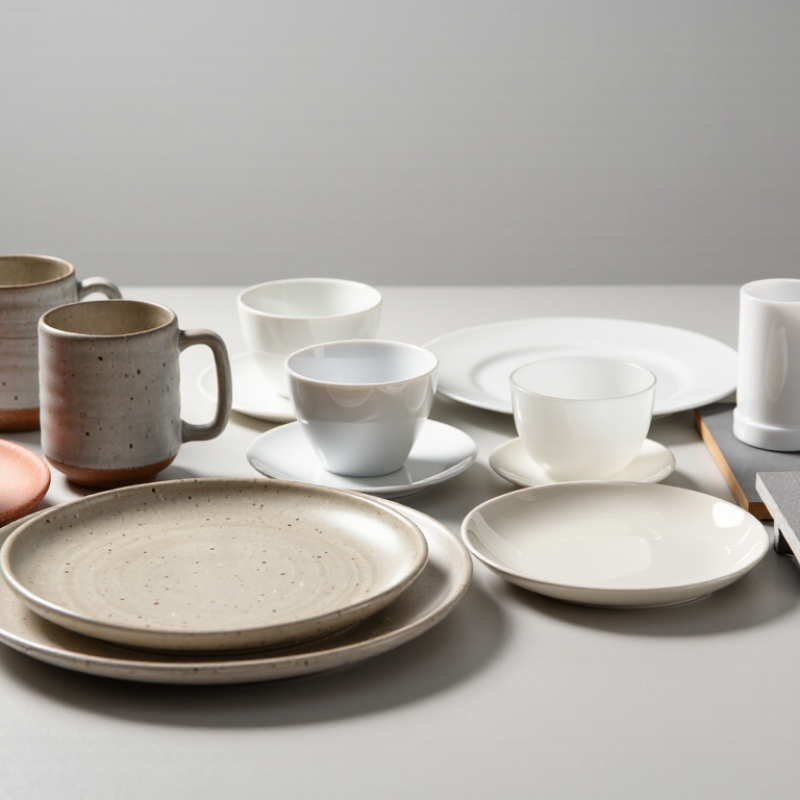
Earthenware often offers warm colors and lower costs, but it usually absorbs more water. Stoneware provides greater durability for restaurants, kitchens, and everyday tableware. Porcelain delivers a fine surface, lower absorption, and a refined appearance. Bone china feels lighter and more translucent, although its pricing and production requirements can vary. Technical ceramics serve demanding industrial uses, where electrical insulation, hardness, or heat resistance matters more than decoration.

Experienced global buyers compare samples under real conditions. They check dimensions, glaze consistency, edge strength, packaging, and test reports. They also ask suppliers about firing temperatures, raw materials, food-contact safety, and quality-control procedures. A sample that survives a showroom inspection may still crack during ocean transport. That lesson is easy to overlook.

Reliable sourcing depends on documented specifications and independent verification. International requirements can differ by destination, product category, and intended use. Buyers should confirm current standards with qualified laboratories or local compliance specialists. No material is perfect for every market. Even experienced purchasers sometimes prioritize appearance too early. A careful review of ceramic types helps prevent costly returns, damaged shipments, and disappointed customers.
Why Types Of Ceramics Matter to Global Buyers?

Ceramic Types and Their Core Material Differences

Why Types of Ceramics Matter to Global Buyers?

Ceramic types differ because their core minerals behave differently during firing. Earthenware usually contains more clay and fires at lower temperatures. It remains porous unless glazed. Stoneware uses stronger clay bodies and often includes feldspar. It becomes denser and more suitable for daily use. Porcelain contains higher kaolin and feldspar content. Its fine particles create a pale, compact body.

The USGS Mineral Commodity Summaries 2024 estimates global kaolin mine production at approximately 45 million metric tons in 2023. Kaolin supports whiteness and plasticity, but it does not guarantee strength alone. Feldspar acts as a flux and helps form a glassy phase during firing. Quartz controls shrinkage, although excess quartz can increase thermal stress. For technical ceramics, alumina and zirconia deliver higher hardness and wear resistance. However, they usually require stricter powder control and more expensive processing.

ISO 13006 classifies ceramic tiles by water absorption. Porcelain tiles generally meet the ≤0.5% absorption level, which matters in wet areas and freeze-prone climates. A low absorption figure still does not prove slip resistance or impact performance. That is where many purchasing decisions become too simple.

Tips: Ask for the body composition, firing temperature, absorption test, and batch tolerances. Compare test methods, not only headline numbers. Request samples from several production lots. One sample can look perfect. Real consistency may tell a different story. Also check glaze fit, edge strength, and color variation under daylight. Supplier documents deserve scrutiny, including mine origin and laboratory accreditation.

How Ceramic Properties Affect Product Performance

Why Types Of Ceramics Matter to Global Buyers?

Ceramic properties directly shape product performance, service life, and installation risk. In factory audits, one recurring mistake is judging quality by appearance alone. A glossy surface can still hide weak bonding or high porosity. ISO 13006 classifies fully vitrified tiles as having water absorption of 0.5% or less. This low absorption improves resistance to staining, frost, and moisture penetration. It does not guarantee perfect performance.

Mechanical strength matters under real pressure. According to ISO 10545-4, tile breaking strength is tested through controlled loading. Large-format tiles need careful attention because their size increases handling stress. The European Commission’s Ceramic Manufacturing Industry BAT Reference Document reports that firing can consume roughly 2–10 gigajoules per tonne, depending on product type and process design. Higher firing temperatures may improve density, but they can also increase energy use and production cost.

Thermal shock is another practical concern. A countertop near a hot pan needs low expansion and stable glazing. ASTM C372 measures the coefficient of linear thermal expansion, helping buyers compare behavior during repeated heating and cooling. Small differences matter. They may become visible as crazing, warping, or edge cracks after installation. Buyers should request test reports, batch data, and dimensional tolerances, not only samples. Samples can mislead. Packaging, transport vibration, and local climate also deserve testing before large-volume purchasing.

Why Types Of Ceramics Matter to Global Buyers? - How Ceramic Properties Affect Product Performance

Ceramic Type Typical Composition Water Absorption Hardness & Wear Resistance Thermal Performance Chemical Resistance Main Performance Advantages Key Limitations Suitable Product Applications
Earthenware Clay minerals, quartz and fluxes; usually fired at approximately 1,000–1,150°C. High; commonly above 10% unless glazed. Moderate; more porous and generally less resistant to impact and abrasion than vitrified ceramics. Moderate thermal stability; sudden temperature changes may cause cracking. Glaze provides the primary barrier; exposed body is more vulnerable to moisture and staining. Low firing cost, easy shaping, warm appearance and strong decorative flexibility. Porosity, lower mechanical strength and limited freeze–thaw durability when unprotected. Decorative pottery, wall tiles, planters and indoor tableware with suitable glaze.
Stoneware Refined clay with silica and fluxes; commonly fired at approximately 1,200–1,300°C. Low to moderate; typically below 3%, depending on the formulation and firing cycle. Good hardness and abrasion resistance; stronger and denser than earthenware. Good heat retention and moderate resistance to thermal shock. Generally good after vitrification and glazing; suitable for many household chemicals. Dense body, reliable durability, good functionality and broad design options. Heavier than some alternatives and can still chip or crack under severe impact. Dinnerware, cookware, sanitary products, floor tiles and architectural ceramics.
Porcelain Kaolin, feldspar and quartz; fired at approximately 1,200–1,450°C. Very low; typically below 0.5% for fully vitrified porcelain. High hardness, stiffness and surface durability; thin sections can be produced. Good heat resistance, although rapid temperature changes can still cause thermal shock. Very good resistance to water penetration, staining and many household chemicals. Low porosity, refined appearance, dimensional stability and hygienic surface. Higher firing energy and manufacturing cost; brittle failure remains possible under sharp impact. Premium tableware, sanitaryware, wall and floor tiles, electrical insulators and laboratory items.
Vitreous China Vitrified ceramic body, commonly based on clay, silica and fluxes with a glassy phase. Very low; often below 0.5% after proper vitrification. High surface hardness and good resistance to scratching and routine wear. Good resistance to normal hot-water service; not intended for uncontrolled thermal shock. Excellent resistance to moisture, staining and common cleaning chemicals. Non-porous surface, easy cleaning and strong sanitary performance. Relatively brittle; edges and thin projections may chip if mishandled. Toilets, washbasins, urinals and other sanitaryware products.
Alumina Ceramic Aluminum oxide, commonly manufactured with approximately 80–99.9% Al2O3. Very low when properly sintered. Very high High-temperature capability, low electrical conductivity and good dimensional stability. Excellent High hardness, strong wear resistance, electrical insulation and corrosion resistance. Lower fracture toughness than some advanced ceramics; machining can be difficult and costly. Wear parts, electrical insulators, valve components, seals and technical machinery parts.
Zirconia Ceramic Zirconium dioxide stabilized with oxides such as yttria or magnesia. Very low when fully densified. Very high Good thermal insulation and low thermal conductivity; service temperature depends on grade and design. Very good resistance to corrosion and many aggressive chemical environments. Higher fracture toughness than most traditional ceramics and strong resistance to crack propagation. Higher material cost; performance can be affected by prolonged exposure to moisture at certain temperatures. Cutting tools, precision components, dental restorations, wear parts and oxygen-sensor components.
Silicon Carbide Silicon and carbon, typically produced as a dense technical ceramic or reaction-bonded material. Very low in dense grades. Extremely high Excellent Excellent Very high hardness, high-temperature strength, thermal conductivity and resistance to thermal shock. Costly processing; brittle and difficult to machine using conventional methods. Kiln furniture, heat exchangers, mechanical seals, armor components and high-temperature parts.
Mullite Ceramic Aluminosilicate phase, commonly formed from alumina and silica-rich raw materials. Low in dense or well-fired grades. Good hardness and moderate wear resistance. Excellent Good resistance to many molten materials and industrial atmospheres. Low thermal expansion, strong thermal-shock resistance and stability at elevated temperatures. Generally lower strength and toughness than alumina or zirconia in demanding mechanical applications. Kiln shelves, furnace components, thermal insulators and high-temperature supports.
Cordierite Ceramic Magnesium aluminosilicate, commonly containing magnesium oxide, alumina and silica. Low to moderate, depending on porosity and processing. Moderate; selected mainly for thermal rather than high-wear performance. Excellent Good in many ordinary industrial environments. Very low thermal expansion and excellent resistance to rapid temperature changes. Lower mechanical strength and wear resistance than alumina and silicon carbide. Catalyst supports, kiln furniture, heat-resistant cookware and thermal insulators.
Note: Property ranges are typical industry-level comparisons. Actual performance depends on composition, density, firing or sintering conditions, glaze, dimensions, surface finish and applicable testing standards.

Why Application Determines the Right Ceramic Type

Why Types Of Ceramics Matter to Global Buyers?

Why Application Determines the Right Ceramic Type

Ceramic selection should begin with the working environment, not the catalog category. Alumina suits electrical insulation and abrasive contact. Zirconia performs better where fracture resistance and repeated impact matter. Silicon carbide handles severe heat, chemical exposure, and thermal shock. These differences affect safety, service life, and replacement costs.

The MarketsandMarkets Advanced Ceramics Market report projects growth from about USD 12 billion in 2023 to more than USD 20 billion by 2028. That expansion reflects demand from electronics, energy, medical equipment, and industrial processing. Yet market growth does not make every ceramic suitable. A dense technical ceramic may fail if its thermal expansion conflicts with a metal assembly. A low-cost tile body may crack under concentrated mechanical loads. Small details matter.

Tips: Match the ceramic to temperature, load, wear, corrosion, and electrical needs. Ask suppliers for thermal-shock data, flexural strength, porosity, and batch consistency. Check test methods against ISO or ASTM requirements. Do not compare prices before comparing service conditions.

In application reviews, buyers sometimes overvalue hardness. Hardness alone is not enough. A component can resist scratching but still break during installation. The European Commission’s Ceramic Manufacturing BREF also highlights significant energy use across ceramic production, especially during firing. That makes thickness, firing efficiency, and reject rates worth examining. A perfect specification sheet can still hide a poor design choice. Recheck the real failure risk.

How Ceramic Choices Influence Cost and Global Trade

For global buyers, ceramic type is a cost decision, not merely a design preference. Porcelain uses refined raw materials and higher firing temperatures. Earthenware usually needs less thermal energy. It also absorbs more water and may require protective packaging. Stoneware sits between these choices, but factory formulas vary. That variability matters. The same product name can hide different quality levels.

UN Comtrade Database records under HS 6907 show ceramic tile exports exceeded US$20 billion in 2023. Freight, insurance, and breakage can materially change the landed price. Dense porcelain weighs more per square meter than some wall tiles. Pallet utilization then becomes important. A buyer may secure a lower factory quote and still pay more per delivered unit. The World Bank’s Commodity Markets Outlook reported a 26% decline in energy prices during 2023. However, local fuel contracts can produce very different factory costs.

Technical ceramics can cost far more because purity, machining, and inspection requirements are stricter. In building ceramics, firing remains a major energy load, according to the European Commission’s Ceramic Manufacturing Industry BREF. Buyers should request water absorption, dimensional tolerance, firing temperature, carton strength, and test methods. Ask for recent batch records, not only a polished sample. I have seen precise specifications that omitted edge-chipping limits. That is a costly gap. Compare landed cost per usable piece, not invoice price alone. Still, no model predicts every breakage event. Humidity, handling, and port delays can expose weaknesses late.

Key Standards for Comparing Ceramics Across Markets

Ceramic types matter because buyers compare performance, not appearance alone. The 2024 Ceramic World Review reported global ceramic tile production near 16.7 billion square metres in 2023. Such scale makes consistent testing essential across markets.

ISO 13006 and EN 14411 classify tiles by forming method, water absorption, and intended use. ASTM standards often measure similar properties differently. Water absorption may use ASTM C373, while breaking strength follows ASTM C648. Frost resistance can involve ASTM C1026 or ISO 10545-12. These results are not always directly interchangeable. A tile listed as porcelain in one market may require different documentation elsewhere.

Ask suppliers for complete test reports, not isolated certificates. Check absorption results, dimensions, surface abrasion, chemical resistance, and slip performance. For exterior projects, request freeze-thaw evidence from the actual production batch. The 2023 UN Comtrade database shows ceramic tile trade exceeding 10 billion US dollars globally, proving how widely these products move between standards systems. Yet paperwork can still hide practical gaps.

I have seen buyers compare only price per square metre. That approach is incomplete. A cheaper tile may need thicker adhesive, extra sorting, or faster replacement. Samples should be tested under local water, temperature, and cleaning conditions. Standards improve confidence, but they do not replace site experience. Mistakes still happen.

FAQS

How should buyers choose the right ceramic type?

Start with the working environment, not the product category. Check temperature, load, wear, corrosion, and electrical requirements. Shortcuts fail.

When is alumina a suitable choice?

Alumina suits electrical insulation and abrasive contact. It can work well around scraping surfaces and insulating components. Confirm fracture resistance before installation.

When does zirconia offer better performance?

Zirconia is useful where repeated impact and fracture resistance matter. It may suit parts facing sudden loads or frequent movement. Hardness alone proves little.

What conditions favor silicon carbide?

Silicon carbide handles severe heat, chemical exposure, and thermal shock. It can support demanding industrial processes. Verify the actual temperature cycles.

Why can a strong ceramic still fail?

A dense ceramic may expand differently from a metal assembly. Installation stress can then create cracks. A scratch-resistant part is not automatically impact-safe.

Which test information should buyers request?

Request thermal-shock data, flexural strength, porosity, and batch consistency. Also review dimensions, abrasion, chemical resistance, and slip performance. Missing data is a warning.

Can buyers compare test results from different markets directly?

Not always. Testing methods may measure similar properties differently. Compare the complete method, sample conditions, and production batch before judging performance.

Why should samples be tested at the project site?

Local water, temperature, and cleaning chemicals can change ceramic performance. Exterior materials also need freeze-thaw evidence. Laboratory confidence is useful, but incomplete.

Is the lowest price usually the best option?

No. A cheaper tile may require thicker adhesive, extra sorting, or earlier replacement. Compare total service costs, not price per square metre.

How does production efficiency affect ceramic selection?

Firing uses substantial energy, especially for thick products. Thickness and reject rates can affect cost and environmental impact. The specification sheet may still hide a poor choice.

Conclusion

Understanding Types Of Ceramics is essential for global buyers because each category has different material compositions, structures, and performance characteristics. Traditional ceramics, porcelain, stoneware, technical ceramics, and other specialized materials vary in strength, hardness, heat resistance, chemical stability, density, and appearance. These differences directly influence product durability, safety, insulation, thermal performance, and suitability for demanding environments.

The right ceramic choice depends on the product’s intended application, operating conditions, design requirements, and expected service life. Material selection also affects manufacturing complexity, availability, shipping weight, production yield, and overall cost, making it important for international trade planning. To compare ceramics across markets, buyers should review consistent standards for dimensions, tolerances, mechanical properties, thermal behavior, surface quality, testing methods, packaging, and documentation. A clear understanding of these factors helps buyers balance performance, quality, compliance, and budget while selecting the most suitable ceramic solution for their needs.

Liam

Liam

Liam is a dedicated marketing professional with a profound expertise in the industry, where he excels at highlighting the unique advantages of our core products. With a keen understanding of market trends and consumer needs, Liam frequently updates our company’s professional blog, providing......