China’s glass-ceramic sector serves demanding markets, from architectural surfaces to dental restorations and precision components. This introduction to China’s top 10 Glass Ceramic Material manufacturers offers a starting point for evaluating suppliers, not a substitute for technical due diligence. A company’s position can change with the product category, production capacity, and evidence available. Rankings are never perfectly neutral.
Glass-ceramic pioneer Larry L. Hench is often quoted as saying, “The most important thing about a material is what it does, not what it is.” That idea fits this market. Buyers should examine more than polished samples or broad claims. They can compare composition data, thermal-expansion values, bending strength, batch consistency, and test methods. Ask for datasheets. Check certificates and sample performance. A glossy tile may look convincing under showroom lights, yet still perform differently after repeated heating or machining. Details count.
The manufacturers discussed in this guide may differ in specialization, scale, and export experience. Some focus on large architectural panels; others supply small, technically demanding parts. Confirm which products are made in-house, how quality is monitored, and whether specifications match your application. Where information is limited, say so. That uncertainty deserves attention, not concealment. Use the profiles to build a shortlist, then verify claims directly with each supplier. A careful comparison is less dramatic, but more useful.
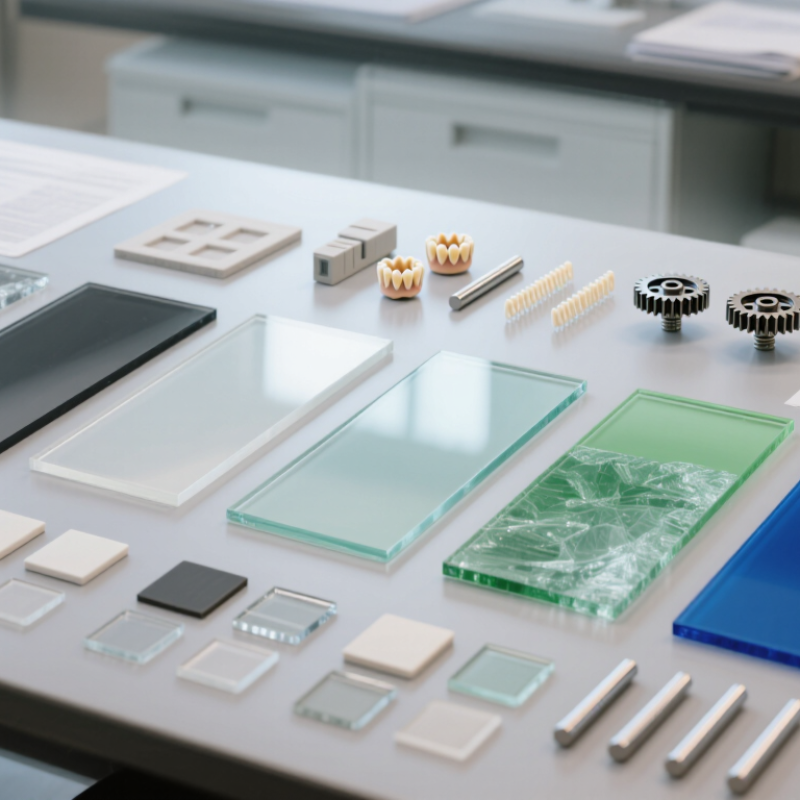
Glass-ceramics begin as glass, then undergo controlled heating that forms fine crystals inside the material. By adjusting composition and heat treatment, manufacturers can tune thermal expansion, strength, and resistance to thermal shock. That control matters. A cooktop must tolerate a hot pan and a cool splash without cracking; precision instruments need stable dimensions as temperatures shift. The European Commission’s 2013 Glass Manufacturing BREF reports that conventional glass melting commonly occurs around 1,500°C. This is useful process context, not a universal glass-ceramic firing temperature.
Industrial uses depend on the balance of properties, not one headline strength figure. Low-expansion glass-ceramics serve in precision optics, telescope mirror supports, and measurement equipment. Chemically durable grades are used in laboratory components, while selected compositions suit dental restorations and electronic packages. Manufacturers assess crystallization, residual stress, surface finish, and thermal cycling—not just nominal composition. Small processing changes can alter the final crystal structure. Not always predictably. That is where material selection gets tricky: a grade that performs well in a laboratory may behave differently in a large production run. Buyers should request test conditions, thermal-expansion data, and application-specific durability results before comparing suppliers.
China’s glass-ceramic manufacturing sector is best understood as a network of specialized stages, rather than one continuous production line. Suppliers prepare glass-forming materials and additives; processors melt, shape, and heat-treat them. Other facilities focus on finishing, testing, or components for construction, electronics, and industrial equipment. Not one chain. Companies may handle several stages, while smaller workshops often concentrate on a single process. The map is not perfectly tidy, and capabilities vary by region and product type.
Tips: When assessing a supplier, ask for the material specification, sample dimensions, test methods, and production tolerances. Request recent test records. A polished sample alone tells little about consistency across a full batch.
For buyers, the practical task is matching technical requirements to the right production setup. Confirm whether a manufacturer controls heat treatment and quality checks in-house or relies on outside partners. Ask how it tracks defects, dimensional variation, and batch-to-batch changes. These details can reveal more than a broad product list. Glass-ceramic performance depends on composition and processing conditions, so small process differences matter. I would still verify claims through samples and documented tests; supplier descriptions do not always explain the limits clearly.
China Top 10 Glass Ceramic Material Manufacturers
Criteria for Selecting China’s Leading Glass-Ceramic Manufacturers
Choosing a glass-ceramic manufacturer takes more than comparing prices. Check whether its material specifications match your operating conditions, including service temperature, thermal shock resistance, dimensions, and surface finish. Ask for recent test data and clear information about how samples are tested. A capable supplier should explain its production controls, inspection steps, and options for adjusting a product to fit your equipment. Specific answers matter. A glossy catalog is not proof of consistent quality.
Tips: Request samples from more than one production batch. Compare measurements and appearance under the same lighting, and ask how the supplier handles defects or specification changes.
Review delivery capacity, communication, and technical support alongside product performance. Confirm lead times in writing and ask what documentation accompanies each shipment. If a supplier cannot explain a test result in plain language, pause and ask again. That may reflect a communication gap, not poor material. Still, do not assume. A checklist helps, but it cannot replace independent testing for demanding applications. Manufacturers should be judged on evidence, not promises.
A practical, evidence-based supplier evaluation framework
This table ranks ten selection criteria, not companies. The weightings are an illustrative procurement model, not an industry standard or a verified manufacturer ranking. Glass-ceramic requirements vary by application; agree on product-specific targets before comparing suppliers.
| No. | Selection criterion | Weight | Evidence to request | Evaluation guidance |
|---|---|---|---|---|
| 1 | Application and product fit | 18% | Technical data sheet, product grade description, intended-use information, and a written response to the buyer’s operating conditions. | Assess whether the proposed material and form meet the agreed end-use requirements. There is no single glass-ceramic grade suitable for every application. |
| 2 | Composition and process control | 12% | Available composition or grade information, batch-control procedures, change-control process, and records showing how production lots are identified. | Check that the supplier can maintain the agreed product specification and notify customers of relevant material or process changes. |
| 3 | Thermal properties | 12% | Test report for the specified coefficient of thermal expansion and, where relevant, thermal-shock or service-temperature performance. Confirm test conditions and temperature range. | Compare results with application-specific limits. Thermal expansion and temperature requirements should be set for the intended design; avoid assuming one universal target. |
| 4 | Mechanical performance | 10% | Test data for the properties relevant to the part, such as flexural strength, hardness, or fracture-related performance, with sample dimensions and test method stated. | Compare like-for-like results, including specimen preparation and test conditions. Use the required design values and safety factors for the application. |
| 5 | Optical and surface quality | 8% | Appearance limits, surface-finish requirements, inspection method, and representative samples or approved reference pieces, if these properties matter to the product. | Define acceptance criteria for visible defects, finish, color, or transmission as applicable. These requirements depend on the end use and should be documented. |
| 6 | Dimensions and manufacturing capability | 10% | Capability statement for requested shapes and sizes, dimensional tolerances, inspection records, and a sample inspection report for comparable work. | Evaluate against the buyer’s drawings and tolerances. Confirm which features are measured, the inspection frequency, and how nonconforming parts are handled. |
| 7 | Quality management and traceability | 10% | Current quality-management certificate, certificate scope, quality procedures, lot identification, and examples of corrective-action or nonconformance records. | Verify certificate validity and scope with the issuing certification body. ISO 9001 is a quality-management-system standard; certification alone does not guarantee product performance. |
| 8 | Testing and measurement capability | 8% | List of in-house tests and equipment, calibration records, sample reports, and details of any external laboratory used for testing. | For outsourced tests, review the laboratory’s competence and the scope of its accreditation. ISO/IEC 17025 specifies requirements for testing and calibration laboratory competence. |
| 9 | Production capacity and delivery reliability | 6% | Quoted production lead time, available capacity for the requested order, production schedule, packaging plan, and documented delivery-performance information where available. | Compare the supplier’s confirmed schedule with the required delivery window. Treat lead times and capacity as order- and product-specific rather than universal figures. |
| 10 | Environmental management and compliance | 6% | Relevant compliance declarations, material safety information where applicable, and a current environmental-management certificate if claimed. | Check requirements for the destination market and application. ISO 14001 concerns environmental management systems; certification does not itself establish product-specific regulatory compliance. |
| Total weighting | 100% | Suggested weighted score: criterion weight × buyer-assigned score. Set the scoring scale and minimum acceptance requirements before supplier comparison. | ||
Note: Request current, product-specific documentation and verify certificates, test methods, and claims directly. This framework intentionally contains no company names, brand names, or unsupported supplier rankings.
China’s glass-ceramic sector serves both industrial users and consumer-product makers. A useful profile of ten manufacturers should compare capabilities, not rely on a ranking alone. The profiles may include suppliers specializing in cooktop panels, laboratory components, optical substrates, architectural surfaces, kiln furniture, electronic insulation, machinable parts, cookware, dental materials, and custom-formed components. These are different markets. A supplier experienced with thin, smooth panels may not suit thick parts exposed to repeated thermal shock.
For each manufacturer, check its material composition, forming process, crystallization control, and available testing data. Ask about thermal expansion, service temperature, dimensional tolerance, and batch consistency. A technical data sheet is useful, but a sample tested under actual operating conditions is better. Production scale and customization options also matter. Some suppliers may describe a material broadly as glass-ceramic, while its properties depend on the precise formulation and process. That distinction is easy to overlook.
Tips: Request a small sample and test it before specifying bulk supply. Compare certificates, tolerances, and lead times in writing. Rankings can change with application needs; even a careful shortlist has gaps.
Comparing the ten manufacturers of glass-ceramic materials is more useful when the focus is capability, not a simple ranking. Their performance depends on composition, controlled crystallization, and production consistency. A buyer should check technical data for thermal expansion, service temperature, strength, and available sheet or component sizes. Details matter.
Product range can reveal how well a supplier serves different needs. Some offer large, flat panels for cooktops or fireplace viewing; others specialize in machinable blocks, laboratory parts, or custom shapes. Low-expansion grades can resist rapid temperature changes, but that performance is formulation-specific. Ask for test conditions, tolerances, and batch-control information, rather than relying on a broad claim. Not every grade fits.
Applications set different priorities. A household cooking surface needs heat resistance and a cleanable finish, while a precision instrument may need dimensional stability and consistent optical properties. Sample testing under realistic temperature cycles can expose issues that a datasheet misses. I would also compare lead times, technical support, and the manufacturer’s ability to maintain specifications across repeat orders. Catalogs look tidy; production is less tidy. A small variation in thickness or finish may matter more than an impressive product list.
They begin as glass. Controlled heating forms fine crystals inside the material.
Composition and heat treatment can tune thermal expansion, strength, and thermal-shock resistance. Small process changes may still cause surprises.
They can support precision optics, telescope mirrors, and measurement equipment. Stable dimensions matter.
Chemically durable grades may serve in laboratory parts. Selected compositions are also used in dental restorations and electronic packages.
No. It describes a common conventional glass-melting temperature, not a universal glass-ceramic firing temperature.
Check thermal expansion, service temperature, strength, sizes, tolerances, and batch-control information. Details matter.
Temperature cycling can reveal problems that a datasheet misses. A lab result may not predict a large production run.
Thickness, surface finish, lead times, and repeat-order consistency can matter. Catalogs look tidy; production is less tidy.
This article explores the properties of Glass Ceramic Material and explains why it is used in applications that require a combination of strength, thermal stability, and precise performance. It outlines how China’s glass-ceramic manufacturing sector is structured, from material development and production to processing and supply for different industrial needs.
The article also presents a framework for evaluating manufacturers, including product range, technical capabilities, quality control, production capacity, and application experience. Its profiles of ten notable manufacturers offer a broad view of the sector without focusing on brand promotion. A final comparison considers how differences in products and capabilities may suit varied applications, helping readers identify practical factors to weigh when assessing potential suppliers.
