
Sourcing Ceramic Matrix Composites in 2026 requires more than comparing quotations. Buyers must verify temperature capability, fiber architecture, coating systems, machining limits, and production evidence. A turbine shroud may face temperatures above 1,300°C. Its real performance depends on the complete material system, not the ceramic matrix alone.
Market forecasts show strong expansion, but their definitions differ. MarketsandMarkets’ 2024 report projects the Ceramic Matrix Composites market to grow from approximately USD 9 billion in 2024 to more than USD 15 billion by 2029. Grand View Research also reports sustained growth, driven by aerospace, defense, energy, and automotive applications. The figures are not perfectly aligned. Product scope, regional coverage, and revenue definitions can change the result. Treat forecasts as direction, not proof.
John Slattery, former GE Aviation president and CEO, described CMCs as “a game changer for aviation.” That statement reflects the material’s promise, but sourcing still demands discipline. Ask suppliers for batch traceability, thermal-cycle data, non-destructive inspection records, and realistic delivery schedules. Visit the production line when possible. Look closely at preform handling and furnace controls. Small process variations can create expensive quality disputes.
This guide explains how to build a reliable 2026 sourcing strategy. It covers supplier qualification, technical specifications, cost drivers, certification expectations, and supply-chain risk. Experience matters here. A polished datasheet is useful, but repeatable production evidence matters more. Some assumptions may prove wrong. That is precisely why buyers should test them before signing long-term contracts.
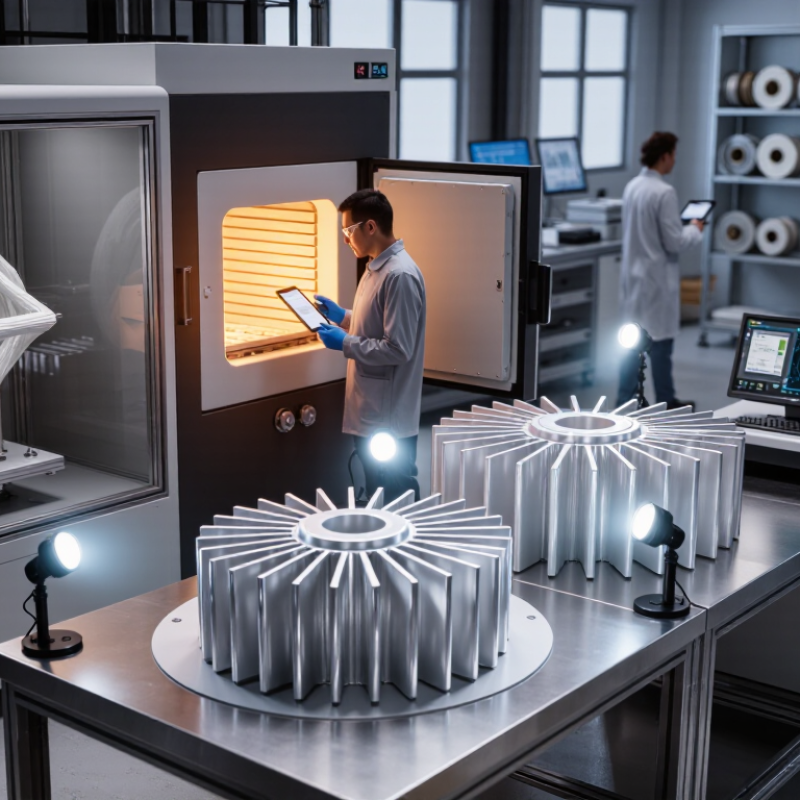
How to Source Ceramic Matrix Composites in 2026?
Defining the application is the real starting point. Describe the operating temperature, heat exposure time, mechanical loads, and required service life. Measure the heat. A short thermal spike differs greatly from continuous exposure at 1,200°C. Include oxidation, moisture, corrosive gases, vibration, and thermal cycling. These details shape the matrix, fiber architecture, coating system, and manufacturing route.
Specify the function of each component. Turbine liners may need low density, thermal stability, and resistance to gas erosion. Brake parts require friction consistency, strength, and predictable wear. Furnace fixtures often prioritize dimensional stability and repeated heating. Ceramic matrix composites can also support lightweight aerospace structures and high-temperature seals. However, each application demands different testing. A material that survives heat may still fail under impact or handling damage.
Request measurable requirements, not broad phrases such as “high performance.” Define tensile strength, fracture toughness, density, porosity, thermal conductivity, and acceptable dimensional change. Ask for batch traceability, process records, inspection methods, and sample test data. Experienced buyers should review joining methods too, because fasteners, adhesives, and interfaces can become weak points. A neat specification can still be wrong. Real assemblies face flaws, uneven heating, and difficult repairs. Leave room for these uncertainties during qualification, while requiring clear evidence before scaling production.
Sourcing ceramic matrix composites in 2026 starts with a material decision, not a supplier shortlist. Define the operating window: peak temperature, thermal cycling, oxidation, vibration, impact, and required service life. A composite that survives 1,200°C in a furnace may fail under repeated shock. That difference matters.
Silicon carbide fiber in a silicon carbide matrix suits hot, oxidizing environments when low density and dimensional stability matter. Oxide-oxide composites can offer strong oxidation resistance and easier air operation, but they may lose strength at higher temperatures. Carbon-based systems deliver excellent thermal shock performance, yet oxidation protection becomes essential. Choose the fiber, matrix, and coating as one system. Their interfaces control crack deflection and damage tolerance. Ask for tensile data, interlaminar strength, creep results, and thermal-expansion measurements at real temperatures. Room-temperature numbers are not enough.
I have found that processing history can change performance more than a datasheet suggests. Fiber alignment, porosity, coating thickness, and machining damage deserve direct inspection. Request batch-level certificates, microscopy images, and representative test reports. Also confirm tolerances for holes, edges, and curved sections before approving a design. A small machining flaw can become a large failure site. Do not select the lightest material automatically. Weight savings may increase coating complexity or maintenance needs. The better choice fits the complete duty cycle, including handling, joining, inspection, and replacement. Some requirements will remain uncertain. Build a test coupon around those uncertainties, and revise the specification when evidence disagrees with the first assumption.
Qualified supplier evaluation must begin with process evidence, not attractive capability slides.
A 2024 MarketsandMarkets report projects the ceramic matrix composites market to grow strongly through 2029. That growth may widen the supplier pool, but it will not guarantee production maturity. Ask each supplier for fiber architecture, matrix chemistry, densification route, coating controls, and furnace uniformity data. Require lot-level traceability. Check whether reported porosity, strength, and oxidation resistance come from production coupons or laboratory specimens.
A serious audit should examine equipment maintenance, operator training, non-destructive inspection, and corrective-action records. Request thermal-cycling results under conditions resembling your component’s service profile. Compare average values with minimum guaranteed performance.
The difference matters.
ISO 9001 or aerospace-quality certification supports reliability, but certification alone cannot prove CMC capability. Review process capability data, including variation between batches, not only the best result.
Run a paid sample program with defined acceptance criteria. Inspect dimensions, surface defects, density, coating thickness, and fracture behavior. Ask for destructive testing plans before volume awards. A qualified supplier should explain failure modes without hiding uncertainty.
That is a useful signal.
My concern is simple: many evaluations overvalue technical novelty and undervalue repeatability. A supplier may pass one impressive test and still lack stable furnace control. Recheck the evidence.
Incomplete data should remain a sourcing risk, not an assumption.
How to Source Ceramic Matrix Composites in 2026?
When sourcing ceramic matrix composites, verify how the supplier actually manufactures each part. Ask for process details, not only a polished capability sheet. Confirm fiber placement, matrix infiltration, heat treatment, machining, and surface finishing methods. These steps strongly affect porosity, dimensional stability, and thermal performance. Request production records for similar geometries and temperatures. A supplier may understand flat panels well but struggle with thin, curved components.
Testing should match your real operating environment. Review data for density, fiber volume, tensile strength, interlaminar strength, thermal shock, oxidation, and creep. Ask whether testing used representative materials, thicknesses, and heat cycles. Non-destructive inspection should include a defined method, acceptance criteria, and qualified operators. Certifications also need careful review. Check certificate scope, expiration dates, audit status, and whether they cover the actual facility. Quality systems such as ISO 9001 or AS9100 can support reliability, but they do not prove every component will perform perfectly.
Tips: Visit the manufacturing site when possible. Compare a test coupon with the finished part. Request lot traceability from raw fiber to final inspection. Ask how failed parts are investigated and documented. Do not accept “qualified” without evidence. One weakness remains: supplier data may represent ideal samples, not production variation. Plan an independent verification test before approving high-consequence applications.
| Sourcing Checkpoint | What to Verify | Required Objective Evidence | Relevant Standards or Test Methods | Decision Metric | 2026 Readiness Indicator |
|---|---|---|---|---|---|
| Material System | Confirm the ceramic matrix type, reinforcement fiber, fiber architecture, interphase coating, and intended operating temperature. | Controlled material specification, approved raw-material list, fiber and coating certificates, and documented material revision history. | Supplier material specification; internal design allowables; chemical and phase characterization by validated laboratory methods. | All constituents and permitted substitutions are explicitly defined. | Required |
| Manufacturing Route | Verify experience with the proposed route, such as chemical vapor infiltration, polymer infiltration and pyrolysis, slurry infiltration, melt infiltration, or hybrid processing. | Process flow chart, equipment list, qualified work instructions, process parameters, furnace records, and production history for comparable geometries. | Documented special-process qualification; controlled thermal-cycle, infiltration, coating, machining, and heat-treatment procedures. | Demonstrated repeatability across multiple production lots. | Required |
| Geometry and Tooling | Assess maximum part size, wall thickness, curvature, channels, holes, joining features, dimensional tolerances, and tooling limits. | Capability drawings, inspection reports, tooling plans, dimensional measurement system details, and representative sample parts. | Customer drawing requirements; calibrated coordinate measurement, optical measurement, or equivalent dimensional inspection methods. | Capability demonstrated on parts with comparable size and complexity. | Required |
| Porosity and Density | Verify total density, apparent porosity, open porosity, fiber volume fraction, matrix distribution, and internal void control. | Lot-level test reports, specimen location maps, acceptance limits, statistical process-control charts, and nonconformance records. | ASTM C20 for apparent porosity, water absorption, and bulk density where applicable; validated microscopy or imaging methods for microstructural assessment. | Results remain within drawing and qualification limits for every lot. | Required |
| Mechanical Testing | Confirm tensile, flexural, shear, fracture, fatigue, and temperature-dependent performance using the actual material system and fiber architecture. | Raw data, specimen dimensions, conditioning history, failure modes, test-machine calibration, and statistical summaries, not only average values. | ASTM C1275 for tensile properties; ASTM C1341 for flexural properties; ASTM C1292 for shear strength; ASTM C1359 for high-temperature tensile properties, when applicable. | Allowables are based on representative coupons and documented variability. | Required |
| Thermal and Environmental Durability | Evaluate oxidation, thermal cycling, thermal shock, moisture exposure, corrosive atmosphere, erosion, and service-specific aging. | Exposure profiles, pre- and post-test measurements, coating inspection, mass-change records, microscopy, and residual-strength results. | Customer-defined environmental test plans supported by controlled furnace, burner-rig, thermal-cycle, or atmosphere-control procedures. | Residual performance meets the required service-life target after exposure. | Application-specific |
| Non-Destructive Evaluation | Confirm the ability to detect delamination, cracks, inclusions, debonds, density variation, coating defects, and machining damage. | NDE procedure qualification, operator qualification records, calibration standards, sensitivity studies, and inspection reports. | Ultrasonic testing, industrial radiography, computed tomography, thermography, and visual inspection using validated written procedures. | Defect-detection capability is demonstrated against defined acceptance criteria. | Required |
| Machining and Finishing | Verify diamond-tool machining, edge treatment, hole quality, surface roughness, coating repair, cleaning, and protection against fiber damage. | Tool-control plan, machining parameters, surface-finish records, edge-condition limits, and post-machining NDE results. | Drawing-specific dimensional and surface-finish requirements; validated inspection methods for brittle ceramic-based materials. | No unacceptable edge chipping, delamination, cracking, or fiber pull-out. | Required |
| Quality Management | Check control of configuration, traceability, calibration, nonconforming material, corrective action, change management, and audits. | Current quality certificate, certificate scope, audit status, quality manual, calibration system, and sample corrective-action records. | ISO 9001 for quality management; EN 9100 where aerospace quality-management requirements apply. | Certificate scope covers the proposed product and manufacturing activities. | Required |
| Laboratory Competence | Determine whether internal or external laboratories are competent for the exact tests required by the procurement specification. | Current laboratory accreditation, scope of accreditation, method revision, equipment calibration, proficiency records, and test uncertainty. | ISO/IEC 17025 for testing and calibration laboratory competence; applicable ASTM or customer-approved procedures. | The accreditation scope directly includes the required test method. | Required |
| Production Readiness | Establish whether the supplier can move from coupons or prototypes to repeatable serial production with controlled capacity. | Production-capacity plan, bottleneck analysis, preventive-maintenance records, qualified personnel matrix, yield data, and on-time delivery history. | Production-part approval plan agreed with the customer; first-article inspection and process-control documentation. | Capacity, yield, lead time, and lot size match the purchasing forecast. | Required |
| Change and Traceability Control | Verify controls for changes to fiber, coating, matrix chemistry, tooling, furnace profile, software, subcontractors, and test methods. | Change-notification procedure, serial or lot traceability, genealogy records, retained samples, and requalification triggers. | Configuration-management procedure aligned with the customer contract and applicable aerospace or industrial quality requirements. | Every delivered part can be traced to raw materials, process records, operators, equipment, and inspection results. | Required |
| Commercial and Compliance Review | Review quotation validity, tooling ownership, intellectual-property responsibilities, export restrictions, packaging, storage, warranty, and long-term documentation retention. | Signed statement of work, compliance matrix, delivery schedule, packaging specification, records-retention period, and risk register. | Contract-specific terms, applicable export-control requirements, and customer data-protection or cybersecurity requirements. | Technical, legal, delivery, and documentation risks are assigned and mitigated. | Required |
| Procurement rule: approve a ceramic matrix composite source only after the manufacturing process, test evidence, certification scope, traceability, and production capacity have been verified against the intended application and contractual requirements. | |||||
Compare Quotes, Lead Times, Contracts, and Supply Risks
Sourcing ceramic matrix composites requires more than comparing unit prices. Ask each supplier to price the same fiber architecture, matrix type, dimensions, tolerances, and inspection plan. A quote without these details is not comparable. Request sample test data, production history, and traceability for each batch. Details matter. Check density, porosity, strength, and thermal expansion against your design requirements.
Lead time is conditional. Separate material preparation, tooling, processing, testing, and shipping dates. One supplier may promise eight weeks but exclude qualification testing. Another may quote twelve weeks with reserved furnace capacity. Confirm monthly capacity, minimum order quantities, and recovery plans for equipment failure. During one review, we overlooked testing queues and underestimated delivery by three weeks. That mistake changed our purchasing schedule.
Contracts should define acceptance criteria, retesting rights, change notifications, documentation, and remedies for late delivery. Include clear ownership of tooling and technical data. Supply risk also deserves measurable attention. Review single-source materials, regional logistics, energy dependence, and subcontracted processes. Request evidence of backup equipment and alternative raw-material approvals. A supplier may appear reliable until one furnace stops. Do not accept vague assurances. Use milestones, quarterly risk reviews, and written escalation contacts. The comparison may remain imperfect, but its assumptions become visible.
Define operating temperature, exposure time, mechanical loads, and required service life. Measure continuous heat separately from short thermal spikes. Include moisture, oxidation, corrosive gases, vibration, and thermal cycling. A neat specification can still fail.
Turbine liners may need low density and resistance to hot gas erosion. Brake parts require stable friction, strength, and predictable wear. Furnace fixtures often need dimensional stability during repeated heating. Lightweight structures and high-temperature seals are also possible applications.
Specify tensile strength, fracture toughness, density, porosity, and thermal conductivity. Define acceptable dimensional change after thermal cycling. Request coating thickness, inspection methods, and batch traceability. Avoid vague terms like “high performance.”
Request details about fiber architecture, matrix chemistry, densification, and coating control. Review furnace uniformity data and process capability across batches. Ask whether results came from production coupons or laboratory specimens. One excellent test proves little.
Review equipment maintenance, operator training, non-destructive inspection, and corrective-action records. Request thermal-cycling results that match the component’s service conditions. Compare minimum guaranteed values with average results. Certification helps, but it cannot prove stable composite production.
Use paid samples with written acceptance criteria. Inspect dimensions, surface defects, density, coating thickness, and fracture behavior. Agree on destructive testing before awarding volume production. Unreported uncertainty remains a sourcing risk.
Request matching fiber architecture, matrix type, dimensions, tolerances, and inspection plans. Separate material preparation, tooling, processing, testing, and shipping dates. Confirm monthly capacity and minimum order quantities. Eight weeks may exclude testing.
Define acceptance criteria, retesting rights, change notifications, and remedies for delays. Clarify tooling ownership and access to technical data. Review single-source materials, regional logistics, energy dependence, and subcontracted work. One furnace failure can disrupt delivery.
Sourcing Ceramic Matrix Composites in 2026 requires a structured approach that begins with clearly defining performance requirements and intended applications. Buyers should identify operating temperatures, mechanical loads, oxidation exposure, thermal shock conditions, dimensional tolerances, and expected service life before selecting a material system. The choice between different ceramic and reinforcement combinations should reflect the balance of strength, weight, durability, manufacturability, and total cost.
After establishing the material requirements, organizations should evaluate qualified suppliers based on technical experience, production capacity, process control, quality systems, and the ability to provide consistent documentation. Manufacturing capabilities, inspection methods, testing data, and relevant certifications should be verified before commercial discussions progress. Finally, buyers should compare quotations, tooling costs, minimum order quantities, lead times, payment terms, warranty conditions, and contract responsibilities. A careful assessment of capacity constraints, raw material availability, logistics, and contingency plans can reduce supply risks and support a reliable long-term Ceramic Matrix Composites procurement strategy.
