
Aluminium Titanium Nitride is becoming a strategic coating material for manufacturers seeking longer tool life, higher cutting speeds, and improved oxidation resistance. Often written as AlTiN or TiAlN, it forms a hard ceramic layer on carbide drills, milling cutters, medical tools, and precision components. Its dark violet or black surface is familiar on tools used in dry machining.
The opportunity is substantial. Grand View Research reported that the global physical vapor deposition market was valued at approximately USD 25 billion in 2023, with cutting tools among its important applications. MarketsandMarkets also identifies rising demand for wear-resistant coatings in automotive, aerospace, and industrial manufacturing. These reports do not isolate Aluminium Titanium Nitride perfectly, but they show the commercial environment surrounding its growth.
Performance depends on more than hardness. Aluminum content, arc evaporation settings, substrate preparation, coating thickness, and cutting temperature can change results dramatically. Small process errors matter. A coating may look excellent yet fail early on a poorly prepared edge.
In their widely cited review, materials scientists S. PalDey and S. C. Deevi stated that “TiAlN coatings have superior oxidation resistance compared with TiN coatings.” That observation remains important for high-temperature machining. However, practical experience suggests caution. AlTiN is not automatically the best choice for every alloy or machine condition. Suppliers should validate adhesion, friction, oxidation behavior, and tool life under real production loads. Transparent testing builds more trust than impressive hardness numbers alone.
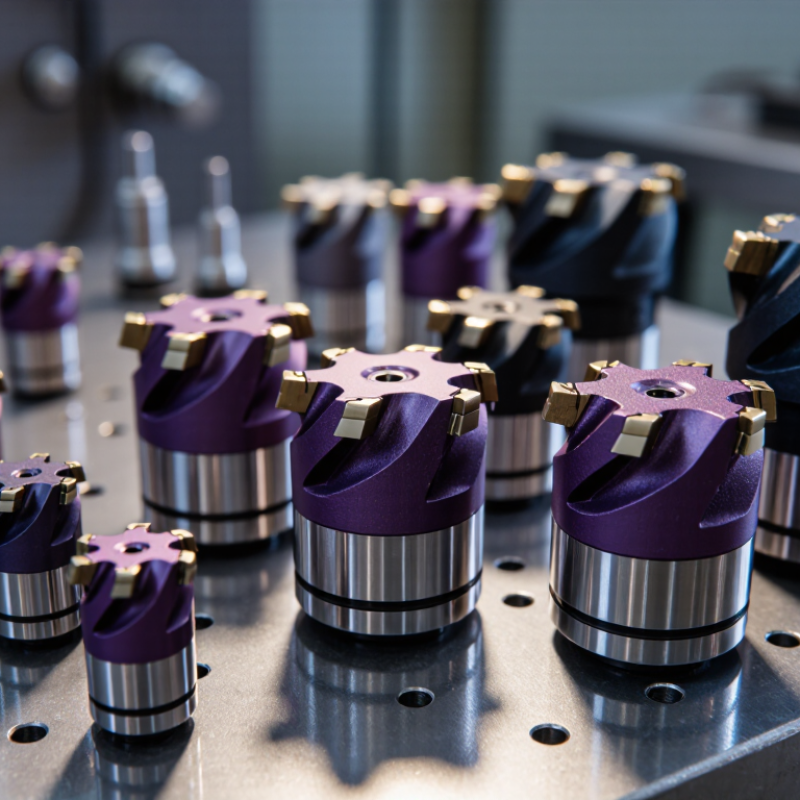
Aluminium titanium nitride, commonly called AlTiN, is a hard ceramic coating for cutting tools and wear parts. It usually contains aluminium, titanium, and nitrogen. During heating, aluminium can form a protective oxide layer. This layer helps reduce oxidation during demanding machining. The coating is typically applied by physical vapour deposition in a controlled vacuum chamber. Tool edges may appear dark violet, bronze, or black.
AlTiN is used on carbide drills, milling cutters, thread tools, and selected forming dies. It performs well when cutting hardened steel, stainless steel, and heat-resistant alloys. Dry machining can sometimes reduce the need for cutting fluid. However, coating choice still depends on speed, feed rate, tool geometry, and workpiece material. It is not a universal solution. Poor edge preparation may cause early chipping, even with a strong coating.
When comparing aluminium titanium nitride manufacturers, buyers should examine coating thickness, aluminium content, adhesion testing, and batch consistency. Experienced suppliers should provide process data and application guidance, not only hardness figures. Ask for performance evidence under similar cutting conditions. Laboratory results can look impressive. Factory results may differ. Temperature control, substrate preparation, and machine stability often decide the real service life. A practical trial on several tools remains useful, although it takes time and may reveal uncomfortable weaknesses.
China’s aluminium titanium nitride manufacturing usually begins with high-purity aluminium and titanium powders. Technicians weigh both materials under controlled conditions. Small errors can change the coating’s hardness, color, and adhesion. The powders are blended, compacted, and treated in a vacuum furnace. Some producers use alloy targets made through melting and vacuum sintering. This step requires careful control of temperature, pressure, and impurity levels. After cooling, the targets are machined into precise shapes. Workers inspect density, surface flatness, chemical composition, and internal defects. Testing matters here.
The finished target supports PVD coating production. Before coating, operators clean and heat the cutting tool or metal component. A vacuum chamber removes moisture and air from the surface. Nitrogen then reacts with aluminium and titanium during arc evaporation or sputtering. The coating may appear gold, bronze, or dark violet, depending on its composition and process settings. Engineers adjust bias voltage, nitrogen flow, chamber pressure, and deposition time. These details influence thickness and wear resistance. In practical production, uniformity across complex tool edges remains difficult. Not every batch performs perfectly. More inspection does not always remove every process variable. Experienced teams therefore compare hardness, adhesion, thickness, and cutting results, rather than trusting one laboratory number.
China’s leading aluminium titanium nitride manufacturers are usually identified by process control, not production volume alone. Strong suppliers manage alloy composition, powder purity, particle size, and coating performance through documented testing. Their facilities often include vacuum coating systems, particle-size analyzers, and hardness testing equipment. Small details matter. A narrow color variation can signal inconsistent deposition conditions.
The most competitive Chinese manufacturers serve cutting-tool, mold, automotive, and aerospace supply chains. They typically offer customized AlTiN targets, powders, or coated components for high-temperature applications. Experienced engineers adjust aluminium content and deposition parameters for different substrates. They also provide batch certificates, adhesion results, oxidation testing, and traceable inspection records. These documents help buyers compare suppliers beyond attractive quotations.
The market is not perfectly transparent. Some manufacturers publish impressive technical data but provide limited long-term testing. Buyers should request recent samples, independent verification, and production records from several batches. Factory audits can reveal practical weaknesses, including poor moisture control or irregular furnace maintenance. Even capable producers may struggle with stable delivery during rapid expansion. Careful evaluation remains necessary, especially when performance depends on coating thickness, surface preparation, and tool geometry.
| Evaluation Dimension | Typical Chinese Market Capability | Common Technical Range or Practice | Why It Matters When Selecting a Manufacturer |
|---|---|---|---|
| Product Forms | Aluminium titanium nitride is commonly supplied as sputtering targets, cathodes, powders, or coating-service consumables. | Circular targets, rectangular targets, rotary cathodes, and customized geometries are available depending on equipment requirements. | A supplier with multiple product forms can better support PVD coating systems and reduce tooling changes. |
| Material Composition | Manufacturers generally offer composition control for different cutting-tool and decorative-coating requirements. | Aluminium content in Al-Ti-N coatings is frequently adjusted within approximately 40–70 atomic percent of the metallic elements. | Composition affects hardness, oxidation resistance, color, phase stability, and deposition performance. |
| Material Purity | Industrial suppliers commonly provide standard and high-purity grades for research, tooling, and production coating applications. | Typical commercial specifications are around 99.5% to 99.99% total purity, subject to the product form and test method. | Higher purity can reduce arc instability, contamination, and coating defects, but may increase cost. |
| Manufacturing Routes | Chinese producers use powder metallurgy, hot pressing, vacuum sintering, vacuum casting, or combinations of these processes. | The selected route depends on target density, bonding method, geometry, composition uniformity, and batch size. | Process capability directly influences target density, service life, sputtering stability, and usable material yield. |
| Target Density | Qualified target suppliers normally provide density data and inspection records for each production batch. | Dense sintered targets are commonly specified above 95% of theoretical density; premium products may achieve higher values. | Higher density generally supports more stable deposition and lowers the risk of premature cracking or abnormal arcing. |
| Deposition Compatibility | Suppliers commonly support cathodic arc evaporation, magnetron sputtering, and reactive PVD processes. | Product recommendations are usually matched to cathode dimensions, power density, gas chemistry, and substrate temperature. | Compatibility helps maintain coating thickness uniformity and repeatable deposition rates across production batches. |
| Typical Coating Performance | AlTiN coatings are widely used where high hardness and elevated-temperature oxidation resistance are required. | Reported coating hardness is often approximately 25–35 GPa, while practical oxidation performance depends strongly on composition and deposition conditions. | Performance should be verified on the customer’s specific tool material, substrate, and cutting parameters rather than judged from nominal composition alone. |
| Application Coverage | The main demand comes from cutting tools, molds, dies, wear parts, and selected decorative or functional components. | Common applications include milling cutters, drills, punches, forming tools, and components exposed to heat and abrasion. | Application experience is a useful indicator of whether a supplier can recommend the right grade and coating parameters. |
| Quality Documentation | Established suppliers generally provide certificates of analysis, dimensional inspection reports, and traceability records. | Common verification methods include chemical analysis, density testing, metallography, dimensional inspection, and batch traceability. | Complete documentation makes incoming inspection, process validation, and supplier auditing easier. |
| Customization Capability | Many Chinese manufacturers accept customized dimensions, bonding configurations, composition targets, and packaging requirements. | Customization may cover target size, thickness, hole pattern, edge design, backing plate, and production quantity. | Customization is important when the coating system uses non-standard cathode dimensions or proprietary process parameters. |
| Export and Supply Support | Export-oriented suppliers commonly provide technical drawings, protective packaging, international shipping documents, and sample orders. | Lead time varies by geometry, production schedule, customization level, and required inspection scope. | Reliable logistics and technical communication are essential for maintaining coating-line continuity. |
| Recommended Selection Method | The strongest suppliers are identified through technical qualification rather than company size or promotional claims. | Compare purity, density, composition tolerance, dimensional accuracy, test reports, sample performance, lead time, and after-sales support. | There is no universally verified public ranking of Chinese AlTiN manufacturers; application testing and documented quality data provide the most reliable comparison. |
Note: The ranges shown are commonly used industry reference values. Actual specifications vary by product form, composition, deposition system, testing method, and customer requirements.
When comparing Chinese aluminium titanium nitride suppliers, define the product before requesting prices. Powder, sputtering targets, and coated components require different specifications. Ask for aluminium-to-titanium ratios, nitrogen content, particle size, density, and impurity limits. A professional supplier should provide recent inspection reports and explain the testing methods. Vague numbers deserve careful questioning.
Request a small sample for independent verification. Check phase composition, hardness, adhesion, color consistency, and oxidation performance under your actual operating conditions. For coating suppliers, review substrate preparation, chamber technology, coating thickness, and batch uniformity. Production photographs can help, but controlled test records are more valuable. They show whether the process is repeatable.
Traceability also matters. Ask for batch codes, raw material sources, storage conditions, and corrective-action procedures. Confirm whether the supplier can maintain your required volume and delivery schedule. A low quotation may hide weak inspection or unstable feedstock. Some records arrive late. That is a warning, not always a failure, but it needs discussion. Compare technical answers, sample results, communication speed, and after-sales responsibility together. A factory visit or live video inspection can reveal basic details, such as clean storage areas and clearly labeled materials. Pricing should come after these checks, not before them.
China Top Aluminium Titanium Nitride Manufacturers?
Before ordering aluminium titanium nitride coatings, buyers should verify measurable quality standards. A polished certificate is not enough.
Request the coating composition, thickness range, hardness, adhesion, and surface roughness. These values should match the intended cutting speed and workpiece material. Ask whether testing follows recognized ASTM, ISO, or equivalent procedures. The supplier should explain the test method, equipment, and acceptance limits. Vague phrases such as “premium quality” prove little.
Check batch traceability carefully. Each delivery should link to production records, inspection results, and the coating date. Review sample test reports, but confirm that they represent the same process and substrate. Adhesion testing matters because a hard coating can still fail under vibration. Thickness should remain consistent across cutting edges, not only on a convenient sample area.
Ask for dimensional inspection before and after coating. Even a few microns may affect tool clearance. This detail is often overlooked. I would also request coating performance data from comparable applications, including tool life and failure patterns. These results are useful, but they are not universal guarantees. Cutting conditions, coolant, and base material can change the outcome.
Supplier experience becomes clearer through technical answers. Can they discuss pretreatment, chamber control, and quality corrections? Can they provide a practical sampling plan? A factory may meet documentation requirements and still miss a small edge defect. That is why an independent inspection or trial order can reduce uncertainty. Photos help. Physical evidence helps more.
The chart presents indicative published ranges commonly used when evaluating AlTiN coating quality. Buyers should request a certificate of analysis, test method, sampling plan, and batch traceability rather than relying on a single performance value.
Key references include ISO 9001 for quality management, ISO 6507-1 for Vickers hardness testing, ISO 2808 for coating thickness measurement, ISO 2409 for adhesion classification, and ISO 21920-1 for surface texture measurement. Actual acceptance limits should be agreed according to the substrate, deposition process, tool geometry, and end-use conditions.
High-purity aluminium and titanium powders are carefully weighed. The powders are blended, compacted, and treated in a vacuum furnace. Some producers use melted and vacuum-sintered alloy targets. Small errors can affect hardness, color, and adhesion.
The cooled target is machined into a precise shape. Workers inspect its density, flatness, chemical composition, and internal defects. Testing matters here. A polished surface does not prove internal quality.
Operators clean and heat the tool before coating. A vacuum chamber removes moisture and air from its surface. Nitrogen reacts with aluminium and titanium during evaporation or sputtering. The coating may look gold, bronze, or dark violet.
Engineers adjust bias voltage, nitrogen flow, chamber pressure, and deposition time. These settings influence coating thickness and wear resistance. Small changes matter. Complex tool edges may still receive uneven coverage.
Ask for composition, thickness, hardness, adhesion, and surface roughness data. The supplier should explain testing methods, equipment, and acceptance limits. “Premium quality” proves little. Measurable evidence is better.
Each delivery should connect with production records and inspection results. The records should include the coating date and process details. Sample reports must represent the same substrate and process. Otherwise, comparison becomes uncertain.
A hard coating can still fail under vibration. Thickness should remain consistent across cutting edges. A few microns may affect tool clearance. This detail is easy to overlook.
No. Cutting speed, coolant, and base material can change performance. Compare hardness, adhesion, thickness, and real cutting results together. Laboratory numbers help. They are not universal guarantees.
Request an independent inspection or a small trial order. Ask for application data, failure patterns, and a practical sampling plan. Photos help, but physical evidence helps more. Even careful factories can miss a tiny edge defect.
Aluminium Titanium Nitride is a high-performance ceramic coating material valued for its hardness, heat resistance, oxidation protection, and distinctive metallic appearance. It is commonly applied to cutting tools, molds, precision components, and wear-resistant parts where reduced friction and extended service life are important. In China, manufacturers typically produce it through physical vapor deposition or related coating technologies, carefully controlling target composition, chamber conditions, substrate preparation, and coating thickness to achieve stable performance.
When comparing Chinese Aluminium Titanium Nitride suppliers, buyers should evaluate production capability, technical expertise, application experience, delivery reliability, customization options, and after-sales support. Before ordering, it is also important to check coating uniformity, adhesion strength, hardness, thickness tolerance, oxidation resistance, and batch-to-batch consistency. Clear testing reports, quality-control procedures, material specifications, and compliance with relevant international or industry standards can help buyers select a dependable supplier and reduce performance risks.
