Ceramics are not one material, but a broad family shaped by chemistry, heat, and manufacturing. A fired clay mug and an alumina electrical insulator may look unrelated. Both belong to the ceramic world. Understanding the different Types Of Ceramic Material helps explain why some ceramics suit cookware, while others serve in medical implants, cutting tools, or high-temperature furnaces.
A useful starting point is the distinction between traditional and advanced ceramics. Traditional ceramics commonly use clay, silica, and feldspar. They include pottery, bricks, tiles, and porcelain. Advanced ceramics use carefully controlled compounds such as alumina, zirconia, silicon carbide, and silicon nitride. They are designed for demanding electrical, mechanical, or thermal performance. There are also glass ceramics and refractory ceramics. The boundaries can be blurry. Composition and processing sometimes matter more than the label.
Industry figures show why these distinctions matter. Grand View Research’s Advanced Ceramics Market Size, Share & Trends Analysis Report estimated the global market at USD 11.8 billion in 2023, and projected continued growth through 2030. Market estimates depend on which products researchers include, so the number is a guide, not a universal measure. Materials scientist Rustum Roy is often quoted as saying, “Ceramics are the most complex materials known to man.” That complexity is practical, not merely academic. A tiny change in grain size can affect strength or heat resistance. This guide compares the main ceramic types, their properties, and common applications, while noting where simple categories fall short. A little ambiguity remains.
What Are the Different Types of Ceramic Materials?
How Ceramic Materials Are Classified
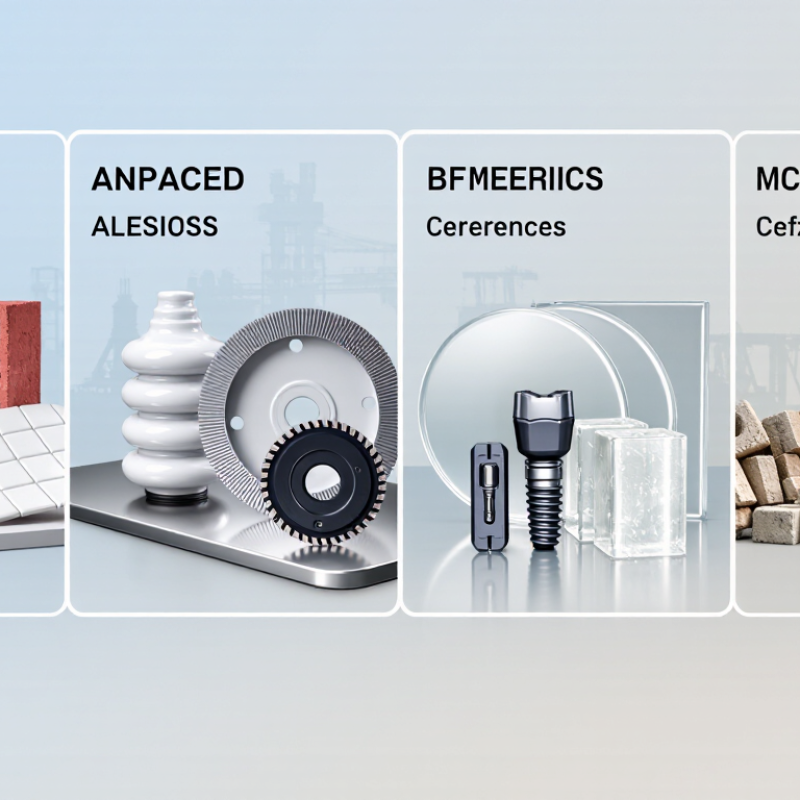
Ceramics are commonly classified by composition, structure, and intended use. Traditional ceramics include clay-based products such as brick, tile, and porcelain. Advanced ceramics use refined compounds, including alumina, zirconia, and silicon carbide, for wear resistance, insulation, or high-temperature performance. Another useful distinction is structure: glass is generally amorphous, while many fired ceramics have crystalline grains. The categories can overlap. The boundary is not perfectly tidy.
Scale matters, but it can mislead. The USGS Mineral Commodity Summaries 2025 estimates that global alumina production reached about 142 million metric tons in 2024. Most alumina serves aluminum production, not ceramic parts; the figure shows the scale of this important ceramic raw material, not ceramic demand. For practical selection, compare the material’s composition with its working conditions. A kiln setter, for example, needs heat resistance, while a floor tile needs surface durability and suitable porosity.
Tips: Check the product’s technical data sheet for composition, water absorption, and maximum service temperature. These details help distinguish similar-looking materials. A label alone may not tell the whole story.
| Ceramic Type | Typical Materials | Key Characteristics | Common Applications |
|---|---|---|---|
| Clay-based ceramics | Earthenware, stoneware, porcelain, and bricks | Made primarily from clay and other mineral ingredients. Properties vary with composition and firing temperature; many products are hard and heat-resistant, while some remain porous unless glazed or vitrified. | Tableware, tiles, sanitaryware, pottery, bricks, and roof tiles |
| Oxide ceramics | Alumina (aluminum oxide), zirconia (zirconium dioxide), and magnesium oxide | Generally resistant to oxidation and chemical attack. Alumina offers hardness and electrical insulation; zirconia can provide high strength and fracture toughness, depending on its composition and processing. | Electrical insulators, wear-resistant parts, cutting components, dental restorations, and thermal barriers |
| Non-oxide ceramics | Silicon carbide, silicon nitride, boron carbide, and aluminum nitride | Often selected for high-temperature strength, hardness, thermal conductivity, or resistance to wear. Their properties differ considerably by material and manufacturing method. | Mechanical seals, furnace components, cutting tools, armor, and heat-dissipating electrical substrates |
| Glass ceramics | Crystalline materials produced through controlled crystallization of glass | Combine a glassy phase with fine crystals. Their thermal expansion and resistance to thermal shock can be tailored through composition and heat treatment. | Cooktop panels, telescope mirrors, laboratory components, and dental materials |
| Glasses | Silicate glass and other amorphous inorganic materials | Typically lack the long-range crystalline structure found in most ceramics. They can be transparent, chemically durable, and electrically insulating, although properties depend on composition. | Windows, containers, optical components, laboratory ware, and insulating fibers |
| Electroceramics | Barium titanate, lead zirconate titanate, and zinc oxide ceramics | A function-based group that includes ceramics with useful dielectric, piezoelectric, ferroelectric, or semiconducting behavior. Many are oxide ceramics. | Capacitors, sensors, actuators, ultrasonic devices, and electronic components |
| Refractories | Alumina-, silica-, magnesia-, and zirconia-based materials | A use-based group designed to withstand high temperatures and, where needed, chemical attack or thermal cycling. Refractory products may be shaped or unshaped. | Furnace linings, kilns, glass-melting equipment, and metal-processing vessels |
Classification note: Ceramic materials can be classified by composition, structure, or intended use. These categories overlap: for example, alumina is an oxide ceramic and may also be used as a refractory or an electrical insulator.
They use controlled compositions and microstructures for demanding loads, heat, wear, or corrosive conditions. Small flaws matter.
Silicon carbide suits hot, abrasive settings. Silicon nitride is used in bearings for low friction and resistance to sudden temperature changes.
Its crystal structure can transform near a growing crack, helping slow crack growth. It is not unbreakable, though.
They combine ceramic fibres with a ceramic matrix to improve damage tolerance. They may suit hot structural parts, but manufacturing quality matters.
Pores, sharp corners, and sudden temperature changes can trigger failure. Engineers must check the real load cycle and inspect finished parts.
Barium-titanate ceramics can serve as dielectric layers in multilayer capacitors. Piezoelectric ceramics can sense vibration or create a small click.
Ferrites appear in transformers, antennas, and motor components. They limit electrical-current losses, though some metallic magnets are more powerful.
Alumina and zirconia can form durable dental parts. Hydroxyapatite coatings can encourage bone attachment. Ceramic implants can still be brittle.
They should match composition and surface finish to forces, fluids, and years of wear. I may be oversimplifying; geometry matters too.
One 2023 estimate placed it near US$11.9 billion, with projected annual growth of 6.5% through 2030. Forecasts are not guarantees.
Types Of Ceramic Material can be understood by how each group is made, what properties it offers, and where it is used. Traditional ceramics include clay products, porcelain, and refractories. Clay ceramics are shaped and fired for everyday or building uses, porcelain is valued for its hardness and refined finish, and refractories are designed to withstand high temperatures. Advanced ceramics are engineered for demanding structural applications, where strength, wear resistance, or stability in harsh conditions is important.
Functional ceramics are selected for specialized behaviors rather than appearance alone. Electronic ceramics can support insulation or other electrical functions, magnetic ceramics are used where magnetic response is needed, and bioceramics are developed for applications involving the human body. Comparing these groups shows how composition and manufacturing affect strength, heat tolerance, electrical or magnetic behavior, and durability, helping determine which ceramic type best suits a particular use.
