
How to Choose Alumina Foam and White Alumina?

Time:2026-10-10 Author:Isabella
0%

Choosing between Alumina Foam White Alumina requires more than comparing color, price, or product names. These materials may serve different technical purposes. Alumina foam usually provides an open, porous structure for filtration, thermal protection, and lightweight support. White alumina often refers to dense or granular alumina products used for wear resistance, insulation, polishing, or high-temperature components. The right choice depends on porosity, strength, purity, operating temperature, and chemical exposure.

Look closely at the working environment. A foundry filter may need controlled pores and stable thermal shock performance. An abrasive application may require hard, clean, and consistent white alumina grains. Specifications matter more than appearance. Review the manufacturer’s test data, including bulk density, alumina content, pore size, compressive strength, and thermal expansion. Samples should be checked under actual service conditions whenever possible. A material that performs well in a catalog may behave differently after repeated heating, vibration, or contact with molten metal.

Experience shows that small details can change the selection. Dust generation, edge damage, and uneven pores are easy to overlook. They can affect production results. It is also important to confirm whether “white alumina” describes a powder, grain, plate, or shaped ceramic. The term is not always used consistently. That creates uncertainty. Consult qualified suppliers and compare several technical datasheets before ordering. There is no universal winner. The better material is the one that matches the application, tolerances, and maintenance plan. Even careful decisions may need revision after field testing. That is normal.
How to Choose Alumina Foam and White Alumina?

What Are Alumina Foam and White Alumina?

How to Choose Alumina Foam and White Alumina?

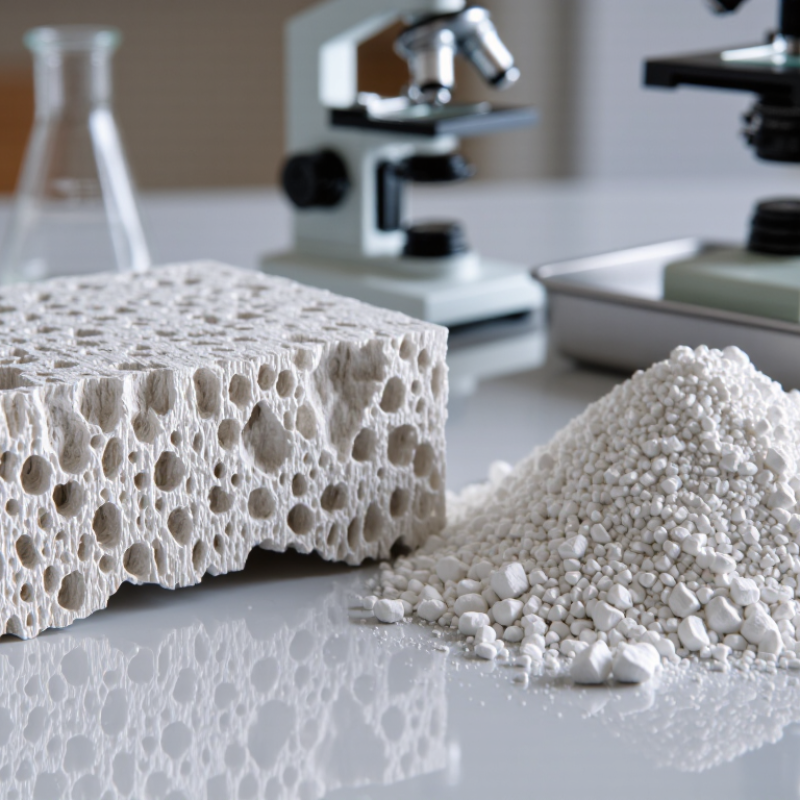
Alumina foam is a lightweight ceramic with an open, sponge-like pore structure. It is commonly used for molten-metal filtration, thermal insulation, burner parts, and catalyst support. Its value comes from controlled porosity, high-temperature stability, and resistance to many corrosive materials. Pore size matters. Smaller pores can improve filtration, while larger pores may reduce pressure loss. Strength is also important because a fragile foam can crack during handling or thermal cycling.

White alumina usually refers to high-purity white aluminum oxide, available as grains, powder, or abrasive media. It is harder and denser than alumina foam. Manufacturers use it for surface finishing, wear-resistant components, refractory mixes, and precision applications. The word “white” does not prove quality. Check alumina content, particle size, bulk density, and impurity levels. A simple color check is not enough. This point is easy to overlook.

Tips: Match the material with the working temperature, fluid, load, and cleaning method. For foam, inspect pore uniformity and compression strength. For white alumina, request a particle-size distribution and chemical analysis. Test a small sample first. Real conditions can expose weaknesses that a datasheet misses. I would also compare thermal shock performance, because laboratory strength may not reflect repeated heating and cooling.

How to Choose Alumina Foam and White Alumina?

Alumina foam is a lightweight, highly porous ceramic, while white alumina generally refers to white fused alumina used as a dense abrasive or refractory aggregate.

The chart uses representative midpoint values from common product ranges. Alumina foam typically has an apparent density of about 0.3–1.0 g/cm³ and open porosity of approximately 60–90%, making it suitable for filtration, thermal insulation, and molten-metal applications. White fused alumina commonly has a bulk density of about 1.5–2.0 g/cm³ and low open porosity, making it better suited to abrasive grains, wear-resistant parts, and refractory mixes. Actual values vary according to pore structure, grain size, purity, and manufacturing process.

How Do Their Properties Differ?

Choosing between alumina foam and white alumina depends on structure, not appearance. Here, white alumina means dense white fused alumina. It commonly contains about 99% aluminium oxide, reaches Mohs hardness 9, and has a density near 3.9 g/cm³. These figures are consistent with technical data summarized in the USGS Mineral Commodity Summaries 2025.

Alumina foam behaves differently. Published ceramic-foam surveys report 70–90% open porosity, densities near 0.3–0.8 g/cm³, and thermal conductivity often below 3 W/m·K at room temperature. Its pores interrupt heat flow and reduce weight. That makes it useful for filtration, furnace insulation, and lightweight support structures. The trade-off is clear. Strength falls as porosity rises. A thin foam wall can chip during handling, even when its alumina chemistry remains stable.

White alumina offers a dense, abrasive surface. It suits wear-resistant linings, precision blasting, and high-temperature components requiring compact geometry. It transfers heat more readily than foam and tolerates concentrated contact better. Still, “high purity” does not guarantee identical performance. Particle size, pore shape, firing temperature, and binder residues can change results. ASTM test methods should guide comparisons, especially for density, compressive strength, and thermal shock. In practical trials, I would test wet and dry conditions. Foam selection is often judged too quickly from catalog values. Actual failure may begin at a corner, not inside the material.

Which Applications Suit Each Material?

How to Choose Alumina Foam and White Alumina?

Alumina foam suits applications that need low weight, open pores, and thermal stability. Its cellular structure can support hot-gas filtration, burner protection, kiln insulation, and molten-metal filtration. Engineers should check pore size carefully. Small pores improve filtration, while larger pores reduce pressure drop. However, foam is not automatically the strongest option. Repeated impacts, vibration, or heavy loading may damage its thin ceramic walls. I have seen designs fail because porosity was valued more than mechanical support.

White alumina is better suited to abrasive media, wear-resistant linings, polishing compounds, and dense ceramic components. Its clean appearance and high hardness support controlled surface finishing. Particle size matters. Coarse grains remove material quickly, while fine powder produces a smoother finish. For refractory use, confirm purity, thermal expansion, and compatibility with the surrounding material. “White” does not guarantee suitability. A simple color check is insufficient.

Tips: Match the material to the physical task. Use alumina foam when airflow, filtration, or insulation matters. Choose white alumina when hardness, abrasion resistance, or surface quality matters. Request test data for temperature, porosity, strength, and chemical exposure. Small trials are wise. Unexpected cracking can reveal a poor fit before full production. Also review cleaning methods, because trapped dust may reduce foam performance over time.

How to Choose Alumina Foam and White Alumina? - Which Applications Suit Each Material?
Comparison Dimension Alumina Foam White Alumina Best Application Fit
Material Structure Open-cell or partially open-cell porous ceramic made from alumina. Its internal network contains a high volume of interconnected pores. Dense, crystalline aluminum oxide material, commonly supplied as white fused alumina grains, powder, or shaped refractory aggregate. Choose according to whether porosity or density is required.
Typical Alumina Content Usually produced from high-alumina ceramic compositions. The final alumina content depends on the formulation, additives, and firing process. Typically about 99% aluminum oxide or higher for high-purity white fused alumina grades; exact purity varies by grade. White alumina is generally preferred where chemical purity is a primary requirement.
Typical Density Low apparent density because of its pore structure. The value depends strongly on porosity, cell size, and strut thickness. High bulk and true density compared with foam ceramics. It provides a compact, load-bearing mineral structure. Alumina foam for lightweight parts; white alumina for dense linings and abrasive media.
Porosity High, often intentionally engineered to provide open passages for gas or liquid flow. Commercial ceramic foams may have porosity above 70%. Low internal porosity when used as a dense aggregate or abrasive grain. Porosity depends on the finished product and processing route. Foam is the natural choice for filtration, flow distribution, and heat exchange.
Thermal Resistance Excellent high-temperature capability when properly fired. The porous structure also lowers thermal mass and can reduce heat transfer. Excellent refractoriness, thermal stability, and resistance to many molten materials at elevated temperatures. Foam for thermal barriers and radiant burners; white alumina for refractory contact surfaces.
Thermal Shock Behavior Can perform well under thermal cycling because of its low thermal mass, but the thin ceramic struts may be vulnerable to impact or rapid mechanical loading. Good thermal-shock performance can be achieved in suitable shapes and formulations, although dense sections may experience higher thermal stresses. Select based on part geometry, heating rate, and mechanical load.
Mechanical Strength Lower compressive and impact strength than dense alumina because load is carried by relatively thin cell walls and struts. High hardness and good wear resistance. Dense shapes and grains provide better resistance to abrasion and compressive loading. White alumina for wear-intensive or load-bearing applications.
Hardness and Abrasion Resistance The alumina phase is hard, but the porous architecture is not normally selected for aggressive abrasive action or repeated impact. Very hard material, commonly used for grinding, blasting, surface preparation, and wear-resistant refractory applications. White alumina is the preferred option for abrasive applications.
Fluid and Gas Permeability Open-cell designs allow controlled flow through the ceramic, making them suitable for filtration, diffusion, and gas distribution. Normally not permeable when used as a dense component. Loose grains may allow bulk-bed flow but do not provide a designed cellular passage network. Alumina foam for engineered flow-through structures.
Filtration Capability Suitable for high-temperature gas filtration and molten-metal filtration when the pore size, coating, and thermal-shock characteristics are properly matched. Not normally used as a standalone porous filter. It may serve as a raw material or aggregate in other refractory structures. Alumina foam for filtration and inclusion removal systems.
Chemical Resistance Generally resistant to oxidation and many chemicals, but the large internal surface area can increase interaction with corrosive media or infiltrating melts. Strong resistance to oxidation and many corrosive environments. Performance depends on impurities, temperature, and contact chemistry. White alumina for dense, chemically demanding contact zones.
Electrical Insulation Alumina is electrically insulating, and the foam structure can combine insulation with low weight and controlled heat transfer. High-purity alumina is widely used as an electrical insulator in high-temperature and high-voltage components. Foam for lightweight thermal insulation; white alumina for dense insulating parts.
Common Forms Panels, blocks, disks, tubes, burner inserts, catalyst supports, and custom-shaped cellular components. Powder, abrasive grains, blasting media, refractory aggregate, bricks, castables, setters, and dense ceramic shapes. Form factor should follow the installation and processing method.
Typical Applications Molten-metal filters, hot-gas filters, radiant burner components, heat exchangers, catalyst supports, lightweight insulation, and flow distributors. Grinding wheels, coated abrasives, blasting, refractory linings, kiln furniture, wear-resistant components, electrical insulators, and high-temperature ceramic parts. Foam for porosity-driven functions; white alumina for hardness and density-driven functions.
Main Advantages Low weight, high specific surface area, controlled permeability, low thermal mass, and the ability to combine filtration with high-temperature stability. High hardness, high purity, excellent wear resistance, strong refractoriness, and reliable performance in dense ceramic or abrasive products. Choose the material whose primary advantage matches the operating requirement.
Main Limitations More vulnerable to impact, edge damage, clogging, and mechanical overload. Performance is sensitive to pore size and manufacturing quality. Heavier and less permeable than foam. Dense sections may require careful design to manage thermal gradients and thermal shock. Consider the balance between strength, permeability, weight, and thermal cycling.
Selection Checklist Specify operating temperature, pore size, porosity, permeability, pressure drop, chemical exposure, thermal cycling, and required mechanical strength. Specify alumina purity, grain size, hardness, bulk density, thermal-shock requirements, abrasion conditions, and chemical compatibility. Use application testing when temperature, molten material, or cyclic loading is severe.

What Factors Should Guide Your Material Selection?

Choosing alumina foam or white alumina depends on the working conditions, not appearance alone. Alumina foam contains a network of open pores, making it useful for molten-metal filtration, gas flow, and lightweight thermal barriers. White alumina is usually a dense, high-purity abrasive or ceramic raw material. Its low impurity level supports cleaner surfaces and stable high-temperature performance.

Start with the process temperature and contact environment. Foam selection should consider pore size, permeability, compressive strength, and thermal shock resistance. A filter with very fine pores may capture more inclusions, but it can restrict flow. White alumina may suit kiln furniture, wear parts, or engineered ceramics requiring hardness and dimensional stability. Check purity carefully when contamination could affect color, melting behavior, or electrical insulation. “White” does not automatically mean better.

Physical testing matters. Ask for porosity data, pore-size distribution, density, and batch consistency. For foam, inspect the cell structure under magnification and look for blocked passages or fragile edges. For white alumina, compare particle size, hardness, and firing response in a small trial. I have seen material perform well in a datasheet test but crack after repeated heating. That result is easy to overlook. Cost should include machining, rejects, replacement frequency, and handling damage. If the application remains uncertain, test both materials under actual thermal cycles before committing to volume.

How Can You Compare Cost, Performance, and Availability?

How to Choose Alumina Foam and White Alumina?

Alumina foam and white alumina serve different engineering needs. Alumina foam contains open pores, so it supports filtration, thermal insulation, and lightweight structures. White alumina is usually dense, granular, or powdered material. It suits abrasive, refractory, and surface-finishing applications. Comparing them only by price can produce a costly mistake.

Cost depends on more than the purchase quote. Foam pricing often reflects pore size, thickness, strength, machining, and firing quality. White alumina costs may vary with purity, particle size, packaging, and supply volume. Performance should be measured against the working environment. Check thermal shock, chemical exposure, compressive strength, surface wear, and dimensional stability. In practical trials, a cheaper foam may fail after repeated heating. I have also seen high-purity material perform poorly when its particle size was unsuitable. That detail is easy to overlook.

Tips: Request technical data and recent test samples. Compare cost per usable part, not cost per kilogram. Ask suppliers about standard stock, production lead time, and minimum order quantities. Confirm whether replacement batches match the original specification. Keep a small reserve for urgent maintenance. Availability matters most when downtime costs more than material. One imperfect assumption can distort the whole comparison, so record test conditions carefully.

FAQS

What is alumina foam?

Alumina foam is a lightweight ceramic with open, sponge-like pores. It supports filtration, insulation, burner protection, and hot-gas flow. Its pores are visible under magnification. Pore size affects filtration and pressure loss.

What is white alumina?

White alumina is usually high-purity aluminum oxide in grains, powder, or abrasive form. It is dense and hard. Common uses include polishing, wear-resistant parts, refractory mixes, and precision ceramics. White color alone proves little.

When should I choose alumina foam?

Choose alumina foam when low weight, open pores, or thermal insulation matters. It can filter hot gases and molten metal. Smaller pores capture more particles. Larger pores usually allow easier flow.

When is white alumina more suitable?

White alumina suits abrasive media, polishing compounds, dense ceramic parts, and wear-resistant linings. Coarse grains remove material faster. Fine powder creates smoother surfaces. It may be unsuitable where open airflow is essential.

Which material handles heavy mechanical loading better?

Dense white alumina usually handles abrasion and concentrated loads better. Foam has thin ceramic walls and can crack under impact. Vibration may damage it. Porosity is useful, but not automatically strong.

What information should I request before buying?

Request alumina content, impurity levels, density, particle-size distribution, and batch consistency. For foam, request porosity, pore-size distribution, permeability, and compression strength. Also ask about thermal shock resistance. Missing data should raise questions.

How should temperature affect material selection?

Match the material with operating temperature and repeated heating cycles. Inspect thermal expansion and compatibility with nearby materials. A sample may survive one heating cycle but fail later. Laboratory results can mislead.

Should I test a small sample?

Yes. Test it under actual temperature, flow, cleaning, and loading conditions. Inspect foam for blocked pores and fragile edges. Check white alumina for cracking and firing response. Small trials are wise.

Does a whiter appearance mean better quality?

No. Color is only a rough visual clue. Check purity, particle size, density, and chemical analysis. A bright surface may hide unsuitable performance. I would not approve material by appearance alone.

Conclusion

Alumina Foam and White Alumina are ceramic materials valued for their resistance to heat, corrosion, and wear, but their structures give them different strengths. Alumina Foam has an open, porous network that provides low weight, thermal insulation, filtration, and controlled gas or liquid flow. White Alumina is a dense, high-purity abrasive and ceramic material known for hardness, dimensional stability, clean appearance, and strong resistance to mechanical damage.

The best choice depends on the application’s operating temperature, load, chemical environment, porosity requirements, surface finish, and expected service life. Alumina Foam is generally suitable for filtration, insulation, catalyst support, and lightweight thermal-management components, while White Alumina is better for abrasive media, wear-resistant parts, protective linings, and precision ceramic products. When comparing options, evaluate total cost rather than purchase price alone, including machining, installation, replacement frequency, energy use, and supply consistency. A practical selection should balance performance, availability, quality requirements, and long-term operating value.

Isabella

Isabella

Isabella is a dedicated marketing professional with a sharp focus on driving brand growth and engagement through strategic content creation. With an extensive background in digital marketing, she combines her passion for storytelling with her keen understanding of industry trends to deliver......