
Alumina is not a single, interchangeable product. Its chemistry, particle size, purity, and surface area can change how it performs in a kiln, catalyst bed, ceramic body, or polishing line. For global buyers, choosing among the Types Of Alumina means matching measurable properties to the job—not relying on a grade name alone. A powder that pours cleanly from a sample jar may still behave differently under production heat. Small details matter.
Chemist Karl Josef Bayer, whose work gave alumina refining its defining process, offers a useful historical reference point. A practical buyer’s maxim inspired by that legacy is: “Choose the material for the process, not the label.” This is an editorial maxim, not a verified quotation from Bayer. That distinction matters when technical claims guide purchasing decisions.
This guide introduces ten common alumina types and the applications they may suit, from calcined and tabular alumina to activated and fused grades. It also highlights the questions worth asking suppliers: What is the typical particle-size distribution? How consistent are purity and moisture levels between batches? Can the supplier provide a current specification sheet and test data? Check the actual figures. Names can mislead. A grade described as “high purity” may still fall short of a particular process requirement. The right choice depends on operating conditions, handling needs, and verified data. Use the comparisons as a starting point, then confirm each specification with the supplier before ordering.
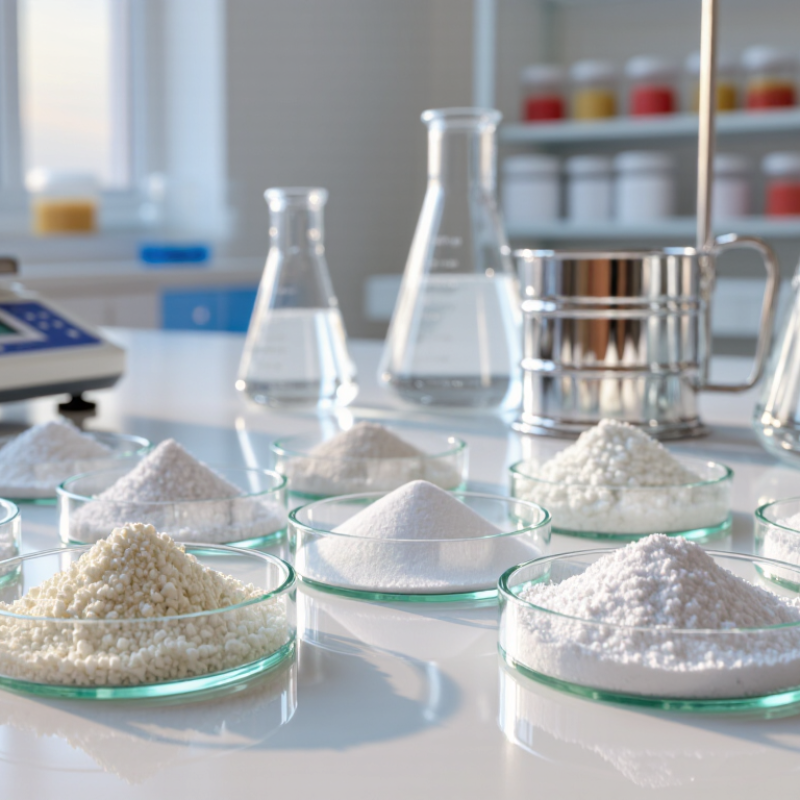
China Top 10 Types of Alumina for Global Buyers
What Alumina Is and How It Is Produced
Alumina, or aluminum oxide (Al₂O₃), is a white industrial powder made mainly from bauxite. It is not the same as aluminum metal. Its properties depend on purity, particle size, crystal structure, and processing. Buyers may encounter smelter-grade alumina for aluminum production and specialty grades for ceramics, abrasives, or refractories. The intended use matters.
Most alumina is produced through the Bayer process. Bauxite is crushed and mixed with hot caustic soda under pressure, which dissolves aluminum-bearing compounds. The remaining solids are separated, and aluminum hydroxide is precipitated from the solution. After washing, it is heated in a kiln to remove water and form alumina. The route sounds tidy on paper; ore chemistry and operating conditions can make results less predictable. Calcination temperature, for example, affects surface area and crystal form.
Tips: Ask for a technical data sheet and check the grade’s intended application. Compare purity, particle-size distribution, and moisture content, not just the product name. For sensitive processes, request a representative sample and test it under your own operating conditions. Small differences can matter.
Alumina (Al2O3) is an aluminum oxide used as a raw material for aluminum production and as an engineered material in ceramics, refractories, abrasives, and adsorption. Most commercial alumina begins with bauxite refined into aluminum hydroxide by the Bayer process; heating the hydroxide produces alumina. Specialized grades are further processed to control purity, particle size, porosity, or crystal structure.
| Alumina Type | Typical Form and Production | Key Characteristics | Common Uses |
|---|---|---|---|
| 1. Smelter-Grade Alumina (SGA) | Produced mainly by Bayer refining and calcination of aluminum hydroxide; supplied as a granular powder. | Designed for feeding into molten cryolite baths during aluminum electrolysis. Particle size, strength, and flow properties are controlled for handling and dissolving. | Primary aluminum production by the Hall–Héroult process. |
| 2. Calcined Alumina | Aluminum hydroxide is heated to drive off water and form predominantly alpha-alumina; properties depend on calcination conditions. | Hard, thermally stable material with low solubility in water. Available in different particle sizes and levels of conversion to alpha-alumina. | Ceramics, refractory products, polishing compounds, and as a feedstock for other alumina products. |
| 3. Reactive Alumina | Typically made by controlled calcination and milling to produce fine, high-surface-area alumina powder. | Fine particle size and high sintering activity can support dense ceramic bodies at suitable firing conditions. | Advanced ceramics, refractory castables, and ceramic formulations requiring improved packing or sintering. |
| 4. Low-Soda Alumina | Produced with additional process control to reduce residual sodium oxide; exact specifications vary by grade. | Lower sodium content than standard grades can help limit unwanted effects on electrical, optical, or ceramic properties. | Technical ceramics, electronic components, and applications with tighter impurity requirements. |
| 5. High-Purity Alumina (HPA) | Made by purification routes that remove trace impurities; high-purity grades are often specified at 99.99% Al2O3 or above, depending on the supplier and application. | Very low impurity levels and controlled particle characteristics; actual purity and trace-element limits should be checked against the product specification. | Specialty ceramics, synthetic sapphire feedstock, phosphors, and selected electronic or optical applications. |
| 6. Tabular Alumina | Produced by sintering shaped or granulated alumina at high temperature, followed by crushing or sizing; it consists mainly of coarse alpha-alumina crystals. | Dense, low-porosity grains with high refractoriness and good resistance to thermal and chemical attack. | Refractory bricks, monolithic refractories, kiln furniture, and other high-temperature linings. |
| 7. White Fused Alumina | Made by electrically melting high-purity alumina and cooling the melt into a solid mass, which is then crushed and graded. | Hard, angular abrasive grains with relatively high purity and low levels of coloring impurities. | Abrasive blasting, bonded and coated abrasives, grinding, and refractory applications. |
| 8. Brown Fused Alumina | Produced by electric-arc smelting of bauxite with reducing agents and iron-bearing additions; the cooled material is crushed and classified. | Hard, tough abrasive grains containing more iron- and titanium-bearing impurities than white fused alumina. | Grinding wheels, abrasive belts, blasting media, and refractory materials. |
| 9. Bubble Alumina | Made by introducing gas into molten alumina to form hollow, closed-cell particles, which are then cooled and sized. | Lightweight, insulating particles with low bulk density and useful resistance to high temperatures. | Lightweight insulating refractories and high-temperature furnace materials. |
| 10. Activated Alumina | Produced by controlled heating (dehydration) of aluminum hydroxide or oxyhydroxide to create a porous transition-alumina structure; commonly supplied as beads or granules. | High surface area and porosity enable adsorption; performance depends on pore structure, moisture, and operating conditions. | Drying gases and liquids, fluoride removal from water, and use as a catalyst support or adsorbent. |
Calcined alumina is heat-treated for industrial uses, including ceramics and refractory linings. Metallurgical-grade alumina is mainly used to produce aluminum.
Tabular alumina has dense, coarse crystals and can withstand thermal shock. Check that its properties match the furnace conditions.
Its fine particles can help form strong, dense refractory mixes. Particle size still matters.
Its porous surface can help dry gases or treat process streams. Ask how it performs under your operating conditions.
White fused alumina is hard and relatively pure, often used in precision abrasives. Brown fused alumina is tougher and used in grinding wheels and blasting media.
Compare purity, particle-size distribution, sodium content, and loss on ignition. Request a recent test report, too.
Yes. Production routes and particle sizes vary. A jar sample can look identical, then behave differently in a kiln.
Controlled abrasion can help finish metal, glass, and ceramics. Try a small sample first; a specification sheet may not reveal every handling issue.
This article introduces alumina, explaining how it is produced and how its grades and physical forms are classified for different industrial needs. It explores ten common Types Of Alumina available from China, including variations in purity, particle size, hardness, porosity, and crystal structure. Rather than treating alumina as a single material, the guide shows how these differences influence performance and suitability for applications such as ceramics, refractories, abrasives, polishing, filtration, and technical components.
For global buyers, selecting the right type means comparing specifications against the demands of the intended process. The article outlines practical considerations such as chemical composition, consistency, physical properties, packaging, and supplier communication. By understanding both the characteristics of each alumina type and the details behind product specifications, buyers can assess options more clearly and make informed sourcing decisions.
