
For global buyers, Polishing Alumina is more than a fine white powder in a sealed bag. Its performance depends on particle size, crystal structure, purity, hardness, and surface treatment. A product that looks consistent may still create scratches, uneven gloss, or slow polishing cycles. These differences become visible on ceramic tiles, optical components, stainless steel, and precision parts.
This guide presents seven practical tips for evaluating Polishing Alumina before purchase. It covers grade selection, particle distribution, purity data, packaging, sampling, supplier verification, and shipment control. Buyers should request technical data sheets, certificates of analysis, and test results from representative batches. Ask how the supplier measures D50, D90, moisture, and iron contamination. Small details matter. A 25-kilogram bag can hide costly variation.
Real purchasing experience also shows that the lowest quoted price is rarely the complete cost. Freight, rejected batches, production delays, and extra filtration can change the calculation. Suppliers with documented quality systems and responsive technical teams usually provide greater confidence, but certification alone is not proof of perfect performance. No checklist is flawless. That assumption can fail. Testing the material on your actual equipment remains essential. A controlled trial, clear acceptance criteria, and retained samples can reduce misunderstandings across borders. The following tips help buyers compare suppliers more carefully, communicate requirements precisely, and build a more reliable purchasing decision.
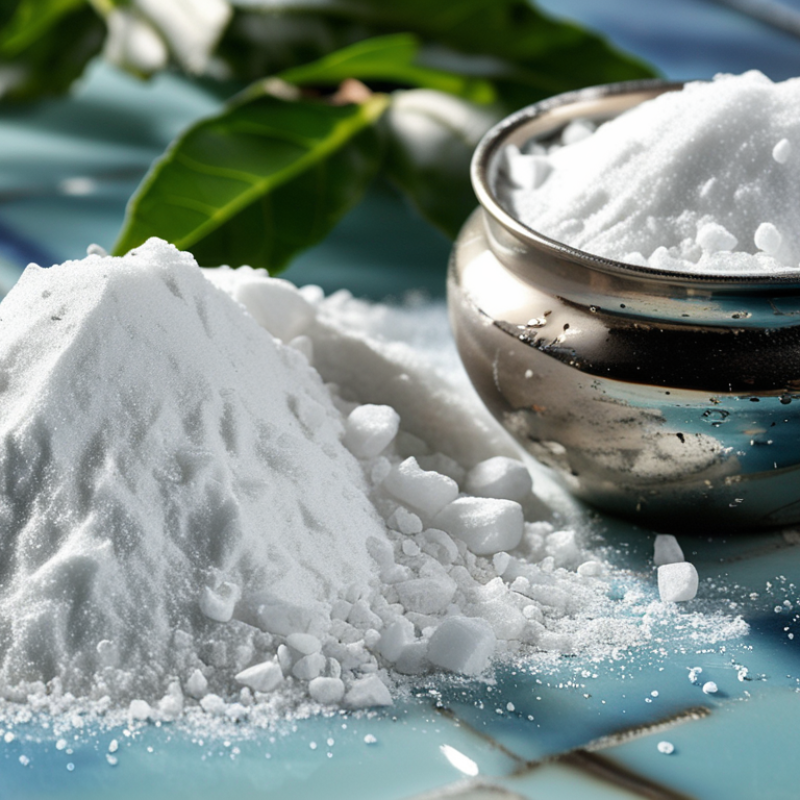
Polishing Alumina Tips for Global Buyers
Polishing alumina is a fine abrasive powder made from aluminum oxide. It removes scratches from metals, ceramics, glass, and coated surfaces. Its grade strongly affects cutting speed, surface finish, and process stability. Particle size is the first detail to check. Coarse particles cut quickly but may leave visible lines. Fine particles create smoother finishes, although they often require more processing time.
Purity also matters. Higher-purity alumina usually produces cleaner results and reduces unwanted surface contamination. Crystal form can change hardness and fracture behavior. Sharp, friable particles may cut aggressively. More durable particles can deliver steadier performance over longer polishing cycles. Buyers should also review particle-size distribution, not only the average size. A wide distribution may produce uneven scratches. That detail is easy to miss.
Moisture content and powder flow affect mixing and feeding. Clumped material can block equipment or create inconsistent slurry density. I once saw a promising abrasive underperform because storage humidity was ignored. A perfect grade on paper can still fail in production. Ask for a certificate of analysis, sample testing, and recommended handling conditions. Compare removal rate, gloss, roughness, and consumption under identical settings. Test it on the actual workpiece. Supplier descriptions help, but measured results deserve greater trust.
7 Polishing Alumina Tips for Global Buyers
How to Match Alumina Particle Size With Your Polishing Application
Particle size should follow the surface, not the product label. Hard ceramics often tolerate larger alumina particles during stock removal. Use 3–9 microns for fast cutting, but watch for deep scratches. Softer metals need gentler abrasives. Particles around 1–3 microns can remove marks without excessive damage. A finer powder is not always better.
For intermediate polishing, consider 0.3–1 micron alumina. It can improve clarity on glass, ceramics, and coated surfaces. Final finishing may require 0.05–0.1 micron particles. Confirm the median size and particle distribution before purchasing. Agglomerated powder can behave like a much larger abrasive. That detail matters. Ask for purity data, moisture information, and inspection records. A clean container also protects consistency during transport.
Match concentration to the pad, pressure, and polishing speed. Higher solids may cut faster but can create heat or drag. Start with a small trial panel from the actual material. Measure gloss, haze, scratches, and removal rate. I have seen finer alumina produce a duller finish when the slurry became unstable. That result was inconvenient, but useful. Recheck dispersion, storage temperature, and mixing time before changing particle size. Keep a written trial record for repeat orders.
Global buyers often compare price before matching alumina to the workpiece. That order can create uneven scratches, slow cutting, or excess surface heating.
Tip one: define the material, target finish, and polishing equipment before selecting powder.
Tip two: treat purity as a performance variable, not a marketing label.
99.5% alumina may suit general metal finishing, while 99.9% or higher can reduce contamination on optical ceramics and electronic components.
Tip three: request traceable batch data, including assay, sodium level, moisture, and particle-size distribution. Small differences matter.
Alpha-alumina has a stable, hard crystal structure and usually cuts aggressively. It fits hardened steel, technical ceramics, and demanding lapping work.
Gamma-alumina offers higher surface activity and a less aggressive feel. It can help with delicate glass or intermediate polishing, but dispersion and load remain important.
Some buyers choose alpha crystals for every application. That is convenient, but not always correct.
A trial on a small panel is wiser. Compare gloss, scratch depth, pad wear, and cleaning time.
Tip four: match particle size to the finish; coarse grades remove material, while fine grades refine surfaces.
Tip five: verify morphology, because angular particles cut differently from rounded particles.
Tip six: check slurry stability, packaging integrity, and storage conditions during international shipment.
Tip seven: request application samples and realistic technical guidance, not only a certificate.
Review local import and workplace documents before purchase. One overlooked variable is water quality.
Hard water can alter dispersion and leave residues. Keep records from each trial. They make the next purchase less uncertain.
7 Polishing Alumina Tips for Global Buyers
Consistent polishing alumina starts with purity, not a glossy certificate. Ask for the latest certificate of analysis, showing alumina content and trace impurities. Check particle-size distribution, not only the average size. A narrow distribution usually supports steadier surface finishing. Morphology also matters. Angular particles can cut aggressively, while rounded particles may create a smoother finish. Request a representative sample from the intended production lot. Test it on your actual ceramic, metal, or optical material. A laboratory sample can look excellent, yet perform differently in continuous production.
Supplier quality needs practical evidence. Review batch traceability, retained-sample procedures, production controls, and complaint response times. Verify whether test methods match recognized standards or clearly documented internal methods. Packaging deserves equal attention. Moisture-proof inner bags, sealed drums, readable lot codes, and impact-resistant outer cartons protect powder during long transit. Ask for photographs of pallet loading. Small gaps inside a carton can become costly damage.
Global compliance is more than a signed declaration. Confirm the safety data sheet, product classification, labeling language, and transport documents for each destination. Check applicable chemical registration and restricted-substance requirements with a qualified local advisor. Requirements can differ by country and change over time. Do not assume one document covers every market. A common mistake is approving packaging before checking warehouse humidity. It sounds minor. It is not. Keep written records of specifications, test results, approvals, and corrective actions. You may still miss something, so schedule a pre-shipment review.
7 Polishing Alumina Tips for Global Buyers
How to Compare Costs, Sample Results, and Long-Term Supply Reliability
Global buyers should compare usable polishing cost, not the quoted powder price. Calculate cost per finished component, including freight, duty, packaging, waste, and rejected parts. The USGS Mineral Commodity Summaries 2025 places global alumina production near 145 million metric tons in 2024. Supply is large, but suitable polishing grades remain specification-sensitive. A lower price may hide unstable particle size or higher impurity levels. A spreadsheet can still lie.
Request samples from at least three production lots. Test purity, sodium content, loss on ignition, particle-size distribution, and agglomeration. Measure removal rate and final surface roughness on your own equipment. Record slurry concentration, pad type, pressure, and cycle time. Keep the variables fixed. Otherwise, sample comparisons become unreliable. A practical mistake is accepting one excellent sample as normal supply performance.
Long-term reliability needs evidence, not promises. Review batch certificates, retained-sample policies, production capacity, export documentation, and delivery history. Ask for a twelve-month supply plan, safety-stock options, and a documented response process for out-of-specification material. The International Aluminium Institute’s production data shows the scale of global alumina demand, yet regional disruptions can still affect lead times. A second approved source reduces exposure. It also adds qualification cost, which buyers often underestimate. Do not ignore that cost.
| Tip | What to Compare | Typical Specification or Benchmark | Indicative Bulk Cost (USD/kg) |
Sample-Test Method | Representative Sample Result | Long-Term Supply Check |
|---|---|---|---|---|---|---|
| 1. Match the particle grade to the finish | Compare median particle size, distribution width, and agglomeration rather than relying only on the nominal mesh or micron label. | Fine polishing grades commonly range from approximately 0.05 to 3 µm; a narrower distribution generally supports more consistent scratch control. | 4–18 | Laser diffraction or equivalent particle-size analysis; inspect dispersion after mixing. | A 0.3 µm grade dispersed in a water-based slurry may produce a final surface roughness of about Ra 0.03–0.08 µm on a suitable hard substrate. | Require lot-to-lot particle-size reports and a defined tolerance, such as D50 within ±15% of the approved value. |
| 2. Verify alumina purity and contamination risk | Compare Al₂O₃ content, sodium, iron, silica, calcium, and other trace elements that may cause staining, corrosion, or process defects. | General polishing grades may contain 98–99.5% Al₂O₃; high-purity grades are commonly specified at 99.5% or higher. | 7–30 | Use ICP-OES, XRF, or an equivalent certificate-backed elemental analysis. | A high-purity grade with low iron and silica can reduce visible discoloration and random deep scratches in optical, ceramic, and semiconductor-related polishing trials. | Request a certificate of analysis for every lot, retained samples, change-notification terms, and a written limit for critical impurities. |
| 3. Compare powder, slurry, and dispersion economics | Calculate delivered cost per usable kilogram and cost per finished part, including dilution, water, dispersant, filtration, waste, and labor. | Dry powder is often cheaper to ship per kilogram, while ready-to-use slurry can reduce mixing and dispersion labor but contains a high proportion of liquid. | Dry powder: 4–30 Concentrated slurry: 3–15 |
Record solids content, viscosity, pH, sedimentation, dilution ratio, and usable life after opening. | A stable 20–40% solids concentrate may be diluted for different removal-rate and finish requirements without rapid settling when properly formulated. | Compare minimum order quantity, packaging size, shelf life, storage temperature, hazardous-goods status, and freight cost per usable kilogram. |
| 4. Measure removal rate and surface finish together | A low price is not beneficial if the abrasive requires longer cycle time or creates excessive rework. | Compare material removal rate, polishing time, Ra/Rz roughness, haze, edge quality, and defect count under identical conditions. | Performance is more meaningful than price alone; a 10–20% price premium may be justified by shorter cycle time. | Use the same pad, pressure, speed, slurry concentration, flow rate, and test duration for every sample. | A valid comparison should report both removal rate, such as mg/min or µm/min, and surface roughness, such as Ra in µm. | Ask for process capability data, batch averages, standard deviation, and a corrective-action procedure for out-of-specification results. |
| 5. Check dispersion stability and equipment compatibility | Compare sedimentation, re-agglomeration, pH, viscosity, foaming, filterability, and compatibility with pumps, pads, and tanks. | Many water-based polishing slurries operate near neutral to mildly alkaline pH, but the correct range depends on the workpiece and formulation. | 5–20 | Run a 24–72 hour settling test, viscosity check, redispersion test, and filter-plugging evaluation. | A suitable dispersion should remix with mild agitation and maintain consistent abrasive concentration without hard sediment or excessive foam. | Confirm formulation change control, technical support response time, storage requirements, and availability of replacement or compatible grades. |
| 6. Evaluate packaging, transport, and delivered cost | Compare ex-works price with ocean or air freight, insurance, duties, local handling, packaging loss, and import documentation. | Common dry-powder packaging includes sealed bags, pails, or fiber drums; moisture barrier and tamper evidence are important for long-distance shipments. | Add approximately 0.50–5.00 USD/kg for freight and handling, depending on volume, route, and shipment mode. | Inspect packaging integrity, moisture pickup, caking, labeling, batch traceability, and weight at arrival. | Well-sealed material should arrive free-flowing or readily dispersible, with no visible moisture damage, leakage, or mixed-lot labeling. | Use agreed Incoterms, a documented claims period, pallet and container standards, buffer stock, and at least two qualified logistics routes where possible. |
| 7. Test supply continuity before approving the grade | Assess capacity, lead time, minimum order quantity, contingency planning, raw-material exposure, and the ability to support repeat orders. | A practical qualification should include initial samples, a pilot order, at least one repeat lot, and a documented comparison against the approved reference. | Typical commercial lead time: 2–8 weeks, depending on grade, order size, production schedule, and export requirements. | Test three or more lots over time and compare particle size, purity, moisture, pH or viscosity, removal rate, and surface finish. | Approve only when repeat lots remain within agreed limits and the process delivers consistent removal and surface roughness under normal production conditions. | Include annual capacity confirmation, safety-stock options, dual-source planning, forecast windows, escalation contacts, and written notice before material changes. |
Polishing alumina is a fine aluminum oxide abrasive powder. It removes scratches from metals, ceramics, glass, and coated surfaces. The result depends on particle size, purity, and surface conditions.
Coarse particles cut quickly but may leave visible lines. Fine particles create smoother finishes but can require more processing time. A smaller particle is not always better.
Use about 3–9 microns for fast stock removal on hard ceramics. Particles around 1–3 microns suit softer metals and gentler polishing. Intermediate polishing may use 0.3–1 micron powder. Final finishing may require 0.05–0.1 micron particles.
The average size alone can hide important differences. A wide distribution may create uneven scratches. Agglomerated powder may behave like a much larger abrasive. That detail is easy to miss.
Higher purity usually reduces unwanted contamination. It can support cleaner polishing results. Request alumina content and trace impurity data. A clean certificate helps, but testing matters more.
Sharp, fragile particles can cut aggressively. Durable particles may perform more steadily during long polishing cycles. Angular particles often remove material quickly. Rounded particles may produce smoother finishes.
Test the powder on the actual workpiece, not only a laboratory coupon. Compare gloss, haze, roughness, scratches, removal rate, and consumption. Keep pressure, pad, speed, and concentration consistent. Record the trial conditions for repeat orders. Paper results can disappoint.
Moisture can cause clumping, feeding problems, and unstable slurry density. Use sealed inner bags, readable lot codes, and protective outer cartons. Check warehouse humidity before approving packaging. It sounds minor. It is not.
Request a current certificate of analysis, safety data sheet, and inspection records. Check batch traceability and representative production-lot samples. Review labeling, transport documents, and destination-specific chemical requirements. Requirements may change between countries. One document may not cover every market.
Choosing the right Polishing Alumina is essential for achieving consistent surface quality, efficient processing, and reliable results across global applications. This guide explains how alumina grade influences hardness, cutting performance, dispersion, and surface finish. It also shows how to match particle size with different polishing requirements, from coarse material removal to fine finishing. Purity and crystal form are equally important, as they can affect compatibility with metals, ceramics, glass, gemstones, and other materials.
For global buyers, evaluating supplier quality goes beyond product specifications. Packaging should protect the powder from moisture, contamination, and damage during transportation, while documentation should support international compliance and traceability. Buyers should compare total cost rather than unit price alone, considering sample performance, consistency between batches, delivery reliability, and long-term supply capacity. By testing samples and reviewing technical support, quality controls, and logistics capabilities, purchasers can reduce risks and select a Polishing Alumina solution that delivers stable performance and value over time.
